English
 Arabic
 French
 Spanish
 Portuguese
 Deutsch
 Turkish
 Dutch
Dutch
 Italiano
 Russian
 Romaian
 Portuguese (Brazil)
 Greek
Greek
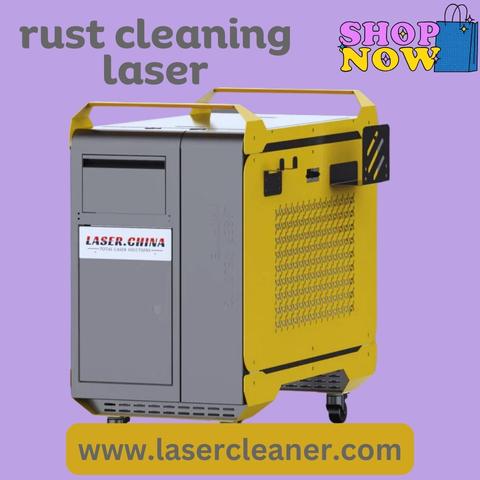
In modern industrial settings, maintaining the integrity of metal surfaces is essential for productivity, safety, and aesthetics. One of the most innovative methods to achieve this is through the use of a rust cleaning laser. This technology is designed to precisely remove rust and corrosion from metal surfaces without causing damage to the underlying material. Unlike traditional methods of rust removal, such as chemical treatments or abrasive tools, the rust cleaning laser offers a highly controlled, precise, and clean approach.
The principle behind a rust cleaning laser is based on high-intensity laser beams that target the oxidized layer of metal. When the laser beam contacts the rust, it instantly heats and vaporizes the corrosion layer, leaving the bare metal surface intact. This method is highly effective on a variety of metals, including steel, iron, copper, and aluminum. The process does not rely on harsh chemicals or mechanical abrasion, making it suitable for delicate and valuable metal components.
Industries across the globe have increasingly adopted rust cleaning lasers due to their precision and efficiency. In the automotive sector, these lasers are widely used for restoring car parts and tools that have been exposed to moisture and environmental conditions. Old car frames, engine components, and metallic accessories can all be treated effectively without compromising their structural integrity. Similarly, in the aerospace industry, where precision and safety are paramount, rust cleaning lasers are used to clean aircraft components, landing gears, and structural parts. These lasers allow maintenance teams to achieve a high level of cleanliness without the risk of introducing micro-cracks or material fatigue that might occur with mechanical sanding or grinding.
In shipbuilding and maritime industries, rust is a persistent problem due to constant exposure to salty water and humid environments. Rust cleaning lasers are deployed to maintain ship hulls, decks, and machinery. The controlled laser treatment removes corrosion while minimizing downtime, which is a critical factor in shipping operations. Industrial machinery and heavy equipment, which are often subjected to harsh operating conditions, also benefit significantly from laser-based rust removal. The technology ensures that parts like gears, valves, and metallic frameworks remain in optimal condition, prolonging their service life and maintaining operational efficiency.
One of the remarkable aspects of a rust cleaning laser is its adaptability to various shapes and surfaces. Unlike abrasive methods, which may struggle with intricate or curved surfaces, laser cleaning can be applied uniformly. This makes it ideal for restoring artistic metalwork, antique tools, and detailed engineering components. Museums and restoration centers have started using rust cleaning lasers to maintain historical metal artifacts. These lasers allow conservators to remove corrosion layers without damaging the patina or original craftsmanship, preserving both the appearance and authenticity of historical items.
The operation of a rust cleaning laser is highly precise, allowing operators to control the intensity, speed, and focus of the laser beam. This level of control ensures that only the rust is removed, and the base material is left untouched. For maintenance teams, this translates to less risk of over-grinding, scratches, or chemical residues. Furthermore, rust cleaning lasers are environmentally friendly compared to traditional chemical rust removers. Since the process relies on light energy rather than harmful substances, it minimizes chemical waste and reduces the need for neutralizing agents. Companies are increasingly adopting this technology to meet environmental regulations and achieve cleaner production processes.
A rust cleaning laser is versatile in terms of its portability and scalability. Handheld devices are available for on-site applications, making it convenient for small-scale maintenance or fieldwork. Larger industrial laser systems are suitable for factory-floor operations or heavy machinery restoration. This versatility allows businesses of all sizes to integrate rust cleaning lasers into their maintenance schedules. Industries that involve pipelines, bridges, and infrastructure projects also benefit from laser cleaning technology. Rust-prone structures like steel bridges and pipeline networks require regular maintenance to ensure safety and reliability, and laser cleaning provides a fast, non-invasive solution for long-term upkeep.
Operators of rust cleaning lasers require specialized training to maximize the effectiveness of the equipment. Understanding the laser parameters, surface properties, and rust thickness is critical for achieving optimal results. Many manufacturers offer training programs and technical support to ensure operators can safely and efficiently use the lasers. In addition, the technology is continuously evolving, with improvements in laser efficiency, automation, and integration with robotic systems. Some advanced setups allow automated laser rust removal in production lines, reducing human intervention and increasing consistency in results.
In urban infrastructure maintenance, rust cleaning lasers are used to maintain public transport vehicles, street furniture, and metal installations exposed to weather conditions. City planners and maintenance authorities leverage this technology to extend the lifespan of metal structures while preserving aesthetic appeal. The precision of laser cleaning ensures that safety signage, railings, and decorative metalwork remain corrosion-free and visually appealing.
Another area where rust cleaning lasers have gained traction is in the construction and renovation industry. Steel beams, scaffolding, and metallic frameworks often accumulate rust during storage or prolonged exposure to moisture. Laser cleaning enables contractors to quickly restore these materials to a usable state without the need for extensive chemical treatments. This not only saves time but also ensures that construction projects proceed on schedule without compromising structural quality.
The adaptability of rust cleaning lasers also extends to electronics and micro-components. Small metal parts, delicate connectors, and precision tools benefit from laser-based rust removal because it is non-contact and highly precise. By removing corrosion without mechanical contact, laser cleaning preserves the integrity of sensitive components, which is especially important in high-tech manufacturing and electronics repair.
In summary, the rust cleaning laser represents a transformative approach to maintaining metal surfaces across multiple industries. Its precision, efficiency, and adaptability make it a reliable tool for automotive, aerospace, maritime, construction, and historical restoration applications. By using focused laser energy, operators can effectively remove corrosion while preserving the base material, ensuring safety, performance, and aesthetics. With growing adoption and continuous technological improvements, rust cleaning lasers are set to become a standard solution for metal maintenance and restoration worldwide.