English
 Arabic
 French
 Spanish
 Portuguese
 Deutsch
 Turkish
 Dutch
Dutch
 Italiano
 Russian
 Romaian
 Portuguese (Brazil)
 Greek
Greek
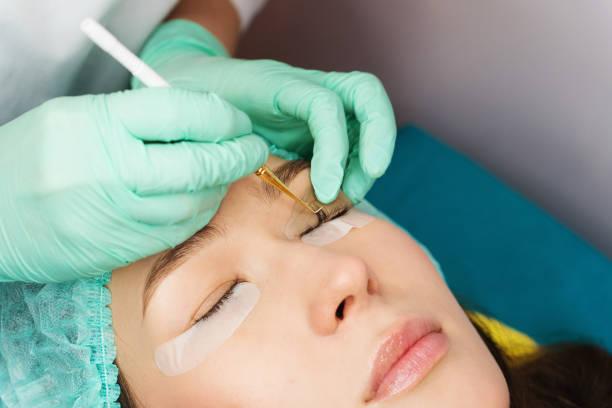
For individuals suffering from specialized hair loss, the impact on the eyes can be particularly distressing. Whether the thinning is caused by Alopecia Areata, traumatic scarring, or years of overplucking damage from extensions and false lashes, the result is often a "vacant" look that makeup cannot fully hide. An Eyelash Hair Transplant in Dubai provides a clinical pathway to reclaim that lost density using your own biological tissue.
In clinical settings, we observe that the eyelid skin can become compromised after years of tension or inflammation. This procedure focuses on transplanting healthy, robust follicles into the eyelid margin, bypassing damaged areas to create a new, permanent lash line that frames the eyes naturally and permanently.
The Clinical Approach to Repairing Overplucking Damage
Restoring lashes that have been lost to "Traction Alopecia" (damage from heavy extensions) requires a strategy that prioritizes follicle survival in potentially thinned skin.
-
Follicle Revitalization: We harvest fine-caliber follicles from the scalp. These "live" units are much stronger than damaged native lashes and can thrive even in areas with minor scarring.
-
Directional Reconstruction: Overplucking often leaves the remaining lashes growing in haphazard directions. In clinical settings, we map the new grafts to a uniform 45-degree upward sweep.
-
High-Definition Density: We use the DHI (Direct Hair Implantation) technique to place grafts as close together as possible, filling the "gaps" left by long-term plucking or autoimmune loss.
-
Vascular Mapping: Since the eyelid is highly vascular, we ensure each graft is placed near a blood supply to guarantee long-term, permanent growth.
What is the Actual Pain Level During Lash Repair?
Is treating damaged eyelids more sensitive?
Patients typically rate the pain of an Eyelash Hair Transplant in Dubai for overplucking or alopecia at a 3/10. While the eyelid is a sensitive area, the primary discomfort is limited to the first minute of local anesthesia. Based on post-procedure follow-ups, patients report a "tugging" sensation during the placement, but no sharp pain. The recovery period is often described as feeling like "mild hay fever"—itchy and slightly puffy, but manageable with standard clinical aftercare.
Who Should Not Get an Eyelash Hair Transplant in Dubai?
Are there safety limits for those with alopecia?
In clinical settings, we must distinguish between types of hair loss. Patients with "Alopecia Totalis" or "Universalis" (complete body hair loss) are not candidates because they lack a healthy donor area. We also screen for active "Ocular Cicatricial Pemphigoid," an inflammatory condition that can destroy new grafts. Furthermore, if the overplucking damage is accompanied by active eyelid infections or severe chronic dry eye, we advise delaying the Eyelash Hair Transplant in Dubai until the ocular surface is medically stabilized.
Step-by-Step Patient Sensations: The Repair Timeline
The journey from damaged lids to full lashes follows a specific physiological timeline:
-
Days 1–3 (The "Puffy" Phase): You will feel a sensation of "heaviness." Minor swelling around the eyes is a normal clinical observation as the tissue integrates the new follicles.
-
Week 1 (The "Itch" Milestone): As the micro-incisions heal, the lash line becomes very itchy. This is a sign of blood flow returning to the area.
-
Months 2–4 (The "Reset" Phase): The initial transplanted hairs will shed. This can be stressful for alopecia patients, but in clinical settings, we confirm the "roots" are alive and preparing for permanent growth.
-
Month 12 (The "Full Frame"): The growth is complete. You will feel the physical weight of thick lashes. Since these are scalp hairs, they will grow long, requiring you to trim them every few weeks.
Why Choose Tajmeels Clinic for an Eyelash Hair Transplant in Dubai?
At Tajmeels Clinic, we specialize in "Complex Eyelid Reconstruction." We understand that an Eyelash Hair Transplant in Dubai for overplucking damage requires a delicate touch and a deep understanding of scar tissue. We use Sapphire-tipped tools to create the smallest possible entry points, ensuring your eyelids remain smooth and natural-looking. Our practitioners provide a customized "Growth Maintenance Plan" to help you care for your new lashes. By choosing Tajmeels Clinic, you are opting for a clinical team that values safety, precision, and the ultimate goal of restoring your natural, youthful gaze.
Genuine Patient Perspectives
"Years of extensions left me with almost no lashes. I was terrified of needles near my eyes, but the team at Tajmeels was so calm. The numbing was a quick pinch, and I didn't feel anything after that. Now, I have real lashes that don't fall out. It’s a total relief." — Mariam
"I have Alopecia Areata that only hit my eyes. Tajmeels explained how they could take hair from the back of my head to fix it. It felt a bit 'scratchy' for a few days, but the result is incredible. I finally feel like I look like myself again." — Zayed
Frequently Asked Questions
Can you fix lashes lost to permanent scarring?
Yes, as long as there is adequate blood flow in the area, an Eyelash Hair Transplant in Dubai can successfully place follicles into scarred eyelid margins.
How many grafts are needed to repair overplucking damage?
Depending on the extent of the damage, most patients require between 50 and 80 grafts per eye.
Will the new lashes grow as fast as my head hair?
Yes. Because they are scalp follicles, they retain their original growth rate and will need trimming every 3 to 4 weeks.
Is the result truly permanent for alopecia patients?
If the donor hair is healthy and the alopecia is not "Universalis," the results are typically permanent.
When can I stop using fake lashes?
We clinically advise against any adhesives for at least 6 to 8 weeks post-op to ensure the grafts are fully anchored.
Does the procedure affect my vision?
No. The procedure is performed on the superficial layers of the eyelid and does not involve the eyeball itself.