English
 Arabic
 French
 Spanish
 Portuguese
 Deutsch
 Turkish
 Dutch
Dutch
 Italiano
 Russian
 Romaian
 Portuguese (Brazil)
 Greek
Greek
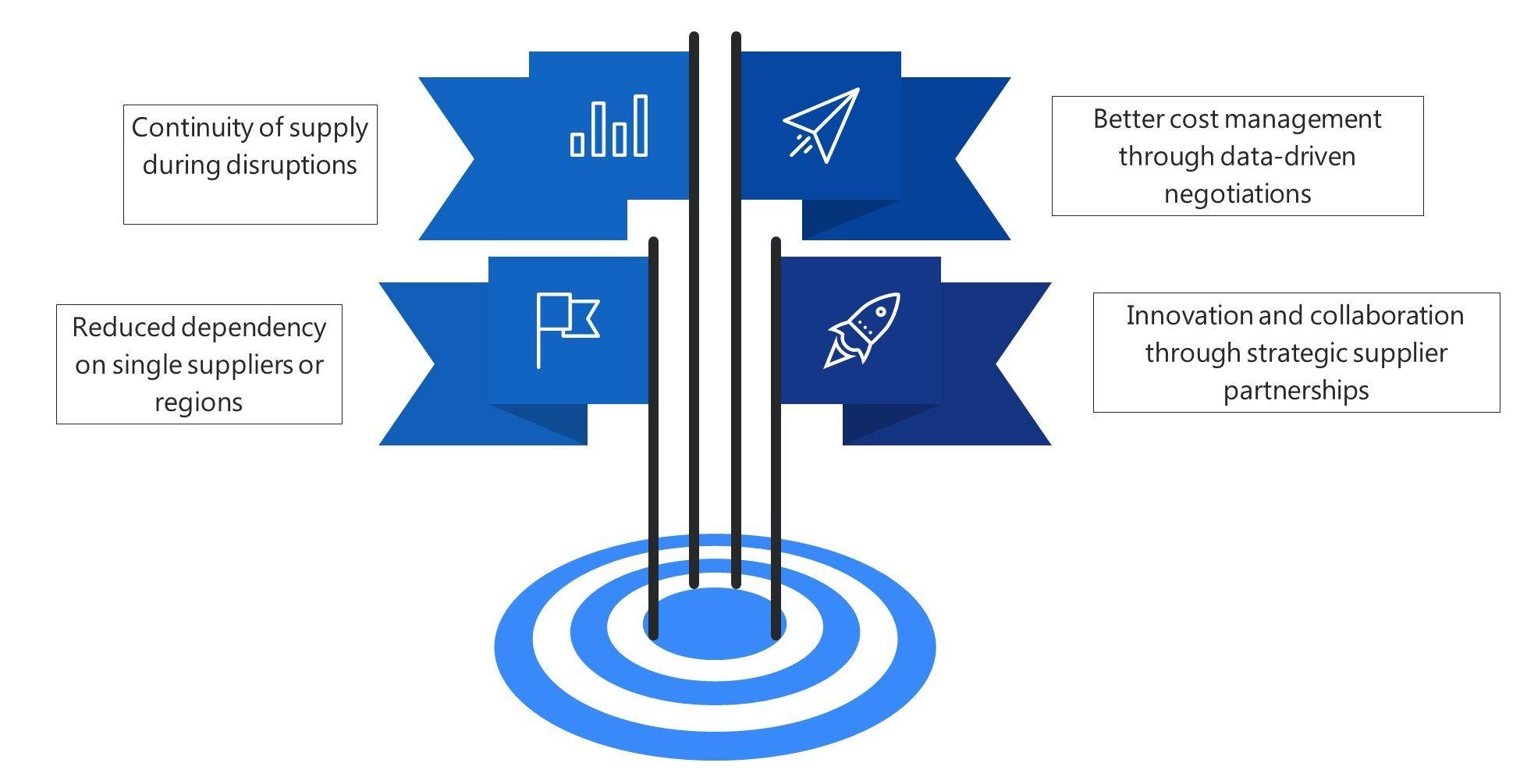
Global trade has always required careful coordination, but in recent years it has become increasingly complex. Geopolitical tensions, trade restrictions, regulatory changes, and economic uncertainty have exposed vulnerabilities in global supply chains. For many organizations, these disruptions have redefined how they approach procurement. What was once treated as a routine operational function has evolved into a strategic priority. At the center of this shift is Supplier Relationship Management (SRM).
Today, Supplier Relationship Management (SRM) is no longer just about monitoring supplier performance or negotiating contracts. It is about building resilient partnerships that can withstand uncertainty and drive long-term value.
What Is Supplier Relationship Management (SRM)?
Supplier Relationship Management (SRM) is a structured and strategic approach to managing interactions with suppliers to maximize value, reduce risk, and foster collaboration. Unlike traditional vendor management, which often focuses on cost control and compliance, SRM emphasizes partnership, transparency, and shared growth.
Effective SRM integrates procurement strategy, performance tracking, communication frameworks, and risk assessment into one cohesive system. It ensures that suppliers are not treated merely as transactional vendors but as critical contributors to business success.
A well-designed Supplier Relationship Management (SRM) strategy helps organizations:
-
Strengthen supply chain stability
-
Improve supplier performance and accountability
-
Encourage innovation and collaboration
-
Reduce dependency risks
-
Enhance cost efficiency without sacrificing quality
In an unpredictable global market, SRM plays a vital role in enabling businesses to respond quickly to disruptions while maintaining operational continuity.
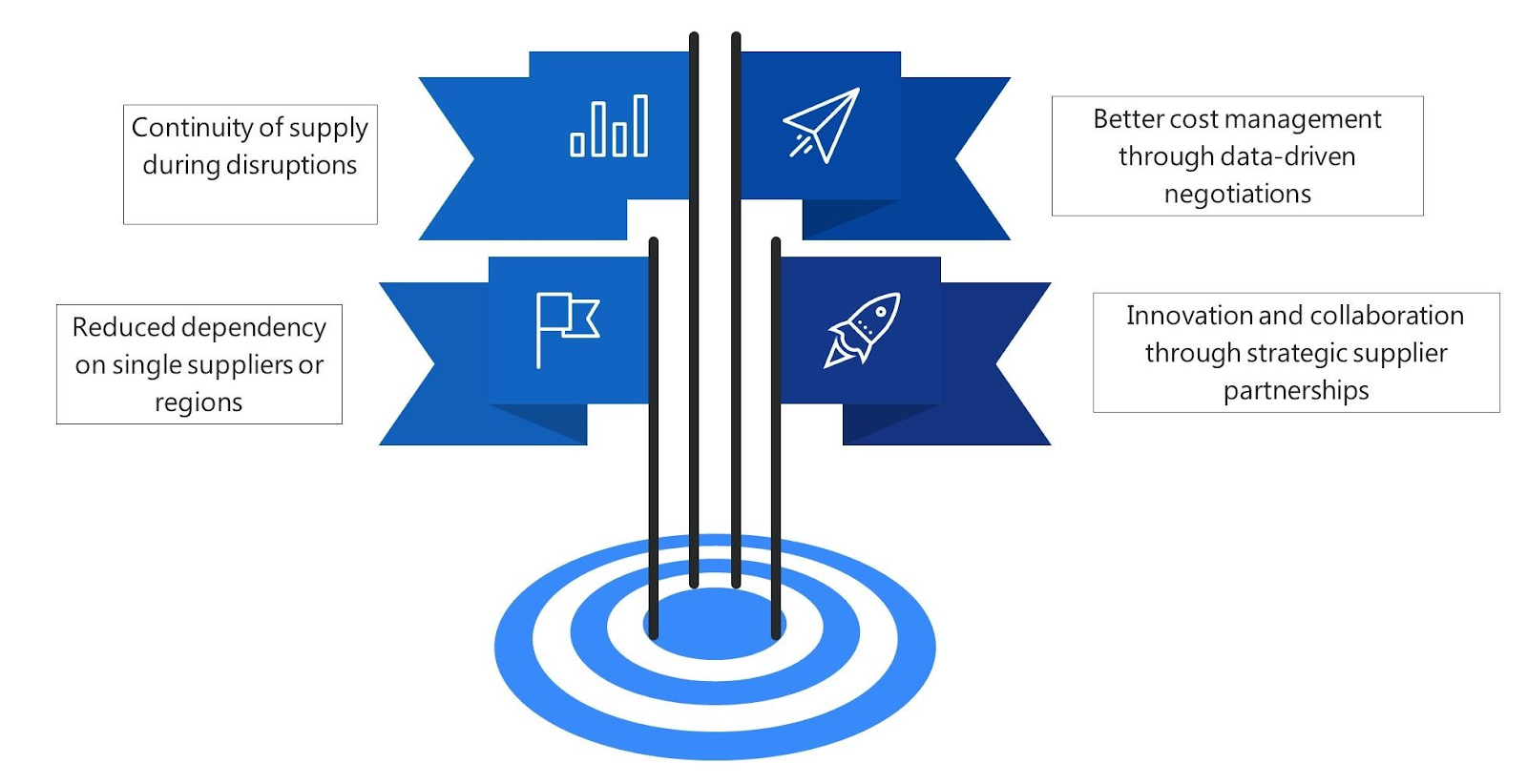
Why SRM Matters More Than Ever
Recent global events have demonstrated how fragile supply chains can be when heavily dependent on specific regions or suppliers. Trade bans, tariffs, export restrictions, and regulatory shifts have significantly impacted industries worldwide.
For example, when major economies impose restrictions on the export of critical materials or components, industries ranging from automotive to technology and aerospace feel the consequences almost immediately. Companies relying on single-source suppliers often experience production delays, cost increases, and reputational risks.
These realities highlight a critical lesson: overdependence creates vulnerability. Strong supplier management practices are essential for mitigating risk and ensuring business continuity.
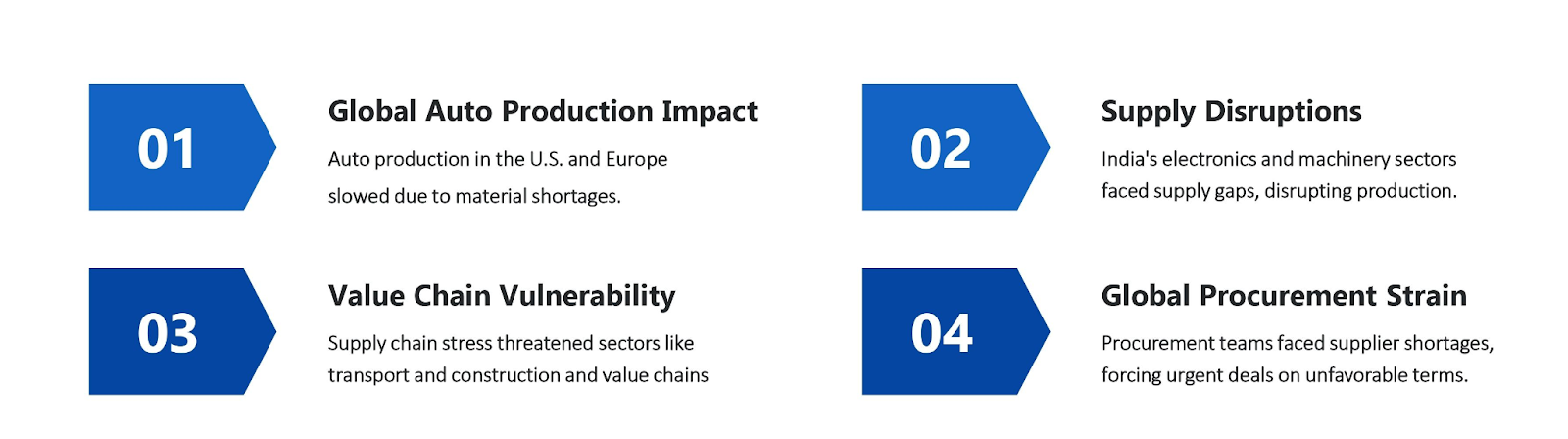
From Risk Exposure to Supply Chain Resilience
Modern organizations must shift from reactive crisis management to proactive resilience planning. Supplier Relationship Management (SRM) enables this transformation by embedding risk awareness into procurement strategies.
Here are key insights businesses should embrace:
1. Diversification Is Essential
Relying on one dominant supplier or region can expose companies to significant disruption. Diversifying the supplier base geographically and operationally reduces the likelihood of sudden breakdowns. Strategic vendor management ensures multiple qualified suppliers are available when needed.
2. Continuous Risk Monitoring
Supply chain risk is dynamic. Political developments, environmental events, regulatory updates, and financial instability can quickly affect suppliers. Ongoing monitoring through analytics and intelligence tools allows businesses to anticipate issues before they escalate.
3. Suppliers as Strategic Partners
In uncertain times, collaboration becomes crucial. Organizations that treat suppliers as long-term partners rather than short-term vendors often receive priority support during shortages or disruptions. Transparent communication and shared objectives foster trust and flexibility.
4. Data-Driven Decision Making
Advanced analytics strengthen supplier management by identifying cost-saving opportunities, forecasting demand fluctuations, and assessing supplier performance. Data enables procurement teams to negotiate effectively and make informed sourcing decisions.
The Role of Vendor Management in SRM
While Supplier Relationship Management (SRM) focuses on strategic partnerships, vendor management ensures operational efficiency. Together, they create a comprehensive framework for procurement excellence.
Vendor management typically involves:
-
Contract compliance monitoring
-
Performance measurement
-
Service-level agreement (SLA) tracking
-
Issue resolution management
When integrated within an SRM framework, vendor management supports long-term strategic objectives rather than functioning as a standalone administrative task.
How UnivDatos Strengthens Supplier Relationship Management (SRM)
In today’s volatile trade environment, businesses need more than theoretical strategies—they need actionable procurement solutions. UnivDatos provides comprehensive procurement consulting services designed to enhance Supplier Relationship Management (SRM) and build resilient supply chains.
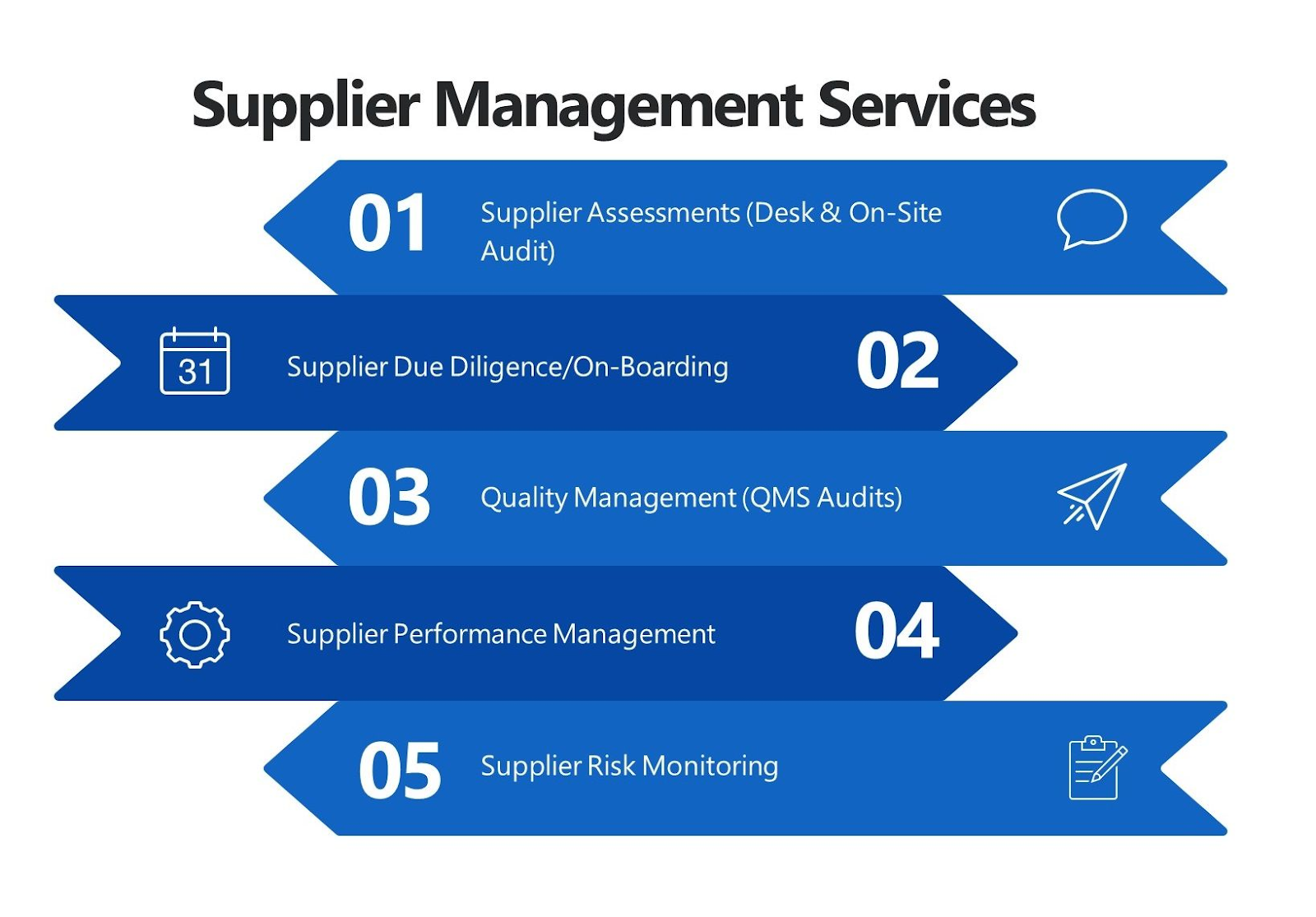
Our approach combines industry expertise, data intelligence, and strategic advisory support to help organizations transform procurement into a competitive advantage.
1. Strategic Supplier Assessment
We evaluate supplier capabilities, financial health, geographic risks, and compliance standards to ensure businesses work with reliable partners.
2. Risk Forecasting and Scenario Planning
Through advanced analytics and market insights, we help organizations anticipate potential disruptions and prepare contingency strategies.
3. Supplier Diversification Strategies
Our experts identify alternative sourcing options and assist in qualifying new suppliers to minimize concentration risk.
4. Performance Optimization Frameworks
We design supplier performance measurement systems that align procurement objectives with broader business goals.
5. Ongoing Advisory and Support
Supplier management is not a one-time initiative. UnivDatos provides continuous guidance to monitor supplier relationships, refine strategies, and measure outcomes over time.
With a team of over 50 procurement specialists and extensive international experience across multiple industries, UnivDatos supports organizations in building procurement systems that are proactive rather than reactive.
Building the Future of Supply Chain Strategy
Trade restrictions and geopolitical shifts are no longer rare occurrences—they are recurring realities. Businesses that wait for disruption before acting often incur higher costs and operational setbacks. Those that prioritize Supplier Relationship Management (SRM) are better positioned to navigate uncertainty with confidence.
By integrating vendor management, supplier management, risk analytics, and strategic collaboration into a unified framework, organizations can transform procurement into a driver of resilience and growth.
In today’s competitive environment, SRM is not just about reducing risk—it is about unlocking strategic value. Companies that invest in strong supplier relationships gain improved agility, enhanced innovation, and long-term sustainability.
UnivDatos stands ready to help businesses turn procurement challenges into strategic opportunities. Through comprehensive Supplier Relationship Management (SRM) solutions, we empower organizations to strengthen partnerships, safeguard supply chains, and secure a competitive edge in an unpredictable global marketplace.
With UnivDatos as your procurement partner, Supplier Relationship Management is more than risk control, it's a strategic advantage. Contact UnivDatos today to learn how our procurement management services can support your brand goals. Call us at +1 978 733 0253, email contact@univdatos.com, or fill out our contact form to schedule a consultation.
FAQs – Supplier Relationship Management (SRM)
1. What is Supplier Relationship Management (SRM)?
Supplier Relationship Management (SRM) is a strategic approach to managing and optimizing relationships with suppliers to improve performance, reduce risk, and create long-term value.
2. How is SRM different from vendor management?
Vendor management focuses on contracts and performance monitoring, while SRM builds strategic partnerships that drive collaboration, innovation, and resilience.
3. Why is Supplier Relationship Management important?
SRM helps businesses reduce supply chain risks, improve supplier performance, ensure continuity, and strengthen overall procurement strategy.
4. How can supplier management reduce supply chain disruptions?
By diversifying suppliers, monitoring risks continuously, and maintaining strong partnerships, businesses can respond quickly to unexpected disruptions.
5. What are the key benefits of an effective SRM strategy?
An effective SRM strategy improves cost efficiency, enhances supplier collaboration, increases transparency, and builds a more resilient supply chain.