English
 Arabic
 French
 Spanish
 Portuguese
 Deutsch
 Turkish
 Dutch
Dutch
 Italiano
 Russian
 Romaian
 Portuguese (Brazil)
 Greek
Greek
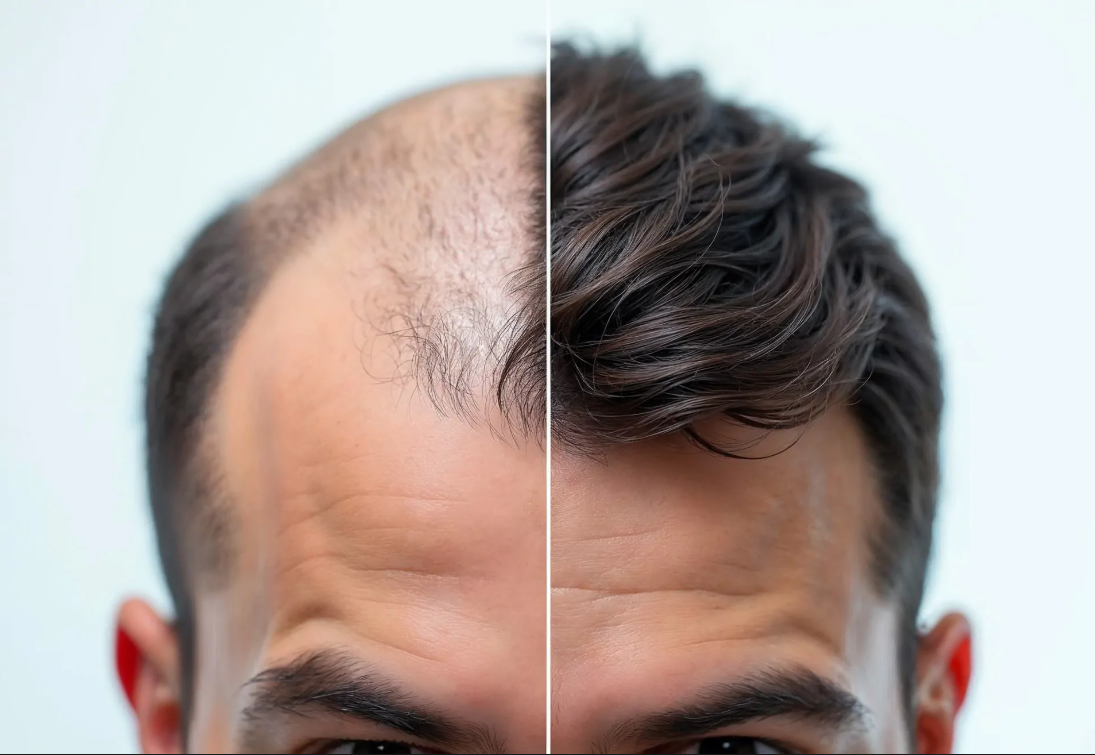
Male pattern baldness—clinically known as androgenetic alopecia—is a hereditary form of hair loss that affects millions of men worldwide. It’s characterized by progressive thinning of hair, typically starting at the temples and crown. Over time, follicles miniaturize, meaning they shrink and produce thinner, weaker hairs before eventually becoming dormant. Traditional treatments include medications like finasteride and minoxidil, and surgical options like hair transplants.
Hair loss with exosomes in Riyadh is gaining popularity as an advanced non-surgical solution for stimulating natural hair growth and improving scalp health.
Exosomes represent a newer, regenerative medicine approach that works differently from these traditional solutions. Exosomes are tiny cell‑derived vesicles that carry growth factors, proteins, and signaling molecules which help cells communicate and stimulate repair processes in tissues, including hair follicles.
1. Stimulating Dormant Follicles and Hair Regrowth
One of the primary mechanisms by which exosomes benefit male pattern baldness is through reactivating dormant hair follicles.
Hair follicle miniaturization doesn’t always mean follicles are permanently dead. In many cases—even when hair is visibly thinning—follicles are still present but inactive. Exosomes deliver bioactive signals directly to these cells, encouraging them to re‑enter the active growth phase (anagen) of the hair cycle. This can result in new hair growth where conventional treatments may have limited effect.
Clinical studies have shown that exosome treatment can significantly improve hair density and thickness compared with controls, with many patients experiencing visible improvement in hair quality and count.
2. Enhanced Growth Factor Delivery and Nutrient Support
Unlike therapies such as platelet‑rich plasma (PRP), which rely on growth factors derived from the patient’s own blood, exosomes can deliver a broader and more potent array of growth factors and signaling molecules that support hair follicle regeneration. This means they can:
-
Promote cellular proliferation and differentiation in hair follicle cells.
-
Improve nourishment and support to weakened follicles.
-
Enhance cellular signaling that supports long‑term follicle health.
Because exosomes can be lab‑standardized and concentrated, some clinics report that their treatment protocols deliver significantly more regenerative factors than PRP.
3. Anti‑Inflammatory and Scalp Health Effects
Inflammation around hair follicles is often an overlooked driver of hair loss. In androgenetic alopecia, inflammatory processes can contribute to follicle miniaturization. Exosomes have anti‑inflammatory properties, meaning they can help calm chronic scalp inflammation and create a healthier environment for hair follicles to thrive.
By reducing inflammation and improving scalp blood flow, exosome therapy supports better nutrient delivery and waste removal in the scalp, which further aids hair growth and overall follicle function.
4. Non‑Surgical and Minimally Invasive
A major appeal of exosome therapy—especially in places with advanced aesthetic and regenerative medicine clinics like Riyadh—is that it’s non‑surgical.
-
The treatment generally involves micro‑injections of exosomes into targeted thinning areas of the scalp.
-
It typically takes 30–60 minutes per session.
-
There’s minimal discomfort and almost no downtime afterward.
For many men, this is a significant advantage over hair transplants, which require surgery, scalp incisions, anesthesia, and recovery time. Exosome therapy is often performed in a clinic setting and allows individuals to resume daily activities immediately.
5. Accelerated Timeline Toward Visible Results
Another benefit reported by clinics offering exosome treatments is a relatively faster onset of visible improvement compared with some traditional methods.
While genetics and individual factors vary, many men begin to notice signs of increased hair thickness or new growth within 8–12 weeks, with more pronounced improvement over 3–6 months as follicles continue responding to the regenerative signals.
This doesn’t mean results are immediate—hair growth is inherently slow—but for a non‑surgical therapy, the timeline is considered favorable.
6. Can Complement Other Treatments
Exosome therapy doesn’t necessarily have to replace other treatments. In many protocols, it’s used in combination with:
-
Microneedling, which enhances penetration of the exosomes.
-
Medications like finasteride or minoxidil to address hormonal aspects of hair loss.
-
PRP therapy in some cases, for layered regenerative support.
This flexibility means exosome treatment can be part of a personalized, multi‑modal approach to male pattern baldness rather than a single‑shot fix.
7. Suitability and Limitations
While exosome therapy has many potential benefits, it’s important to understand its best use cases and limitations:
-
Most effective in early to moderate hair loss where follicles have not completely disappeared.
-
Not a guaranteed “miracle cure” and may vary from person to person.
-
Current research is promising but still evolving—long‑term large‑scale studies are limited.
-
Ideally administered by experienced medical professionals using high‑quality exosomes.
Conclusion
In summary, exosome therapy offers a promising, regenerative approach to treating male pattern baldness with the following key benefits:
-
Stimulates dormant hair follicles and encourages natural hair regrowth.
-
Delivers potent growth factors and supports scalp cell function.
-
Reduces inflammation and improves scalp health.
-
Non‑surgical, minimally invasive, and convenient.
-
Can be part of a customized, multi‑modal hair restoration plan.
For men in Riyadh or elsewhere exploring advanced hair restoration options, exosome therapy represents an innovative tool in the hair loss treatment spectrum—potentially filling the gap between medications, surgical transplants, and older regenerative techniques like PRP.