English
 Arabic
 French
 Spanish
 Portuguese
 Deutsch
 Turkish
 Dutch
Dutch
 Italiano
 Russian
 Romaian
 Portuguese (Brazil)
 Greek
Greek
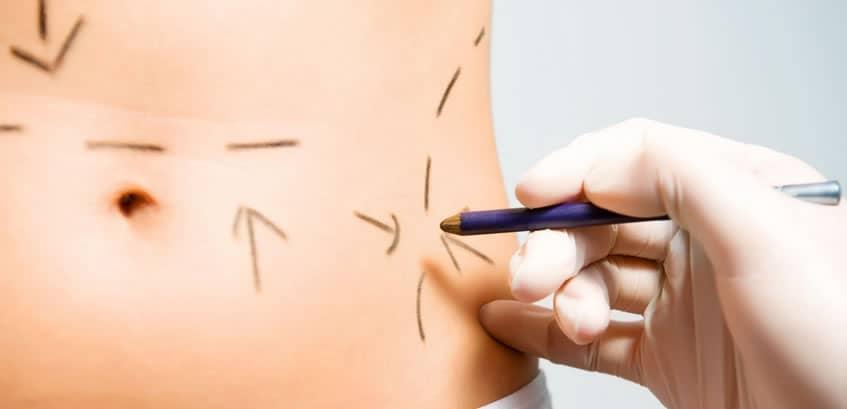
For many who have undergone life-changing weight loss through gastric sleeve, bypass, or balloon procedures, the Circumferential Abdominoplasty in Riyadh is the essential final phase of post-bariatric care. While bariatric surgery successfully addresses the internal metabolic health and fat volume, it often leaves behind a significant "envelope" of redundant skin. In the high-standard clinical environment of 2026, the 360-degree lift is no longer viewed as a purely cosmetic choice; it is a reconstructive necessity that restores physical function, resolves chronic skin issues, and provides the psychological "closure" needed to complete a massive weight loss journey.
1. Beyond the Scale: Addressing the "Skin Envelope"
Post-bariatric patients face a unique anatomical challenge: "global deflation." Because weight loss occurs from the entire trunk, the skin sags not just at the front, but across the hips and lower back.
-
The 360-Degree Solution: A standard tummy tuck is often insufficient for bariatric patients because it fails to address the "back rolls" and the sagging of the buttocks that follow massive weight loss.
-
Belt Lipectomy: By removing a continuous circle of tissue, the circumferential approach "re-drapes" the skin over the new, smaller frame, ensuring that the patient's outer appearance finally matches their internal health.
2. Functional Restoration and Hygiene
In the warm climate of Riyadh, excess skin folds (panniculus) can lead to significant medical discomforts that the circumferential lift directly "cures":
-
Chronic Intertrigo: Deep skin folds trap moisture and heat, leading to persistent rashes, fungal infections, and skin breakdown. The 360-degree removal of these folds provides immediate and permanent relief.
-
Mobility and Exercise: Redundant skin is heavy and can cause physical "chafing" or mechanical obstruction during movement. Removing this weight (often 3kg to 8kg of tissue) allows post-bariatric patients to engage in the high-intensity exercise required to maintain their new weight.
-
Postural Realignment: The weight of a large skin apron pulls the spine forward. A circumferential lift re-centers the body’s gravity, often resolving the chronic lower back pain that plagues many post-weight loss individuals.
3. The 2026 Metabolic Stabilization Protocol
In 2026, Riyadh’s surgical centers follow strict "Metabolic Window" guidelines to ensure bariatric patients are safe for surgery:
-
The 12/6 Rule: Patients must typically be at least 12–18 months post-bariatric surgery and have maintained a stable weight for at least 6 consecutive months.
-
Nutritional Screening: Post-bariatric patients are prone to malabsorption. Pre-operative care includes high-precision blood panels to check for levels of Iron, B12, Protein (Albumin), and Vitamin D. Surgery only proceeds once these "building blocks" are optimized to ensure the 360-degree incision heals robustly.
Post-Bariatric Impact: Functional vs. Aesthetic
| Feature | Post-Bariatric Challenge | Circumferential Lift Impact |
| Skin Folds | Persistent rashes and hygiene issues. | Total elimination of 360-degree folds. |
| Body Shape | "Square" or "Deflated" appearance. | Restores a contoured waist and lifted glutes. |
| Core Strength | Weakened abdominal wall. | Internal muscle repair (Plication). |
| Physical Weight | 5kg+ of hanging, redundant tissue. | Immediate reduction in physical burden. |
| Clothing Fit | Difficulty finding clothes for a "two-size" body. | Enables a consistent, standard clothing size. |
4. Psychological Integration and "The Finish Line"
The psychological role of a circumferential lift in post-bariatric care cannot be overstated.
-
Eminence of Results: Many patients feel that despite their weight loss, they still "look like their old selves" in the mirror due to the skin folds. The 360-degree lift reveals the actual physical results of their hard work.
-
Body Image Resilience: Studies in 2026 show that post-bariatric patients who undergo body contouring have a significantly lower rate of weight regain. The visual "reset" acts as a powerful psychological anchor, reinforcing the commitment to a healthy lifestyle.
5. Safety and Staging in Riyadh
Because bariatric patients may have complex medical histories, Riyadh’s 2026 protocols emphasize safety over speed.
-
In-Hospital Recovery: Circumferential lifts for bariatric patients are performed in tertiary hospitals with full ICU support, ensuring 24/7 monitoring during the critical first 48 hours.
-
DVT Prevention: Due to the nature of post-bariatric blood chemistry, aggressive anti-clotting protocols (including mechanical pumps and early ambulation) are standard to ensure a safe recovery.
6. Long-Term Maintenance for the Bariatric Patient
To protect the results of a 360-degree lift, Riyadh experts emphasize:
-
Protein Consistency: Maintaining a high-protein diet to support the newly tightened tissues.
-
Core Strength: Engaging in Pilates or core-focused training to maintain the "internal girdle" created during muscle plication.
-
Weight Vigilance: While the skin is gone, the remaining fat cells can still expand. Staying within 5kg of the surgical weight is the key to lifetime results.
Conclusion
The Role of Circumferential Abdominoplasty riyadh in Post Bariatric Care is fundamentally transformative. It is the surgical bridge that allows individuals to fully transition from a life defined by obesity to one defined by health, mobility, and confidence. By addressing the 360-degree reality of skin laxity, this procedure ensures that the incredible health gains of bariatric surgery are matched by a body that is firm, functional, and finally complete.