English
 Arabic
 French
 Spanish
 Portuguese
 Deutsch
 Turkish
 Dutch
Dutch
 Italiano
 Russian
 Romaian
 Portuguese (Brazil)
 Greek
Greek
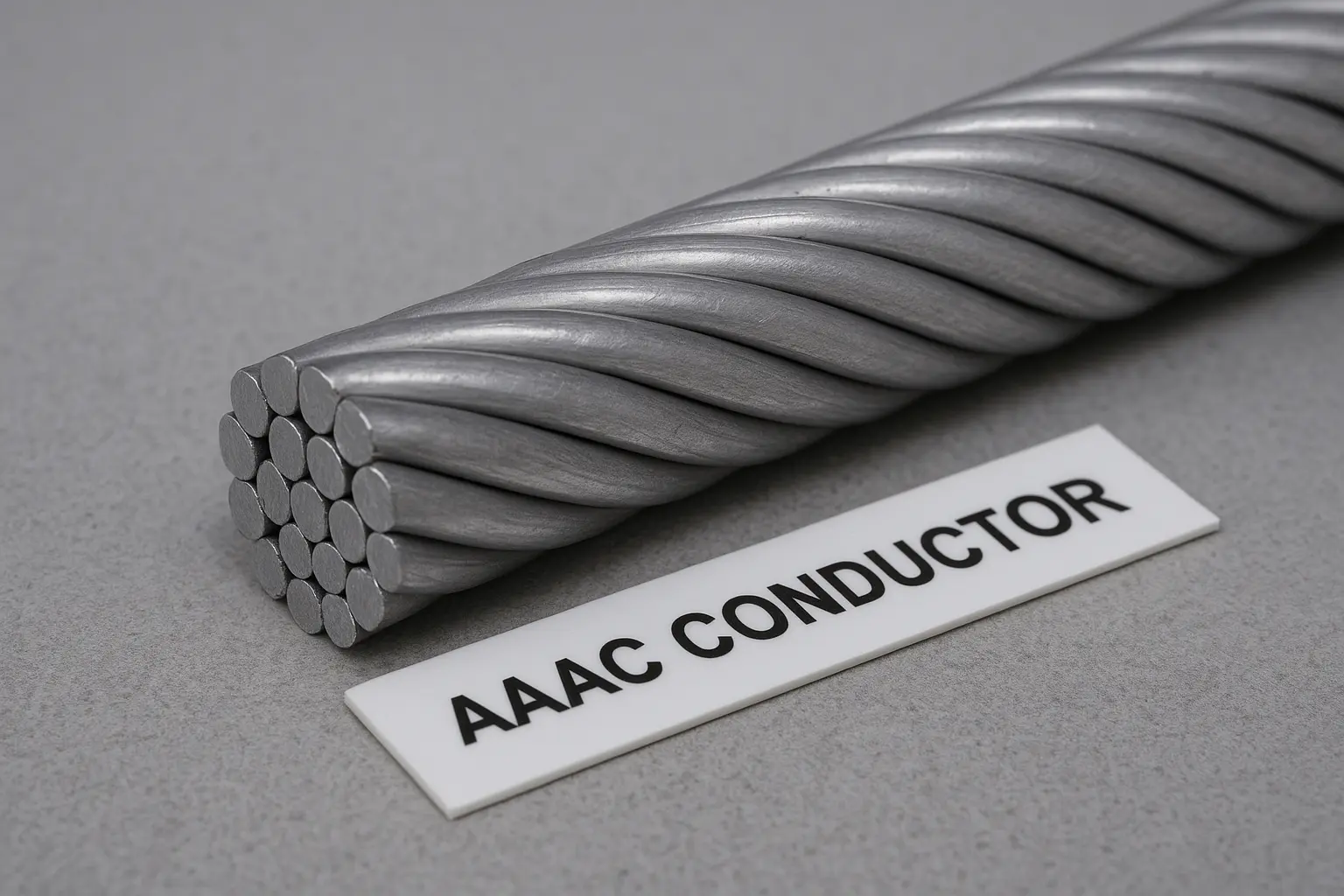
In modern transmission and distribution networks, selecting the right AAAC conductor is a critical decision that directly affects line reliability, sag performance, corrosion resistance, and long-term project cost. For utilities, EPC contractors, engineers, and procurement teams, the challenge is balancing mechanical strength, weight, conductivity, and environmental durability especially in coastal, mountainous, river-crossing, and long-span installations.
HNBF Power, a global manufacturer of overhead conductors and power cables, delivers high-performance AAAC conductor solutions engineered to international standards for utility-grade applications. Their AAAC range is designed with high-strength aluminum alloy strands to provide an excellent strength-to-weight ratio, making it ideal for modern grid expansion and power distribution upgrades.
What Is an AAAC Conductor?
AAAC (All Aluminum Alloy Conductor) is a stranded bare overhead conductor made entirely from aluminum-magnesium-silicon alloy wires. Unlike AAC conductors that prioritize conductivity, AAAC offers a stronger balance between electrical efficiency and mechanical durability.
The key reason engineers specify AAAC is its superior tensile strength combined with lighter weight. This makes it highly effective in:
- Medium and long-span overhead transmission lines
- Primary and secondary distribution networks
- River and valley crossings
- Coastal and industrial corrosive environments
- Mountainous utility infrastructure projects
HNBF Power manufactures AAAC conductors according to major global standards such as IEC 61089, ASTM B399, DIN 48201, BS EN 50183, and AS 1531, ensuring project compliance for international tenders and grid specifications.
Why AAAC Solves Common Utility Project Pain Points
1) Better Corrosion Resistance for Harsh Environments
One of the most common buyer pain points is premature conductor degradation in humid, saline, or polluted zones.
Because AAAC uses aluminum alloy throughout the full conductor construction, it offers significantly improved corrosion resistance compared with steel-reinforced alternatives. This makes it a strong choice for:
- Coastal substations
- Marine transmission corridors
- Chemical industrial zones
- High-humidity tropical regions
For procurement teams, this means lower maintenance cycles and reduced replacement risk over the conductor lifecycle.
2) Improved Sag Performance on Long Spans
Utilities often face clearance issues caused by conductor sag under heat load and long-distance spans.
AAAC’s higher mechanical strength helps maintain better sag characteristics than pure AAC, improving:
- Tower-to-tower span efficiency
- Ground clearance compliance
- Reduced risk during thermal expansion
- Safer operation in high-temperature regions
This directly supports cost savings by reducing the need for extra support structures.
3) Lightweight Design Reduces Tower Stress
For EPC contractors optimizing total project CAPEX, lighter conductors reduce load pressure on poles and towers.
AAAC’s high strength with reduced weight allows:
- Faster stringing operations
- Lower transport and handling cost
- Improved installation efficiency
- Reduced structural design requirements
This becomes especially valuable in remote grid expansion projects.
Why HNBF Power Is a Smart AAAC Conductor Supplier Choice
Choosing a conductor supplier is not only about the product—it is about supply reliability, technical support, and standards compliance.
HNBF Power naturally stands out for global utility buyers because of its:
International Standard Manufacturing
Their AAAC conductor portfolio is built for major international compliance frameworks, simplifying tender approvals and engineering documentation.
Strong Production Capacity
With large-scale manufacturing capabilities and utility export experience, HNBF Power supports:
- Bulk utility orders
- EPC project timelines
- OEM/private label supply
- Custom drum packaging requirements
- Region-specific standard customization
Custom Engineering Support
Different projects demand different alloy grades, conductor sizes, tensile strengths, and drum lengths.
HNBF Power helps engineers and procurement buyers customize:
- Cross-sectional area
- Stranding construction
- Drum length
- Standard selection
- Packaging type
- Marking requirements
This reduces sourcing friction and speeds up project procurement cycles.
Applications Where AAAC Delivers the Best ROI
Transmission Line Upgrades
For utilities replacing aging bare conductors, AAAC improves:
- Reliability
- Corrosion life
- Span efficiency
- Lower maintenance cost
Rural Electrification
For developing grid networks, AAAC provides durable and economical overhead distribution solutions.
Renewable Energy Grid Connections
Solar and wind evacuation lines often require long-span lightweight conductors where AAAC performs exceptionally well.
Coastal Infrastructure Projects
Ports, offshore-support facilities, and coastal industrial parks benefit from AAAC’s corrosion-resistant alloy construction.
How Procurement Teams Should Evaluate AAAC Conductors
Before issuing RFQs, buyers should assess these critical points:
Mechanical Requirements
Check:
- Breaking load
- Tensile strength
- Sag performance
- Span length suitability
Environmental Conditions
Define:
- Coastal or inland use
- Pollution class
- Humidity level
- Wind and ice loading
Compliance Requirements
Match tender specifications with:
- IEC
- ASTM
- BS
- DIN
- Local utility standards
HNBF Power supports these customized project requirements with utility-grade manufacturing flexibility.
FAQs About AAAC Conductor
What is the main advantage of AAAC conductor?
The biggest advantage is its high strength-to-weight ratio, giving better sag performance and corrosion resistance for overhead transmission and distribution lines.
Is AAAC better than AAC?
For projects needing higher mechanical strength and longer spans, yes. AAAC generally performs better than AAC in structural and environmental durability.
Where is AAAC conductor commonly used?
It is widely used in overhead transmission, distribution feeders, coastal grids, river crossings, and long-span utility networks.
Can HNBF Power customize AAAC conductor specifications?
Yes. HNBF Power can customize conductor size, stranding design, standards, drum packaging, and project-based technical requirements.
Which standards does HNBF Power follow for AAAC?
Common supported standards include IEC 61089, ASTM B399, DIN, BS, and AS standards.
Partner with HNBF Power for Customized AAAC Conductor Solutions
If your utility, EPC, or industrial power project requires a reliable AAAC conductor supplier with international standards compliance, strong production capacity, and project-based customization, HNBF Power is ready to support your requirements.
Contact HNBF Power today for customized AAAC conductor solutions, technical datasheets, bulk pricing, and fast global project delivery support.