English
 Arabic
 French
 Spanish
 Portuguese
 Deutsch
 Turkish
 Dutch
Dutch
 Italiano
 Russian
 Romaian
 Portuguese (Brazil)
 Greek
Greek
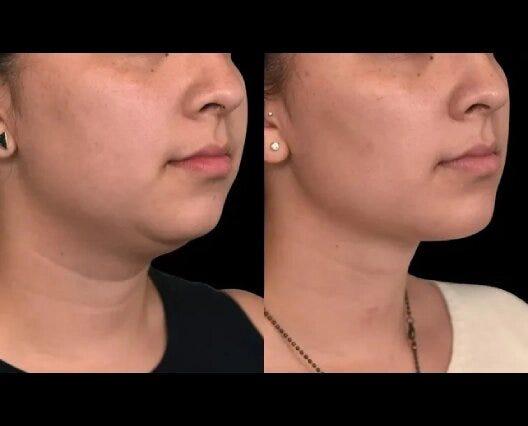
Corrective Jaw Surgery: Combining Functionality with Aesthetic Refinement
For many individuals seeking a Jawline Treatment Riyadh, the journey begins with a desire for a more balanced and attractive profile. However, when the underlying issue is a significant skeletal discrepancy—such as a protruding lower jaw, a receding chin, or an asymmetrical bite—superficial treatments like fillers or threads may only offer a temporary or incomplete camouflage. This is where corrective jaw surgery, also known as orthognathic surgery, becomes the definitive solution. Unlike purely cosmetic procedures, orthognathic surgery is a specialized field that bridges the gap between medical necessity and aesthetic refinement. By physically repositioning the maxillary (upper) or mandibular (lower) bones, surgeons can resolve functional problems related to chewing, speaking, and breathing, while simultaneously creating the foundational structure for a crisp, high-definition jawline that lasts a lifetime.
The Intersection of Health and Appearance
Orthognathic surgery is rarely a solo endeavor; in Riyadh’s advanced medical centers, it is typically a collaborative process involving a maxillofacial surgeon and an orthodontist. The primary goal is often functional: correcting a malocclusion (misaligned bite) that can lead to chronic jaw pain, premature tooth wear, or even obstructive sleep apnea. Yet, because the jawbones form the literal framework of the lower face, the aesthetic "side effects" are often life-changing.
When a recessed jaw is moved forward, it naturally stretches the soft tissues of the neck and chin, eliminating the appearance of a "weak" profile and sharpening the mandibular angle. Conversely, reducing a protruding jaw can soften a heavy, aggressive lower face, bringing the features into a more heart-shaped or oval harmony. This dual benefit—improving how the jaw works while perfecting how it looks—makes corrective surgery one of the most transformative procedures in the realm of facial reconstruction.
Common Conditions Addressed by Jaw Surgery
Corrective surgery is designed to address structural issues that cannot be solved through braces or camouflage aesthetics alone.
-
Mandibular Retrognathia (Receding Jaw): This condition often results in a "short" lower face and a sloped jawline. Surgery brings the lower jaw forward, creating immediate projection and a clear separation between the face and neck.
-
Mandibular Prognathism (Protruding Jaw): An overdeveloped lower jaw can create a "strong" but sometimes unbalanced look. Surgery repositions the bone backward to achieve a more neutral, balanced profile.
-
Facial Asymmetry: When one side of the jaw has grown more than the other, it can create a slanted appearance. Surgical correction aligns the midline of the face, ensuring that the jawline looks symmetrical from every angle.
-
Open Bite or Crossbite: By aligning the jaws, surgeons ensure the lips can close naturally and comfortably, which prevents the strained appearance often seen in the chin area (mentalist strain) when someone with an open bite tries to close their mouth.
The Surgical Process: Precision and Planning
Modern jaw surgery in the city utilizes state-of-the-art 3D imaging and virtual surgical planning. This allows surgeons to "perform" the surgery on a digital model of the patient’s skull before ever entering the operating room. This level of precision ensures that the movements—often measured in millimeters—will result in both a perfect bite and an aesthetically pleasing profile.
The procedure itself is performed under general anesthesia. Most modern techniques involve internal incisions made entirely inside the mouth, which means there are no visible external scars on the face. The bones are repositioned and secured with tiny, biocompatible titanium plates and screws. Over time, the bone heals and fuses in its new, optimal position. While the surgery is more intensive than non-surgical contouring, the results are structural and permanent; the "new" jawline is not a product of an injectable gel, but a fundamental change to the person’s own skeletal architecture.
Recovery and the Aesthetic "Final Reveal"
Choosing the surgical path requires a period of dedicated recovery, but for most patients, the long-term benefits far outweigh the short-term downtime.
-
Initial Healing: Patients usually spend one or two nights in the hospital for monitoring. Swelling is most significant in the first week but begins to subside rapidly thereafter.
-
Nutritional Adjustments: Because the jaw needs time to heal, a liquid or very soft-food diet is typically required for the first few weeks.
-
The Result: While the functional improvements (like a better bite) are noticed almost immediately, the full aesthetic refinement of the jawline emerges over 3 to 6 months as the swelling completely disappears and the soft tissues settle over the new bone structure.
The Psychological Impact of a Balanced Profile
Beyond the physical and functional changes, the psychological impact of corrective jaw surgery is profound. Many individuals who have lived with a recessed or asymmetrical jaw feel a renewed sense of confidence once their profile is brought into balance. A strong, well-defined jawline is often associated with vitality and self-assurance. By correcting the foundation of the face, orthognathic surgery provides a permanent "reset," allowing individuals to move through the world with a profile that reflects their internal strength. In a metropolitan hub like Riyadh, where professional and social presence is highly valued, this blend of functional health and aesthetic precision offers the ultimate solution for a truly defined look.