English
 Arabic
 French
 Spanish
 Portuguese
 Deutsch
 Turkish
 Dutch
Dutch
 Italiano
 Russian
 Romaian
 Portuguese (Brazil)
 Greek
Greek
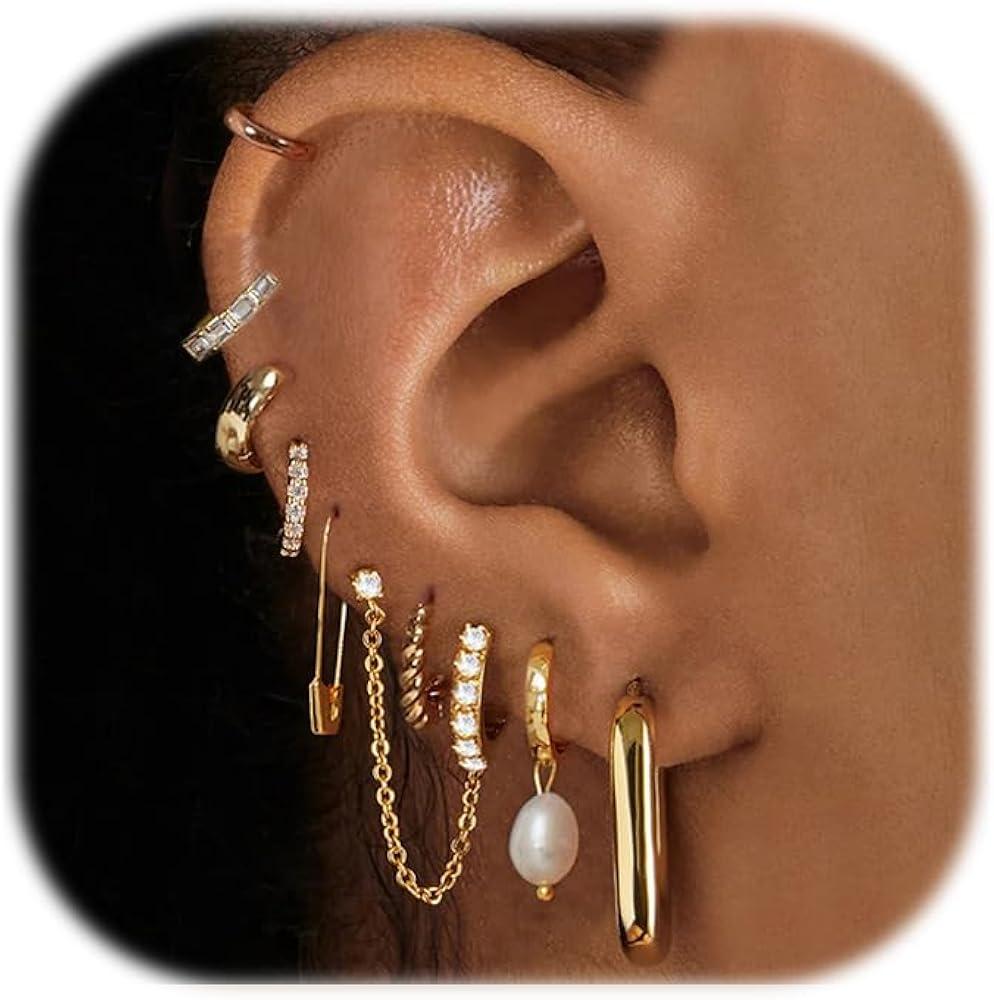
Daith Piercing: Aesthetic Appeal and Placement Considerations
The daith piercing occupies a unique and visually arresting position within the ear’s anatomy, making it a favorite for those seeking to add a "central" masterpiece to their collection. For individuals pursuing a professional Ear Piercing in Riyadh, the daith is often the crowning achievement of a curated ear. Located at the innermost fold of the ear’s cartilage, just above the ear canal, the daith is situated on the crus of the helix. Unlike other piercings that sit on the outer rim, the daith "hugs" the internal structure of the ear, often featuring ornate hoops or clickers that seem to emerge directly from the ear's interior. Because this area involves thick, dense cartilage and a tight anatomical space, the procedure requires a specialized level of clinical expertise to ensure the placement is both aesthetically striking and biologically sound.
The Anatomy of the Daith: A Precision Placement
The "daith" is not just a random point; it is a specific anatomical landmark. Successful placement depends entirely on the unique shape of the patient's ear.
-
Structural Assessment: A professional will assess the "crus of the helix" to ensure it is prominent enough to support jewelry. If the fold is too shallow, the piercing may be prone to "rejection" or "migration."
-
The "Tucked" Look: The aesthetic goal of a daith is for the jewelry to appear as though it is perfectly centered and "tucked" into the ear. This requires the specialist to map the entry and exit points deep within the fold, ensuring the jewelry sits symmetrically relative to the tragus and the ear canal.
-
Depth Control: Because the daith is located near the entrance of the ear canal, the specialist must ensure the needle path does not interfere with the canal's opening. This level of depth control is only possible with a trained professional using precision instruments.
Specialized Equipment: The Curved Needle Technique
Due to the "C-shaped" contour of the daith's location, it is one of the more technically challenging piercings to perform.
-
The Receiving Tube: Professionals often use a sterile "receiving tube" or a specialized curved needle to navigate the tight fold of the inner ear. This allows the practitioner to guide the needle through the dense cartilage without affecting the surrounding tissue.
-
Hollow Needle Precision: A surgical-grade hollow needle is almost universally preferred for the daith. It removes a tiny core of tissue, which reduces the internal pressure on the cartilage. This is crucial for preventing "cartilage blowout" or the formation of unsightly bumps during the healing process.
-
Aseptic Integrity: In a clinical environment, the practitioner establishes a rigorous sterile field. Every component, including the jewelry and the tools used to stabilize the ear, is medical-grade and single-use, ensuring a complication-free procedure.
Jewelry Selection: The "Hoop-First" Piercing
The daith is one of the few cartilage piercings where a hoop (specifically a captive bead ring or a seamless clicker) is often used as the initial jewelry.
-
Medical-Grade Titanium: To ensure the body accepts the piercing, 100% biocompatible Titanium is used. It is resistant to the moisture that naturally accumulates in the inner ear and does not leach allergens into the wound.
-
Proper Sizing: The diameter of the hoop must be carefully selected to accommodate the initial swelling. If the hoop is too small, it will put "pinching" pressure on the wound; if it is too large, it may move excessively, irritating the healing tissue.
-
Internal Smoothness: Professional daith jewelry is polished to a mirror finish. This smoothness allows the hoop to move slightly without dragging bacteria or rough edges through the new skin tunnel, facilitating a more comfortable recovery.
The Healing Timeline and Biological Considerations
Healing a daith piercing is a commitment. Because the area is tucked away, it stays warmer and more humid than the outer ear, which affects the healing environment.
-
Months 1–3: The acute healing phase. You can expect some tenderness and "throbbing" during the first few weeks. It is critical to avoid "playing" with the jewelry or rotating the hoop.
-
Months 4–9: The formation of the fistula. The body is lining the puncture with skin. During this time, "crusting" is normal and should be managed with sterile saline irrigation.
-
1 Year+: A daith piercing is generally considered fully mature after 12 months. Only then should you consider switching to more decorative or intricate jewelry styles.
Maintenance and the "No-Touch" Protocol
Because of its deep placement, the daith requires a specific cleaning strategy to avoid irritation.
-
Saline Irrigation: Use a sterile saline spray twice a day. The goal is to flush away debris without physically touching the piercing.
-
The "LITHA" Rule: Professionals advocate for the "Leave It The Heck Alone" (LITHA) method. The more the jewelry is moved, the higher the risk of developing Hypertrophic Scarring or "pressure bumps."
-
Dry Cleaning: After showering or using saline, the area must be dried carefully. Moisture trapped in the fold of the daith can lead to fungal or bacterial overgrowth. A hair dryer on a "cool" setting is an excellent tool for ensuring the inner ear stays dry.
The Myths and Realities of the Daith
There is significant public discussion regarding the daith piercing and its potential relationship with migraine relief. From a clinical perspective, it is important to distinguish between aesthetic enhancement and medical treatment.
-
Aesthetic Focus: The primary purpose of a daith piercing is cosmetic. It is a beautiful, sophisticated addition to your ear curation.
-
Vagus Nerve Stimulation: While some individuals report a reduction in migraine frequency, clinical evidence is currently anecdotal. A daith piercing should be sought for its style and sophistication, with any potential physiological benefits considered a secondary, unconfirmed possibility.
Conclusion: A Masterpiece of Inner-Ear Design
The daith piercing is a striking example of how style meets sophistication in the world of body modification. Its central placement provides a balanced anchor for the rest of your ear curation, offering a look that is both bold and intimate. By prioritizing anatomical suitability, sterile medical-grade equipment, and high-quality biocompatible materials, you ensure that your daith piercing is a healthy and permanent success. Through professional care and a disciplined healing routine, the daith becomes a radiant centerpiece of your personal identity, reflecting a commitment to both aesthetic excellence and biological integrity.