English
 Arabic
 French
 Spanish
 Portuguese
 Deutsch
 Turkish
 Dutch
Dutch
 Italiano
 Russian
 Romaian
 Portuguese (Brazil)
 Greek
Greek
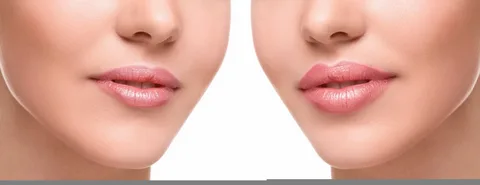
Managing Thin Lips: Long-Term Strategies for Volume Retention
For individuals with naturally thin labial tissue, the clinical objective often shifts from a one-time enhancement to a sustainable, multi-year strategy for volume retention. When approaching Lip Augmentation Riyadh, it is essential to recognize that thin lips have a limited "tissue envelope." Overfilling this small space in a single session can lead to filler migration, where the product moves above the lip line, creating an unnatural "mustache" shadow. A successful long-term strategy focuses on "tissue expansion"—slowly and safely increasing the lip's capacity to hold volume over time. By combining conservative, phased filler treatments with advanced skin-quality therapies, patients can achieve a significant, lasting transformation that respects their natural anatomy and prevents the "over-processed" look.
The Biological Constraints of Thin Lips
Clinically, thin lips are characterized by a smaller mucosal surface area and less subcutaneous fat. This means there is less "room" for dermal fillers to sit comfortably.
-
The Pressure Factor: If too much hyaluronic acid is injected at once, the internal pressure of the tight tissue can squeeze the filler out toward the skin, leading to "lumps" or displacement.
-
Vascularity: Thin lips often have more superficial blood vessels, requiring a higher degree of precision and a "slow-flow" injection technique to minimize trauma and ensure even integration.
A long-term strategy manages these constraints by prioritizing structural integrity over immediate size, ensuring the lips remain soft and functional as volume is gradually added.
The "Staged Expansion" Protocol
The most effective way to manage thin lips is through a Phased Treatment Plan. Instead of using a full 1.0ml syringe in the first visit, a specialist may recommend the following:
-
Phase 1: Priming (0.5ml): The first session focuses on defining the vermillion border and providing a small "base" of volume. This "primes" the tissue, encouraging it to stretch slightly.
-
Phase 2: The Softener (6–8 Weeks Later): A second micro-dose is added. Because the tissue has already begun to adapt to the first treatment, this second layer integrates more smoothly, allowing for a more significant "pout" without a "shelf" effect.
-
Phase 3: Refinement (6 Months Later): Once the base is stable, "high-definition" techniques can be used to sculpt the Cupid’s bow and add central projection.
Choosing Fillers for "Micro-Layering"
For thin lips, the "rheology" (physical properties) of the filler is the difference between success and failure. Specialists often utilize a Layering Technique with different types of hyaluronic acid:
-
Foundation Layer: A filler with higher "cohesivity" is used to provide a structural border and prevent the lip from "collapsing" inward.
-
Surface Layer: An ultra-soft, low-viscosity filler (often referred to as a "skin booster") is placed in the mucosal layer. This draws in moisture and smooths out internal creases, giving thin lips a "pillowy" look without making them appear "hard."
Strategies for Long-Term Volume Retention
To ensure the volume lasts as long as possible, the clinical focus must extend beyond the injection itself to include bio-stimulation and lifestyle management.
-
Collagen Induction: Research shows that the mechanical stretching of the tissue by hyaluronic acid fillers stimulates "fibroblasts," the cells responsible for natural collagen production. Over several years of consistent, conservative treatments, the lips may naturally become "thicker" and more resilient, requiring less filler to maintain the same look.
-
The "Micro-Maintenance" Schedule: Rather than waiting for the filler to disappear completely, patients with thin lips benefit from "top-ups" every 6 to 9 months. Maintaining a constant "base" of product prevents the tissue from fully retracting, which keeps the "envelope" open and the shape crisp.
-
Internal Hydration: Hyaluronic acid is water-loving. Patients who maintain high levels of internal hydration and use medical-grade topical lip shields with SPF often see their filler last 20–30% longer than those who do not.
Avoiding the "Tension" Trap
One of the risks of managing thin lips long-term is the loss of natural movement. If the lips are filled beyond their anatomical "snap-back" point, they can look like "plastic" when the patient speaks.
To avoid this, specialists use the "Dynamic Assessment" method. During the procedure, the patient is asked to smile, pucker, and speak. If the filler looks "static" or "lumpy" during movement, it is a sign that the tissue tension is too high. The goal is a result that is "invisible in motion"—where the lips look full and lush but move with the same fluidity as natural, un-enhanced tissue.
Conclusion: Patience as a Clinical Tool
Managing thin lips is a journey of patience and precision. It requires a shift in mindset from "instant gratification" to "long-term architectural development." By utilizing a staged expansion protocol and high-quality, biocompatible fillers, individuals with naturally thin features can achieve beautiful, sustainable volume that enhances their entire facial harmony. This disciplined approach ensures that the lips remain healthy, hydrated, and youthful, providing a confident smile that stands the test of time. In the hands of a skilled specialist, thin lips are not a limitation, but a canvas for subtle, sophisticated, and enduring beauty.