English
 Arabic
 French
 Spanish
 Portuguese
 Deutsch
 Turkish
 Dutch
Dutch
 Italiano
 Russian
 Romaian
 Portuguese (Brazil)
 Greek
Greek
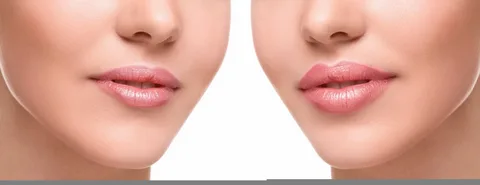
Dissolving Fillers: How to Safely Reverse or Adjust Lip Augmentation
In the modern era of aesthetic medicine, the ability to modify or reverse a procedure is as essential as the initial treatment itself. For individuals undergoing Lip Augmentation Riyadh, the use of hyaluronic acid (HA) fillers provides a significant clinical advantage: they are fully reversible. Whether a patient is experiencing "filler fatigue," dealing with migration (where product moves above the lip line), or simply desires a more subtle look, the biological "undo button" exists in the form of a specialized enzyme called hyaluronidase. This enzyme allows practitioners to safely and effectively break down synthetic HA, restoring the lips to their natural state or creating a "blank canvas" for a more precise re-augmentation. Understanding the clinical process of dissolution is vital for any patient who values safety, flexibility, and the long-term health of their facial anatomy.
The Science of Hyaluronidase
Hyaluronidase is a naturally occurring enzyme that the human body uses to regulate its own hyaluronic acid levels. In a clinical setting, a concentrated version of this enzyme is used to "de-polymerize" the cross-linked chains of dermal fillers.
When injected into the area containing the filler, the enzyme works like a chemical "key," breaking the bonds that hold the HA gel together. Once these bonds are broken, the filler turns back into its liquid form and is absorbed and excreted by the body’s lymphatic system. Because hyaluronidase is specific to hyaluronic acid, it does not permanently damage the patient’s own natural tissue; while it may temporarily break down some of the body's native HA, the skin naturally replenishes its own supply within 24 to 48 hours.
Common Reasons for Seeking Dissolution
Dissolving filler is not always a sign of a "failed" procedure; often, it is a strategic choice to improve the long-term aesthetic.
-
Filler Migration: Over time, or due to over-filling, product can migrate toward the "white roll" of the lip, causing the dreaded "filler mustache." Dissolving this migrated product restores the crispness of the lip border.
-
Lumps and Nodules: If a filler was injected too superficially or if the body has encapsulated the product, small firm bumps may appear. Hyaluronidase can target these specific areas to smooth the texture.
-
The "Reset" Strategy: Many patients who have had multiple treatments over several years choose to dissolve their old filler completely. This allows the specialist to start fresh, applying modern techniques like the "Russian Lip" or "Keyhole Pout" on tissue that is no longer distorted by aged, degraded product.
-
Vascular Compromise: In rare, emergency cases where filler accidentally enters a blood vessel, immediate dissolution is a critical safety protocol used to restore blood flow to the area.
The Clinical Procedure: What to Expect
The process of dissolving fillers is a clinical procedure that requires precision and a staged approach.
-
Allergy Testing: Because hyaluronidase is an enzyme, a "patch test" is often performed on the forearm before the procedure to ensure the patient does not have a hypersensitivity to the material.
-
Targeted Injections: The practitioner uses a very fine needle to inject the enzyme directly into the pockets of filler. The amount of enzyme used is carefully calculated based on the volume and type of filler being dissolved.
-
The Dissolving Window: Unlike the instant volume of a filler, dissolution takes a little time. While some softening occurs immediately, the full effect of the enzyme is typically seen between 24 to 72 hours after the injection.
-
Localized Swelling: Patients should expect moderate swelling during the first 24 hours. The chemical reaction between the enzyme and the filler can cause a temporary inflammatory response, which is a normal biological part of the breakdown process.
Rheology and "Stubborn" Fillers
Not all fillers dissolve with equal ease. The "rheology" or chemical makeup of the specific brand used impacts how many sessions of hyaluronidase may be required.
-
Highly Cross-Linked Fillers: Denser gels designed for high projection or longevity often require multiple rounds of dissolution. The enzyme has to work harder to penetrate the "tighter" chemical bonds of these products.
-
Layered Fillers: If a patient has received multiple brands of filler over several years, the practitioner must be patient, as different layers may react to the enzyme at different speeds.
Because of this variability, most clinical protocols suggest a "dissolve and wait" period of at least two weeks before attempting to re-fill the lips. This ensures the enzyme is fully out of the system and the tissue has returned to its natural, soft baseline.
Managing the "Post-Dissolve" Transition
When the filler is gone, patients often feel that their lips look "smaller" than they did before they ever had fillers. This is usually a psychological adjustment to the sudden loss of volume.
In reality, the tissue is simply returning to its original anatomical state. During the two-week waiting period before a re-fill, patients are encouraged to use medical-grade topical hydrators to support the skin’s barrier. This "resting period" is essential because it allows the specialist to accurately assess the natural symmetry and volume of the lips, ensuring that the new augmentation is perfectly tailored to the "blank canvas."
Conclusion: Flexibility in Aesthetics
The ability to safely dissolve and adjust lip fillers is one of the most significant advancements in aesthetic safety. It ensures that no patient is "stuck" with a look they no longer love and provides a pathway for corrective work that maintains the highest standards of facial harmony. By treating hyaluronidase as a sophisticated clinical tool, specialists can offer a level of precision and peace of mind that was previously impossible. Whether you are seeking a minor adjustment or a total reset, the dissolution process is a testament to the fact that modern beauty is not about permanent changes, but about the freedom to refine and evolve your profile with total confidence.