English
 Arabic
 French
 Spanish
 Portuguese
 Deutsch
 Turkish
 Dutch
Dutch
 Italiano
 Russian
 Romaian
 Portuguese (Brazil)
 Greek
Greek
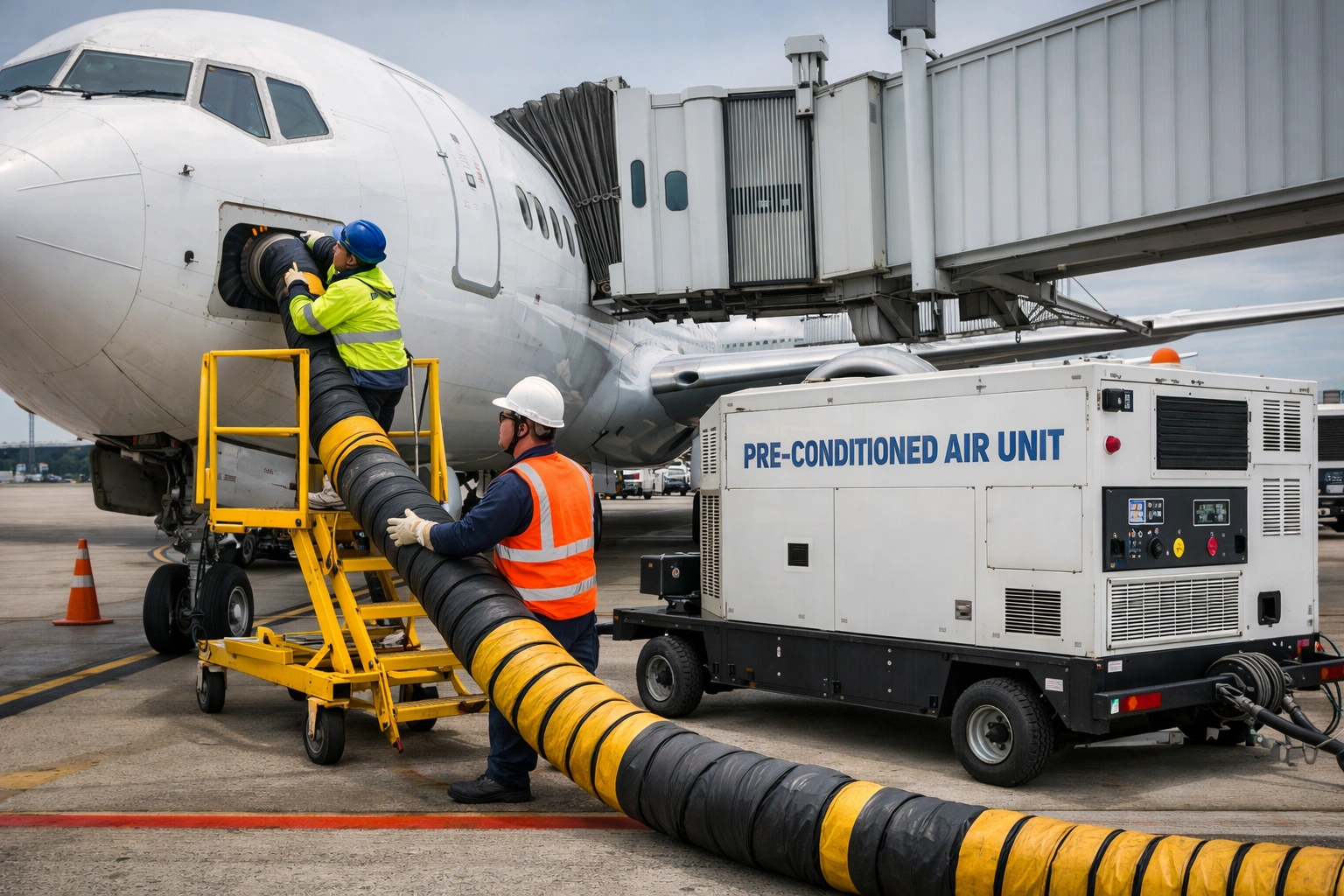
Efficient ground operations are critical in the aviation industry, where aircraft turnaround time directly impacts airline schedules, passenger comfort, and operational costs. One of the most essential yet often overlooked systems in this process is the airplane pre-conditioning air unit (PCA unit) a vital ground support system that delivers temperature-controlled air to aircraft while they are parked at the gate.
For airports, MRO facilities, and aviation service providers, investing in reliable and high-performance pre-conditioning air systems is no longer optional it is a necessity. DREZ Aircon, a leading manufacturer of portable and industrial HVAC solutions, delivers advanced cooling systems designed to support demanding environments like aviation aprons, hangars, and temporary operational setups.
Understanding Airplane Pre-Conditioning Air Units in Aviation Operations
An airplane pre-conditioning air unit is a specialized HVAC system used on the ground to supply conditioned air (cool or warm) into an aircraft cabin while the engines are off. This eliminates the need to run the aircraft’s Auxiliary Power Unit (APU), significantly reducing fuel consumption and emissions.
Key functions include:
- Supplying cooled or heated air to aircraft cabins
- Maintaining passenger comfort during boarding and parking
- Reducing reliance on onboard APUs
- Supporting energy-efficient airport operations
In high-traffic airports or extreme weather conditions, PCA units become essential for maintaining operational efficiency and passenger satisfaction.
Key Challenges Faced in Aircraft Ground Cooling Systems
Aviation environments demand HVAC systems that can withstand extreme operational pressure. However, many airports and ground handling operators face challenges such as:
1. High Fuel Dependency of APUs
Running aircraft APUs for cabin cooling consumes significant fuel, increasing operational costs for airlines.
2. Inconsistent Cooling Performance
Older or low-quality PCA systems often fail to maintain stable airflow and temperature, especially in hot climates.
3. Mobility and Space Constraints
Airports require compact, highly mobile cooling units that can be easily positioned near different aircraft stands.
4. Harsh Environmental Conditions
Dust, heat, humidity, and continuous operation demand industrial-grade durability.
5. Maintenance Downtime
Frequent breakdowns in low-quality units lead to operational delays and increased maintenance costs.
These challenges highlight the need for robust, efficient, and portable air conditioning solutions tailored for aviation environments.
DREZ Aircon’s Advanced Approach to Airplane Pre-Conditioning Cooling
DREZ Aircon delivers next-generation industrial cooling systems designed to meet the strict requirements of aviation ground support operations. Our portable and industrial air conditioning units are engineered for performance, efficiency, and reliability in high-demand environments like airports and aircraft hangars.
Why DREZ Aircon stands out:
High-Efficiency Cooling Technology
Our systems are designed to deliver powerful, consistent airflow capable of rapidly stabilizing aircraft cabin temperatures, even under extreme ambient conditions.
Aviation-Grade Durability
Built with industrial components, DREZ units withstand continuous operation, dust exposure, and outdoor airport environments.
Portable & Flexible Design
Mobility is essential in aviation operations. Our portable HVAC systems can be easily positioned near aircraft stands, maintenance hangars, or remote aprons.
Energy-Saving Performance
By replacing or reducing APU usage, our solutions help airlines and airport operators significantly cut fuel consumption and carbon emissions.
Custom Industrial Configurations
We provide tailored HVAC solutions for different aircraft sizes, airport layouts, and operational requirements.
Technical Benefits of Using DREZ Pre-Conditioning Air Solutions
Integrating DREZ Aircon systems into airport ground operations offers measurable operational advantages:
Improved Passenger Comfort
Ensures a stable cabin environment during boarding and pre-departure phases.
Reduced Operational Costs
Minimizes aircraft APU usage, saving fuel and reducing engine wear.
Faster Turnaround Times
Efficient cooling reduces delays in boarding and maintenance preparation.
Environmental Compliance
Supports green airport initiatives by lowering emissions and fuel consumption.
Reliable Continuous Operation
Designed for 24/7 industrial use in high-pressure aviation environments.
Applications of Airplane Pre-Conditioning Air Units
DREZ Aircon systems are widely applicable across aviation and industrial cooling environments, including:
• Commercial Airports
Gate-side cooling for passenger aircraft during boarding and disembarkation.
• Aircraft Maintenance Hangars
Temperature control during repair, inspection, and servicing operations.
• Military Airbases
Reliable ground cooling for tactical and transport aircraft.
• Charter & Private Aviation Terminals
Premium cabin comfort solutions for private jets and business aviation.
• Temporary Aviation Operations
Emergency or seasonal airport setups requiring portable HVAC deployment.
Why Airports and Aviation Operators Prefer DREZ Aircon
Modern aviation demands efficiency, sustainability, and reliability. DREZ Aircon combines all three into a single solution framework. Our systems are not just cooling units they are strategic assets that help airports optimize operations and reduce environmental impact.
With increasing pressure on airlines to reduce emissions and improve turnaround efficiency, investing in advanced PCA systems is becoming a standard requirement rather than an upgrade.
DREZ Aircon supports aviation stakeholders with:
- Engineering-grade HVAC equipment
- Portable and industrial cooling systems
- Customized airflow solutions for large-scale operations
Frequently Asked Questions (FAQs)
1. What is an airplane pre-conditioning air unit used for?
It is used to supply cooled or heated air to aircraft cabins while parked on the ground, reducing the need to run the aircraft’s onboard auxiliary power unit (APU).
2. Why is PCA important in airport operations?
It improves passenger comfort, reduces fuel consumption, lowers emissions, and speeds up aircraft turnaround times.
3. Can DREZ Aircon units be used for different aircraft sizes?
Yes, DREZ Aircon offers scalable and customizable HVAC solutions suitable for small regional aircraft to large commercial jets.
4. Are portable air conditioning units effective for aviation use?
Yes, industrial-grade portable HVAC systems are widely used in airports due to their mobility, efficiency, and adaptability.
5. Does DREZ Aircon provide customized industrial cooling solutions?
Yes, DREZ Aircon specializes in tailored HVAC systems designed to meet specific aviation, industrial, and event cooling requirements.
Conclusion: Smarter Ground Cooling for Modern Aviation
As aviation continues to evolve, the need for efficient ground cooling systems becomes increasingly critical. The airplane pre-conditioning air unit plays a vital role in reducing operational costs, enhancing passenger comfort, and supporting sustainable airport operations.
With DREZ Aircon’s advanced portable and industrial HVAC solutions, airports and aviation service providers can achieve higher efficiency, lower fuel dependency, and improved operational performance.
Request a Custom Aviation Cooling Solution Today
Looking for a reliable and high-performance airplane pre-conditioning air unit for your airport or aviation facility?
DREZ Aircon is ready to support your operations with industrial-grade portable cooling systems designed for real-world aviation challenges.
Contact us today to request a quote or explore our full range of portable and industrial HVAC solutions tailored for aviation, events, and industrial applications.