English
 Arabic
 French
 Spanish
 Portuguese
 Deutsch
 Turkish
 Dutch
Dutch
 Italiano
 Russian
 Romaian
 Portuguese (Brazil)
 Greek
Greek
How Tattoo Removal Works in General: A Complete Guide
Tattoo removal has become increasingly common as people’s preferences, lifestyles, and personal meanings change over time. While tattoos are designed to be permanent, modern technology now makes it possible to significantly fade or completely remove them. Understanding how tattoo removal works in general helps set realistic expectations about the process, results, and recovery. Tattoo removal in Riyadh has become a popular option for people looking to fade or completely remove unwanted ink using modern techniques.
Why Tattoo Removal Is Needed
People choose tattoo removal for many reasons. Some regret impulsive decisions, while others want to remove tattoos linked to past relationships, outdated beliefs, or poor-quality artwork. In other cases, professional requirements or personal aesthetics change over time. Whatever the reason, tattoo removal offers a way to “reset” the skin’s appearance.
However, it is important to understand that tattoo removal is a gradual process rather than a single quick treatment.
How Tattoos Are Placed in the Skin
To understand removal, it helps to first know how tattoos work. When a tattoo is created, ink is injected into the dermis, the second layer of skin beneath the outer surface (epidermis). This layer is stable, which is why tattoos remain visible for years without fading like surface-level markings.
The ink particles are too large for the body’s immune system to naturally eliminate them. As a result, they stay trapped in the skin, forming a permanent design.
The Science Behind Tattoo Removal
Modern tattoo removal is mainly based on one scientific principle: breaking ink particles into smaller fragments so the body can naturally remove them.
The immune system plays a key role here. Once ink particles are broken down into tiny pieces, white blood cells gradually carry them away through the lymphatic system. This process takes time, which is why multiple sessions are needed.
Laser Tattoo Removal: The Most Common Method
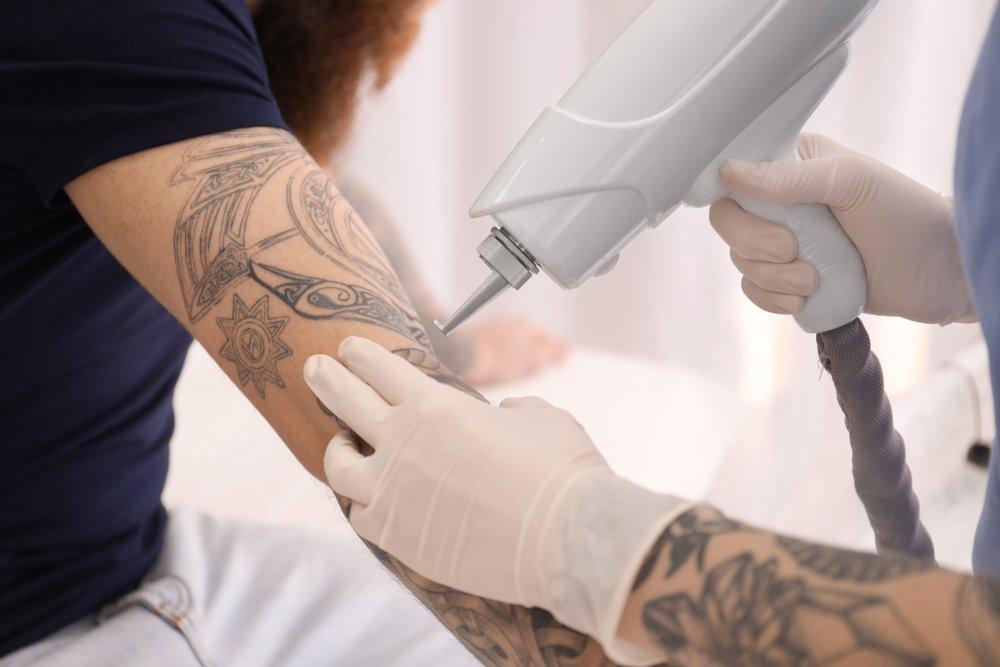
The most widely used and effective method today is laser tattoo removal. It works using high-intensity light pulses that target ink pigments beneath the skin.
Different laser wavelengths are used for different ink colors. For example, black ink is the easiest to remove because it absorbs all light wavelengths, while colors like green and blue can be more resistant and require specialized lasers.
During the procedure, the laser emits short bursts of energy that pass through the skin and are absorbed by the tattoo ink. This energy causes the ink particles to shatter into smaller fragments without severely damaging surrounding skin.
What Happens During a Session
A typical laser tattoo removal session is relatively quick, often lasting between 10 to 30 minutes depending on tattoo size. Before treatment, the area is usually cleaned and sometimes numbed with a topical anesthetic to reduce discomfort.
When the laser is applied, patients often describe the sensation as similar to a rubber band snapping against the skin. After the session, the treated area may appear red, swollen, or slightly blistered—this is a normal part of the healing process.
Healing and Body Response
After each session, the body begins its natural healing and removal process. The immune system slowly clears the broken ink particles over several weeks.
Healing time between sessions is crucial. Most professionals recommend waiting 6 to 8 weeks between treatments to allow the skin to recover and the body to process the fragmented ink.
Over time, the tattoo gradually fades with each session until it becomes barely visible or completely gone.
Number of Sessions Required
There is no fixed number of sessions for tattoo removal. It depends on several factors:
- Tattoo size and location
- Ink color and density
- Depth of ink placement
- Age of the tattoo
- Skin type and immune response
On average, complete removal can take anywhere from 6 to 12 sessions, though some tattoos may require more.
Other Tattoo Removal Methods
Although laser treatment is the most common, there are other methods as well:
- Surgical removal: The tattooed skin is cut out and stitched together. This is usually used for small tattoos.
- Dermabrasion: The skin is physically sanded to remove layers containing ink.
- Chemical removal: Certain acids or solutions are used to break down skin layers, though this is less common due to risks.
These methods are generally less preferred because they can cause scarring or inconsistent results.
Risks and Side Effects
Tattoo removal is generally safe when performed by trained professionals, but some side effects may occur:
- Temporary redness and swelling
- Blistering or scabbing
- Skin sensitivity
- Changes in skin pigmentation
- Rare risk of scarring
Proper aftercare significantly reduces these risks.
Conclusion
Tattoo removal works by breaking down ink particles so the body’s immune system can naturally eliminate them over time. Laser technology has made the process much safer and more effective than older methods, but it still requires patience, multiple sessions, and proper aftercare.
While tattoos are designed to be permanent, modern science has made it possible to reverse them to a large extent—offering people a second chance to change what is written on their skin.