English
 Arabic
 French
 Spanish
 Portuguese
 Deutsch
 Turkish
 Dutch
Dutch
 Italiano
 Russian
 Romaian
 Portuguese (Brazil)
 Greek
Greek
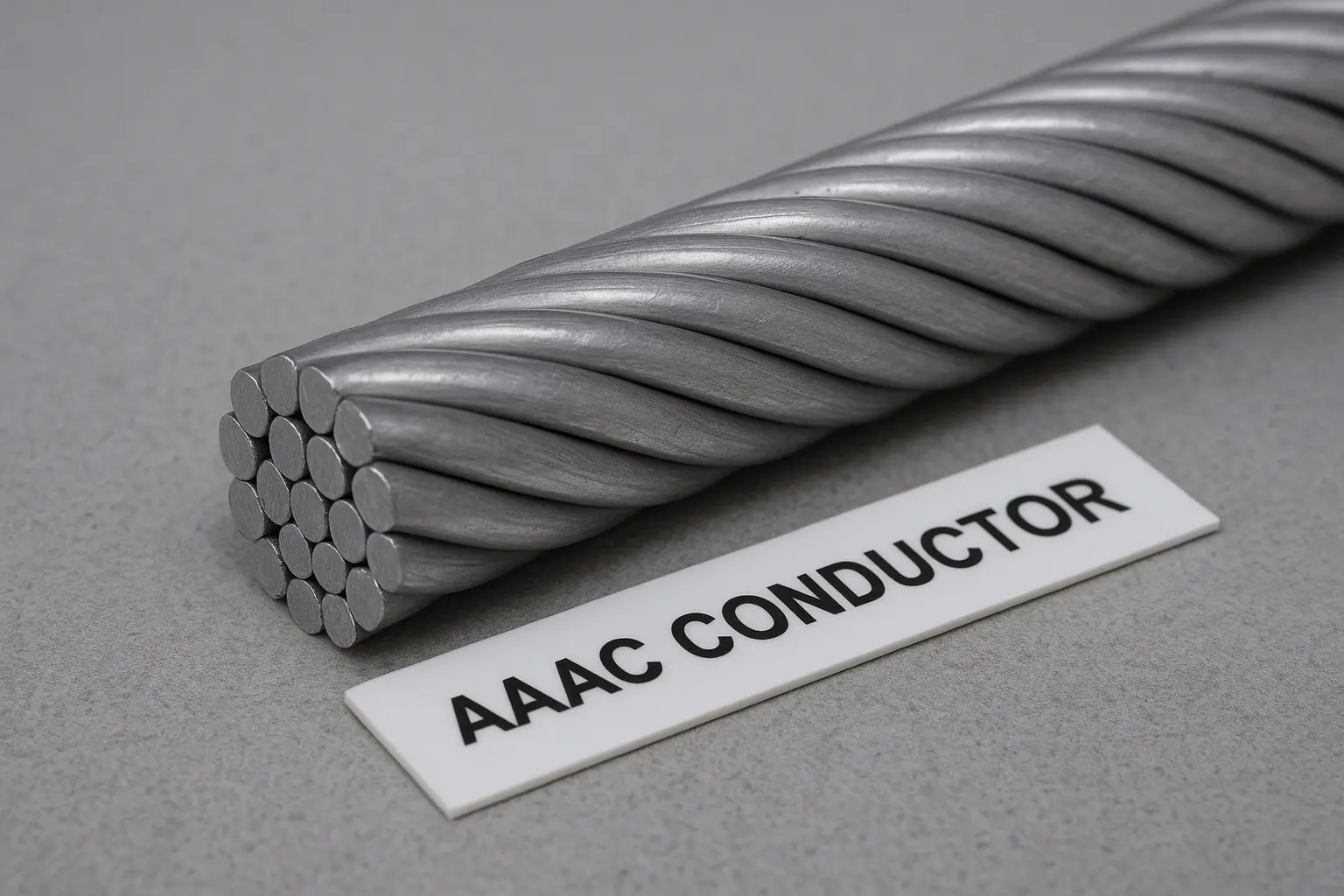
In today’s evolving power transmission and distribution industry, selecting the right overhead conductor is critical for efficiency, reliability, and long-term performance. Among the various options available, AAAC conductor (All Aluminum Alloy Conductor) stands out as a preferred choice for utility engineers, procurement specialists, and EPC contractors worldwide. At HNBF Power, we manufacture high-quality AAAC conductors designed to meet rigorous international standards and optimize power transmission across challenging environments.
What is an AAAC Conductor?
An AAAC conductor is made entirely from high-strength aluminum alloy strands, providing a combination of lightweight construction, excellent conductivity, and enhanced mechanical strength. Unlike conventional bare aluminum conductors (AAC) or ACSR conductors, AAAC conductors do not include a steel core. This makes them highly resistant to corrosion, particularly in coastal or industrial environments where exposure to moisture and pollutants is common.
Key advantages of AAAC conductors include:
-
High corrosion resistance: Ideal for areas prone to atmospheric corrosion.
-
Lightweight yet strong: Reduces tower load and simplifies installation.
-
Enhanced conductivity: Supports efficient power transmission over long distances.
-
Low sag: Maintains line stability, even under high temperatures.
At HNBF Power, our AAAC conductors are engineered for high performance, providing utilities and EPC contractors with reliable solutions that minimize operational risks.
Applications of AAAC Conductors
AAAC conductors are versatile and suitable for multiple overhead transmission and distribution applications. Some common use cases include:
-
Urban and rural electricity distribution: Lightweight design makes AAAC ideal for long-span power lines in urban and remote areas.
-
Coastal power projects: Corrosion resistance ensures long service life in coastal regions with high humidity and salt exposure.
-
Industrial installations: Robust mechanical strength allows use in industrial zones where environmental conditions are harsh.
-
Renewable energy transmission: Efficient conductivity supports integration with solar, wind, and hybrid energy systems.
By choosing AAAC conductors from HNBF Power, project planners and procurement teams benefit from a balance of durability, efficiency, and cost-effectiveness.
Technical Specifications of HNBF Power AAAC Conductors
HNBF Power manufactures AAAC conductors in compliance with international standards such as IEC, ASTM, and IS specifications. Our conductors are available in various sizes, diameters, and strand configurations to meet specific project requirements. Typical specifications include:
-
Material: High-strength aluminum alloy (AA-1350 or equivalent)
-
Tensile Strength: Up to 140 MPa (depending on size and alloy type)
-
Conductor Diameter: Ranges from 8 mm to 36 mm
-
Current Carrying Capacity: Engineered for optimal load efficiency
-
Corrosion Resistance: Superior performance in coastal and industrial zones
Each conductor undergoes rigorous quality testing at our manufacturing facility to ensure durability, conductivity, and compliance with global standards.
Advantages of Choosing HNBF Power AAAC Conductors
Selecting HNBF Power AAAC conductors offers tangible benefits for utility engineers, procurement teams, and project managers:
-
Customizable solutions: Tailored conductor designs for specific project conditions.
-
Global supply capability: Timely delivery for projects anywhere in the world.
-
Technical support: Guidance on conductor selection, installation, and maintenance.
-
Cost efficiency: Reduced maintenance and extended service life lower total project costs.
Our team works closely with clients to ensure each AAAC conductor meets performance expectations while adhering to budget and timeline constraints.
FAQs About AAAC Conductors
1. What is the main difference between AAAC and ACSR conductors?
AAAC conductors are made entirely of aluminum alloy, offering superior corrosion resistance, while ACSR conductors include a steel core for added tensile strength but are more prone to corrosion in harsh environments.
2. Can AAAC conductors be used in high-voltage transmission lines?
Yes, AAAC conductors are suitable for both medium- and high-voltage overhead transmission lines, providing stable performance under load.
3. How long do AAAC conductors last?
With proper installation and maintenance, AAAC conductors can last 30 years or more, especially in corrosive or coastal environments.
4. Are AAAC conductors heavier than traditional AAC conductors?
No, AAAC conductors are lightweight, often lighter than AAC conductors with comparable capacity, which reduces tower load and installation challenges.
5. Does HNBF Power provide custom sizes for AAAC conductors?
Absolutely. HNBF Power offers custom conductor designs tailored to project specifications, including diameter, current rating, and mechanical strength.
Conclusion
The choice of conductor can significantly influence the reliability, efficiency, and longevity of your power transmission system. AAAC conductors provide an excellent balance of mechanical strength, corrosion resistance, and conductivity, making them a preferred option for modern electrical networks.
At HNBF Power, we combine advanced manufacturing technology, stringent quality control, and global supply capabilities to deliver AAAC conductors that meet the needs of engineers, procurement teams, and utilities worldwide.
Contact HNBF Power today to discuss customized AAAC conductor solutions for your next project and experience reliable power transmission engineered for performance and durability.