English
 Arabic
 French
 Spanish
 Portuguese
 Deutsch
 Turkish
 Dutch
Dutch
 Italiano
 Russian
 Romaian
 Portuguese (Brazil)
 Greek
Greek
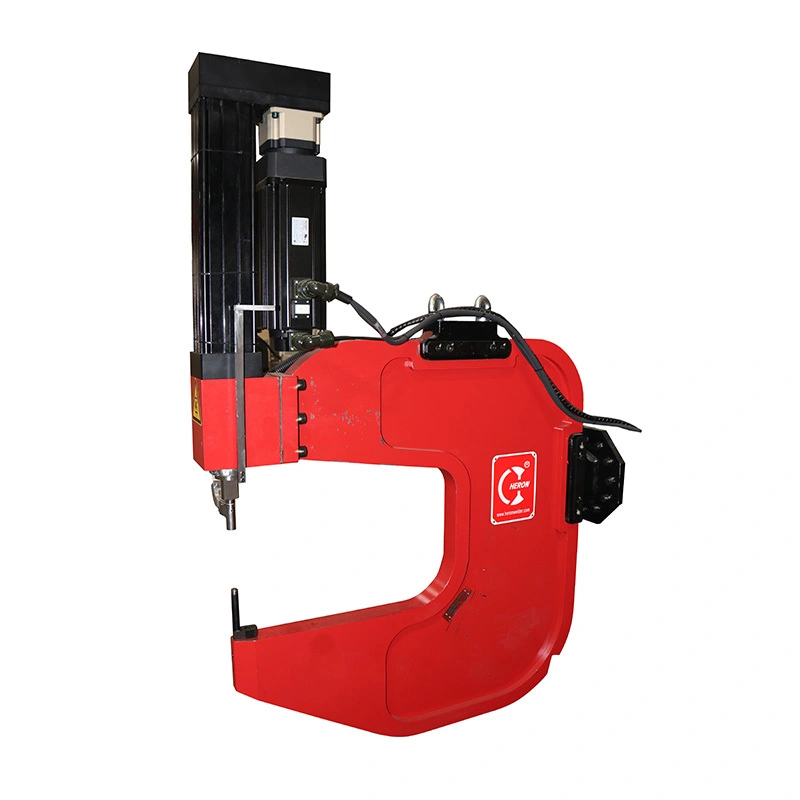
In high-speed manufacturing environments where precision, repeatability, and minimal heat-affected zones are critical, capacitor discharge welding (CDW) stands out as a go-to joining technology. This advanced resistance welding method delivers concentrated energy in microseconds, creating strong, consistent welds with virtually zero disruption to surrounding materials. For manufacturing engineers, OEMs, automation integrators, and factory decision-makers focused on quality and throughput, capacitor discharge welding offers a compelling combination of performance and control.
At Heron Welder, we specialize in industrial welding and metal-joining solutions tailored to today’s complex production challenges. With expertise across resistance welding, clinching, self-pierce riveting, welding guns, controllers, and fully automated production lines, we bring deep technical insight and customized automation to every application.
In this article, we’ll demystify capacitor discharge welding, explore its principles, key applications, operational benefits, comparisons with other technologies, and best practices for success.
What Is Capacitor Discharge Welding?
Capacitor discharge welding is a form of resistance welding that uses stored electrical energy from high-capacity capacitors to deliver a very short, high-current pulse through the workpieces. Unlike traditional resistance welding methods (e.g., spot welding with continuous current), CDW releases energy in microseconds to milliseconds, creating a weld before significant heat can spread beyond the immediate joint area.
This ultra-fast energy delivery enables:
-
Minimal heat-affected zones (HAZ)
-
Low distortion and deformation
-
Precise welds on thin or heat-sensitive materials
-
Clean welds with reduced expulsion and splatter
CDW is ideal for applications where aesthetics, electrical performance, or material integrity matter.
How Capacitor Discharge Welding Works
The Physics Behind the Process
At its core, capacitor discharge welding involves three key components:
-
Capacitor Bank – Stores electrical energy at high voltage.
-
Discharge Circuit – Releases the stored energy in a controlled pulse.
-
Weld Head & Electrodes – Conduct current into the parts being joined while applying force.
When triggered, the capacitor bank discharges a high-amplitude current pulse across the electrodes and through the workpieces. The rapid surge generates intense localized heating at the interface, causing the materials to soften and fuse. Because the energy transfer happens so quickly, heat has little time to dissipate into adjacent areas.
The result is a solid-state weld with minimal thermal impact an advantage for delicate components and assemblies requiring tight tolerances.
Key Applications of Capacitor Discharge Welding
Electronics and Electrical Components
CDW excels in joining thin sheet metals, fine wires, battery tabs, connectors, and small electrical assemblies where traditional welding methods could damage sensitive parts. Its precision control makes it ideal for:
-
Battery pack assembly (tab welding)
-
Connector terminals
-
Microelectronics and sensor housings
Automotive and EV Manufacturing
Automotive engineers increasingly turn to capacitor discharge systems for joining:
-
Thin gauges in body assemblies
-
Battery module and pack components
-
Shielding and grounding tabs
CDW’s rapid weld times improve cycle rates on automated production lines while protecting adjacent structures from thermal distortion.
Medical Devices and Aerospace
In industries where part integrity and dimensional accuracy are paramount such as medical implants, surgical instruments, and aerospace components CDW offers reliable, repeatable weld quality without compromising material properties.
Capacitor Discharge Welding Versus Other Welding Methods
When selecting a joining technology, it’s essential to understand how CDW compares with other common methods:
CDW vs. Traditional Resistance Spot Welding
| Feature | Capacitor Discharge Welding | Traditional Resistance Spot Welding |
|---|---|---|
| Welding Speed | Ultra-fast (µs–ms) | Milliseconds–seconds |
| Heat Affected Zone | Very small | Larger |
| Material Thickness | Thin to moderate | Moderate to thick |
| Distortion | Minimal | Higher |
| Best for | Heat-sensitive, precision parts | General structural joints |
CDW’s ultra-fast discharge limits heat spread, making it superior for delicate or thin materials where distortion and microstructural changes are concerns.
CDW vs. Laser Welding
Laser welding is another low-heat input method, but it requires precise optics and often significant capital investment. CDW offers:
-
Lower system cost
-
Robustness in industrial environments
-
Simplified integration with automation
While lasers excel in certain high-precision applications, CDW delivers an excellent balance of performance, cost, and manufacturability.
Choosing the Right Capacitor Discharge System
Selecting the appropriate CDW system depends on several factors:
1. Material Types and Thickness
CDW is especially effective for thin gauge metals and dissimilar material combinations. Material conductivity, thickness, and thermal properties influence capacitor sizing and discharge parameters.
2. Weld Geometry and Access
The design of fixtures and electrodes must provide secure contact and consistent force throughout the weld cycle. Heron Welder engineers evaluate part geometry to optimize head design and electrode configuration.
3. Control and Monitoring
Modern CDW systems offer sophisticated control over discharge profiles, current ramping, and real-time monitoring. These features support quality control, traceability, and integration into manufacturing execution systems (MES).
4. Automation Integration
CDW systems can be standalone or integrated into robotic and conveyor-based production lines. Heron delivers turnkey solutions—including controllers, software, and safety systems—to fit your automation strategy.
Best Practices for Reliable Capacitor Discharge Welding
To maximize performance and weld quality, follow these industry best practices:
Optimize Electrode Contact
Clean, well-maintained electrodes ensure consistent current flow and reduce variability. Implement routine maintenance schedules and use appropriate electrode materials for your application.
Control Weld Parameters
Fine-tune discharge energy, force, and timing to match material properties and thickness. Automated systems can store and recall parameter sets for different part families.
Use Proper Fixturing
Stable part fixturing eliminates movement during discharge, improving weld repeatability and reducing defects.
Monitor Process Metrics
Employ real-time monitoring to detect anomalies like excessive resistance or poor contact. Statistical process control (SPC) tools help maintain quality across high volumes.
Train Operators
Even with automation, operator understanding of CDW principles contributes to better setup, inspection, and troubleshooting.
Integrating CDW Into Automated Production
Capacitor discharge welding is inherently fast, making it an excellent candidate for high-throughput automation. Whether you’re building a robotic cell, conveyor-based line, or hybrid system, Heron Welder can engineer solutions that:
-
Synchronize weld cycles with material handling
-
Provide intuitive HMI for operators and maintenance personnel
-
Integrate safety systems and vision inspection
-
Report and log weld data for traceability and quality compliance
Our team partners with integrators or delivers full turnkey lines tailored to your KPIs and footprint.
FAQs - Capacitor Discharge Welding
Q: What materials can be welded with capacitor discharge welding?
A: CDW works best on conductive metals like steel, stainless steel, copper alloys, and aluminum. It’s particularly effective on thin gauges and tabbed assemblies.
Q: How does capacitor discharge welding affect material properties?
A: Because the energy pulse is so brief, heat-affected zones are minimal, preserving mechanical and electrical properties near the weld.
Q: Can CDW be automated?
A: Yes. CDW systems can be integrated into robotic or conveyor-based automation, with controls, safety, and data logging optimized for production environments.
Q: Is CDW suitable for high-volume manufacturing?
A: Absolutely. The ultra-fast cycle times and repeatability make it ideal for high-throughput production.
Q: What industries benefit most from CDW?
A: Electronics, automotive (including EV battery assembly), medical devices, aerospace, and precision metal fabrication all leverage CDW’s advantages.
Drive Precision and Throughput With Heron’s CDW Solutions
Capacitor discharge welding empowers manufacturers to achieve high-quality, low-distortion welds at speeds that match modern production demands. From delicate electronics to automotive assemblies and medical devices, CDW delivers precision and repeatability that traditional welding methods struggle to match.
At Heron Welder, we bring deep industry expertise and a comprehensive portfolio of welding and automation solutions. Whether you’re specifying a standalone CDW system or integrating into a larger automated line, our engineers work with you from concept to commissioning.
Ready to elevate your welding process? Contact Heron today to request a quote or consult with our team on fully customized welding and automation solutions tailored to your manufacturing goals.