English
 Arabic
 French
 Spanish
 Portuguese
 Deutsch
 Turkish
 Dutch
Dutch
 Italiano
 Russian
 Romaian
 Portuguese (Brazil)
 Greek
Greek
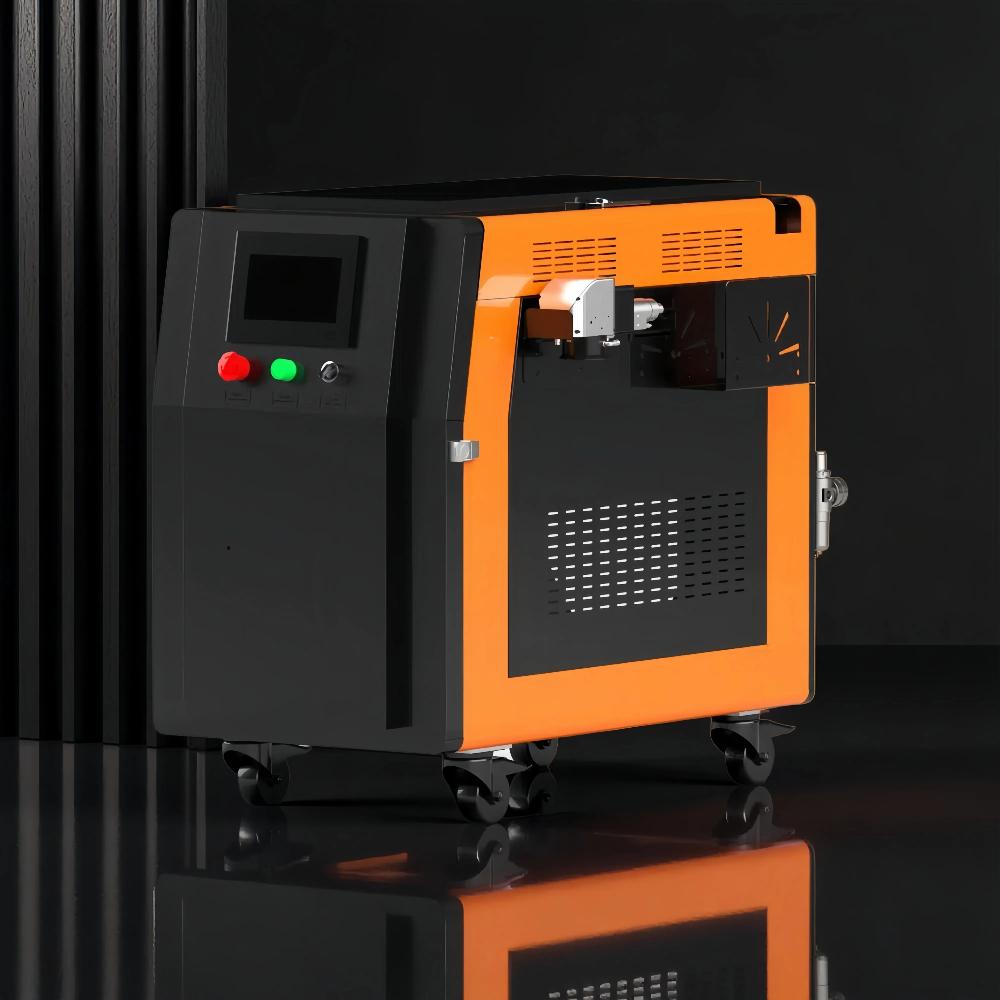
Rust and corrosion are persistent challenges that can compromise the integrity of metal components, slow down maintenance workflows, and increase long-term operational costs. Whether you’re maintaining heavy machinery in an industrial setting, restoring classic automotive parts, or prepping structural steel for welding and coating, traditional methods like sandblasting, grinding, and chemical treatments are often inefficient, messy, and damaging to underlying material. A modern solution that’s changing the game is the fiber laser rust remover — an innovative laser cleaning system engineered for precision, speed, and environmental safety.
The fiber laser rust remover uses concentrated pulses of fiber laser energy to vaporize rust and oxidation without abrasive contact or chemical use. Unlike mechanical approaches that scrape or hammer at surfaces, laser cleaning targets only the unwanted layers, preserving the integrity of the base metal underneath. This non-contact method dramatically reduces the risk of surface deformation, gouging, or micro-cracks, making it ideal for delicate components or intricate metalwork that can’t withstand aggressive cleaning techniques.
One of the standout advantages of this advanced system is its precision. Operators can adjust laser parameters — such as pulse frequency, power output, and scanning speed — to match the specific material and level of corrosion being treated. This level of control ensures consistent results across a wide range of substrates, from steel and aluminum to titanium and cast metals. Whether cleaning a large industrial panel or refining detailed parts, this fiber laser system delivers uniform rust removal with minimal impact on production time.
Speed and productivity are vital in industrial environments, and the fiber laser rust remover excels where traditional methods slow progress. High-power laser systems clean faster than grinding wheels or chemical baths, reducing downtime and lowering labor costs. For maintenance teams working on tight schedules, this efficiency translates to more uptime for machinery and shorter project cycles. The laser’s ability to handle large surface areas quickly also makes it a practical choice for shipyards, fabrication shops, and construction sites that demand rapid turnaround.
Environmental sustainability is another major benefit of choosing a fiber laser solution over conventional cleaning methods. Traditional rust removal often involves harsh chemicals that require careful handling and disposal, creating hazardous waste streams. Abrasive blasting generates dust and particulates that can harm workers and contaminate surrounding areas without proper containment. In contrast, laser cleaning produces minimal waste, eliminates chemical runoff, and helps facilities meet workplace safety and environmental standards more easily.
Safety is a core consideration in any industrial process, and fiber laser systems include protective features such as enclosures, fume extraction compatibility, and emergency shutoff controls. These components help ensure operators remain protected while achieving high-quality surface preparation. Since the laser doesn’t physically touch the surface, there’s also less vibration and noise, reducing operator fatigue and contributing to a safer work environment.
The versatility of a fiber laser rust remover extends beyond rust elimination. It’s effective for removing coatings, paint, oxides, and even oil residues, making it a multifunctional tool for cleaning and surface preparation. This flexibility enhances value by enabling a single system to tackle multiple maintenance and manufacturing tasks.
In summary, a fiber laser rust remover is a forward-thinking investment that boosts productivity, protects material integrity, and supports safer, greener operations. For companies seeking efficient, cost-effective surface preparation solutions, this laser cleaning technology delivers precision cleaning that stands above traditional methods.