English
 Arabic
 French
 Spanish
 Portuguese
 Deutsch
 Turkish
 Dutch
Dutch
 Italiano
 Russian
 Romaian
 Portuguese (Brazil)
 Greek
Greek
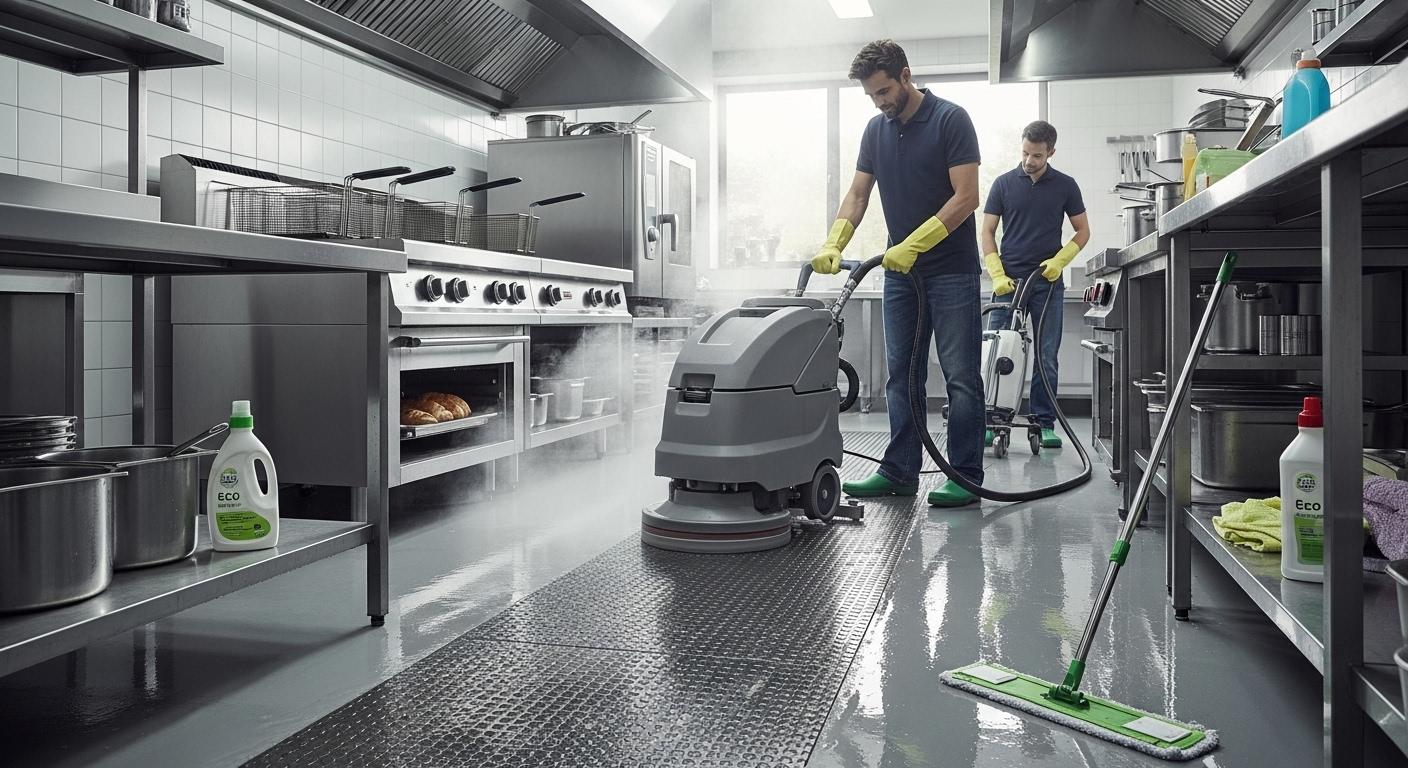
Introduction
Maintaining hygienic floors is essential for commercial Kitchen cleaning. High-traffic kitchens face grease, water, and food residue, creating slip hazards and microbial growth. Using the right floor cleaner ensures floors remain slip-resistant, supporting food-safe sanitation and overall floor hygiene.
High-performance cleaners, including bio-enzymatic cleaners and industrial degreasers, remove hidden grease and organic soils effectively. Non-toxic cleaning solutions reduce chemical exposure for staff while maintaining regulatory compliance. Proper commercial Kitchen cleaning routines prevent bacteria buildup, reduce accident risk, and ensure HACCP and local food safety standards are met. Integrating mechanical scrubbing, steam cleaning, or enzyme-based systems ensures sustainable cleaning solutions while keeping floors inspection-ready.
Understanding Commercial Kitchen Cleaning Floors
Commercial kitchens are high-risk environments where hygiene, slip-resistance, and regulatory compliance intersect. Commercial Kitchen cleaning isn’t just about appearance it’s essential for food-safe sanitation, floor hygiene, and microbial reductionOperators must understand that floors in these settings endure grease, moisture, and heavy foot traffic daily. Selecting the right cleaning products and equipment is critical to prevent microbial contamination, maintain slip-resistant surfaces, and comply with HACCP or local regulations. Mechanical scrubbing, enzyme-based cleaners, and steam systems are often combined for maximum effectiveness. Proper commercial Kitchen cleaning routines prevent health hazards, protect staff, and enhance operational efficiency, while supporting sustainable cleaning solutions and reducing long-term costs for floor maintenance.
Types of Commercial Kitchen Cleaning Floor Cleaners
Different floor cleaners serve specific roles in commercial Kitchen cleaning, and choosing the right type is crucial for hygiene and safety.
1. Solvent Degreasers for Heavy Grease
Solvent degreasers are ideal for fryer zones and prep areas with tough oil and fat buildup. They dissolve stubborn grease, making mechanical removal easier. Using degreasers properly ensures microbial reduction, food-safe sanitation, and consistent floor hygiene while maintaining slip-resistant surfaces.
2. Enzymatic Cleaners for Food Residue
Enzymatic cleaners break down proteins, fats, and starches naturally. They are perfect for commercial Kitchen cleaning in food prep areas, providing non-toxic cleaning, bio-enzymatic microbial reduction, and sustainable cleaning solutions. Enzymes penetrate grout and textured surfaces to maintain safe, hygienic floors.
3. Steam & Thermal Cleaning Systems
Steam and thermal cleaners use high-temperature vapor to remove grease and microbes without chemicals. They enhance floor hygiene, reduce chemical exposure, and support food-safe sanitation. These systems work well in high-traffic kitchens, complementing enzymatic or degreaser-based cleaning routines.
4. pH-Neutral Cleaners for Sensitive Floors
pH-neutral cleaners are gentle yet effective, suitable for epoxy, vinyl, and quarry tile floors. They preserve slip resistance, prevent corrosion, and allow daily maintenance without damaging surfaces. Using them alongside mechanical or steam cleaning ensures sustainable cleaning solutions while maintaining optimal commercial Kitchen cleaning standards.
Why Commercial Kitchen Floors Are Hard to Clean
Commercial kitchen floors are engineered for durability and safety, not ease of cleaning. Commercial Kitchen cleaning is challenging due to grease, moisture, heavy traffic, and embedded food residuesHigh-traffic areas spread soils quickly, while heat from stoves and fryers polymerizes grease, making it sticky and difficult to remove. Textured or quarry tile floors improve traction but trap particles, requiring mechanical scrubbing or enzyme-based solutions. Moist conditions foster microbial growth, creating persistent odors and potential contamination. Regulatory pressures and HACCP compliance demand thorough cleaning and documented schedules. Understanding these challenges allows managers to implement deep-clean cycles, combine bio-enzymatic cleaners with mechanical or thermal methods, and maintain food-safe sanitation, slip-resistant surfaces, and sustainable cleaning solutions throughout the kitchen.
Hidden Hygiene Risks in Commercial Kitchen Cleaning
Kitchen floors are constantly exposed to oil, grease, and food debris, making commercial Kitchen cleaning critical. Floor hygiene, microbial reduction, and food-safe cleaning are key concerns.
Grease and food residues trap bacteria, odors, and pathogens. Without proper cleaning, microbial buildup compromises safety and compliance. Using bio-enzymatic cleaners or industrial degreasers ensures deep cleaning of high-traffic zones like prep stations and fryer areas. Combined with non-toxic cleaning solutions and mechanical scrubbing, these products maintain slip-resistant surfaces. Scheduling deep-clean cycles ensures all areas remain hygienic while reducing microbial contamination and supporting sustainable cleaning solutions in busy commercial kitchens.
Degreasers in Commercial Kitchen Cleaning Floors
Grease is a major slip hazard, and industrial degreasers are essential for commercial Kitchen cleaning. Industrial degreasers, microbial reduction, and food-safe sanitation are critical.
Degreasers dissolve fats and oils, allowing easy mechanical removal. They are particularly effective in fryer zones, prep stations, and dishwashing areas. Proper rinsing prevents residue that reduces traction on slip-resistant floors. Combining degreasers with bio-enzymatic cleaners or non-toxic cleaning methods enhances microbial control. Routine degreasing and deep-clean schedules maintain floor hygiene, reduce accidents, and support sustainable cleaning solutions across high-traffic commercial kitchen areas.
Enzymatic Cleaners in Commercial Kitchen Cleaning
Bio-enzymatic cleaners are ideal for commercial Kitchen cleaning, targeting fats, proteins, and starches safely. Non-toxic cleaning ensures safe food-contact surfaces, while microbial reduction reduces bacteria in prep and cooking areas.
Enzymatic cleaners penetrate grout, textured surfaces, and hidden cracks. They digest organic soils without harsh chemicals, maintaining slip-resistant floors. Daily or nightly use supports food-safe sanitation, floor hygiene, and sustainable cleaning solutions. Pairing enzymes with mechanical scrubbing or steam cleaning ensures complete removal of grease, microbial contamination, and odors. Enzyme-based cleaners are a critical part of any modern commercial Kitchen cleaning program.
Steam Cleaning in Commercial Kitchen Cleaning Floors
Steam cleaning enhances commercial Kitchen cleaning by removing grease, soils, and microbes without chemicals. Thermal sanitation, microbial reduction, and eco-friendly degreasers are key benefits.
High-temperature vapor penetrates cracks and grout, reaching areas mops or chemicals cannot. Steam supports food-safe sanitation while maintaining slip-resistant surfaces. Combining bio-enzymatic cleaners with steam systems further enhances microbial control and floor hygiene. This approach also reduces chemical exposure, making it a non-toxic cleaning method aligned with sustainable cleaning solutions for busy commercial kitchens.
pH-Neutral Cleaners in Commercial Kitchen Cleaning Floors
pH-neutral cleaners are essential for safe commercial Kitchen cleaning. They maintain floor hygiene, protect flooring materials, and support food-safe sanitation.
These non-toxic cleaning solutions prevent corrosion on vinyl, epoxy, and quarry tiles. They are safe for slip-resistant surfaces and compatible with enzyme and steam cleaning methods. Daily use of neutral cleaners ensures microbial control, reduces chemical hazards, and supports sustainable cleaning solutions. Combined with mechanical scrubbing, these cleaners form a complete system for effective commercial Kitchen cleaning while maintaining hygiene, safety, and compliance.
Scheduling Commercial Kitchen Cleaning Floors
Proper scheduling is critical for commercial Kitchen cleaning. Deep-clean schedules, floor hygiene, and microbial reduction should be incorporated into daily routines.
High-traffic areas like fryers and prep zones require multiple cleanings, while low-traffic zones benefit from nightly deep cleaning. Documented schedules improve compliance and maintain slip-resistant floors. Combining chemical, enzymatic, and thermal methods ensures all areas remain safe, hygienic, and compliant. Integrating bio-enzymatic cleaners and non-toxic cleaning products in scheduled routines promotes sustainable cleaning solutions in commercial kitchens.
Equipment for Commercial Kitchen Cleaning Floors
Using the right equipment enhances commercial Kitchen cleaning.Mechanical systems paired with bio-enzymatic cleaners or industrial degreasers improve degreasing, coverage, and efficiency. Machines suitable for floor type prevent damage and maintain slip-resistant surfaces. Staff training ensures safety and consistent results. Combining mechanical, thermal, and non-toxic cleaning methods achieves comprehensive commercial Kitchen cleaning while supporting sustainable cleaning solutions and regulatory compliance.
Common Mistakes in Commercial Kitchen Cleaning Floors
Mistakes in commercial Kitchen cleaning reduce hygiene and safety.Frequent errors include skipping high-traffic zones, improper chemical use, inadequate rinsing, and poor documentation. Avoiding these errors preserves slip-resistant surfaces, maintains floor hygiene, and ensures food-safe sanitation. Using bio-enzymatic cleaners, following deep-clean schedules, and employing non-toxic cleaning methods prevent microbial buildup. Adhering to best practices guarantees effective, safe, and sustainable commercial Kitchen cleaning.
Conclusion
Choosing the right floor cleaner transforms commercial Kitchen cleaning. Proper cleaners, combined with mechanical and thermal systems, remove grease, food residues, and microbes while preserving slip-resistant floors. Structured schedules and staff training maintain hygiene, safety, and compliance. Prioritizing commercial Kitchen cleaning reduces accidents, microbial contamination, and operational risks while supporting sustainable cleaning solutions in commercial kitchens.
FAQs
1. How often should floors be cleaned?
High-traffic: multiple times daily; low-traffic: nightly deep clean.
2. Can household cleaners be used?
No, use industrial degreasers or enzymatic cleaners for safe results.
3. How long do floors take to dry?
Depends on method; steam or auto-scrubbers speed drying.
4. Best products for commercial Kitchen cleaning?
Solvent degreasers, enzymatic cleaners, pH-neutral cleaners, and steam systems.
5. How to maintain slip-resistant floors?
Use neutral or enzyme cleaners, mechanical scrubbing, and scheduled deep cleans.
6. Are chemical-free methods effective?
Yes, steam and enzymatic solutions sanitize and reduce microbial growth.
7. How to prevent microbial buildup?
Regular degreasing, enzyme use, and scheduled deep-clean cycles.
8. Can all cleaners be used on any floor type?
No, match cleaner to flooring: vinyl, epoxy, or quarry tile.
9. How to document cleaning for compliance?
Use logs, checklists, and inspection records for HACCP standards.
10. Are eco-friendly cleaners effective?
Yes, concentrated, non-toxic products maintain hygiene and reduce waste.