English
 Arabic
 French
 Spanish
 Portuguese
 Deutsch
 Turkish
 Dutch
Dutch
 Italiano
 Russian
 Romaian
 Portuguese (Brazil)
 Greek
Greek
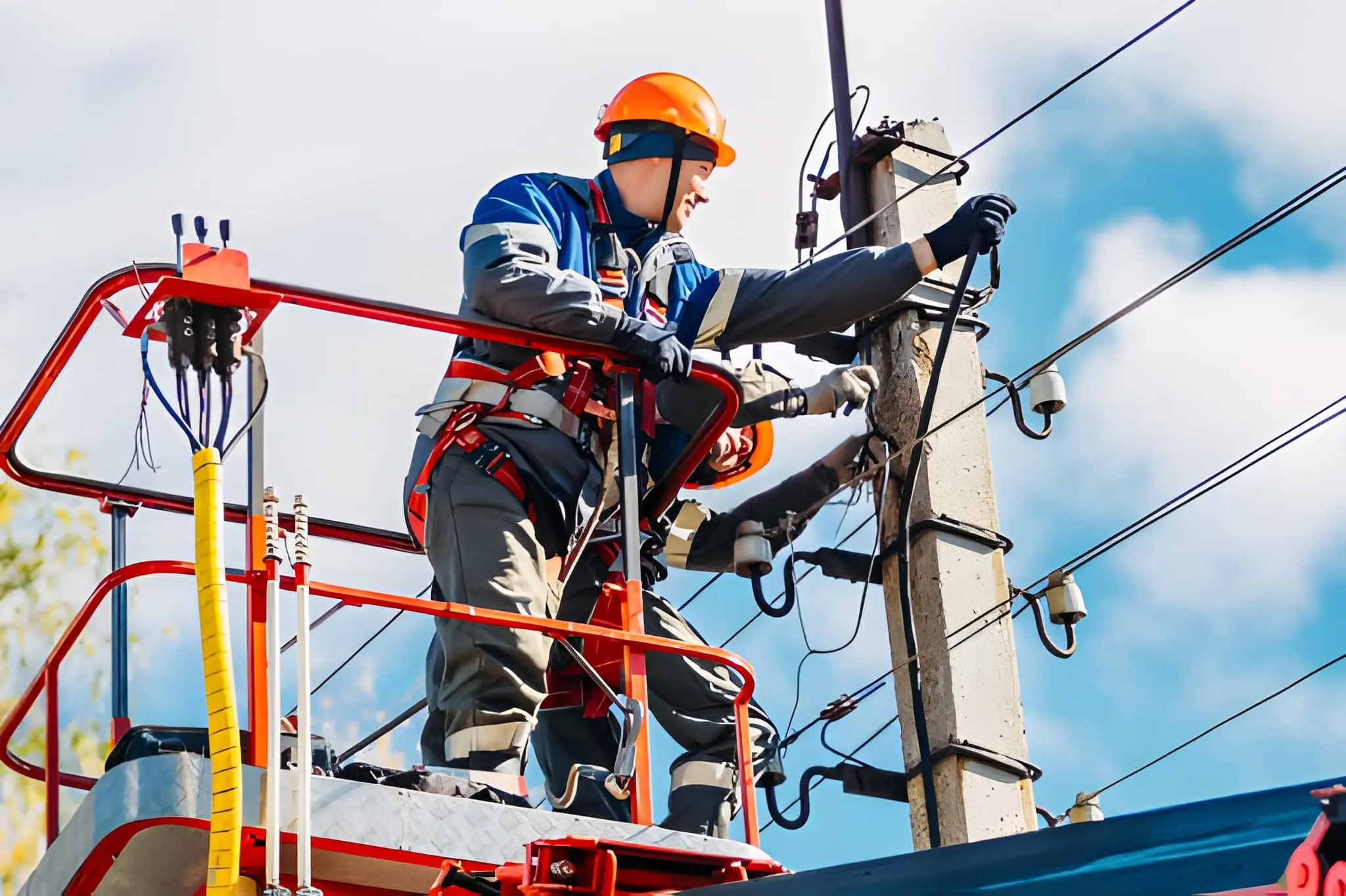
In today’s rapidly expanding power infrastructure, the power cable plays a far more critical role than many people realize. For utilities, EPC contractors, and industrial project owners, the right power cable directly affects network reliability, installation efficiency, operational safety, and long-term maintenance cost.
From urban distribution upgrades to large-scale transmission and renewable energy projects, engineers and procurement teams must balance electrical performance, mechanical strength, environmental resistance, and compliance with international standards. Choosing the wrong cable type can lead to higher losses, premature failure, and costly rework.
As a global manufacturer of overhead conductors and power cable systems, HNBF Power supports utilities and infrastructure developers with a complete portfolio of AAC, AAAC, ACSR, ABC, LV power cables, and concentric cables designed for real-world grid conditions and demanding project schedules.
This guide explains how power cables work, how to select the right type, and what technical factors matter most for modern power networks.
What Is a Power Cable and Why It Matters in Grid Projects
A power cable is an insulated electrical conductor designed to transmit and distribute electrical energy safely from one point to another. In power networks, cables are used in:
-
Distribution feeders
-
Service connections
-
Industrial and commercial facilities
-
Underground and hybrid overhead systems
-
Temporary and permanent power installations
Unlike communication or control cables, power cables must handle high current, thermal stress, voltage fluctuations, and harsh environmental conditions.
For utility-scale projects, a power cable is not only a product it is a long-term asset within the grid.
Key Types of Power Cables Used in Utility and Infrastructure Projects
LV Power Cables for Distribution Networks
Low-voltage power cables are widely used in secondary distribution systems, buildings, and industrial facilities. They are designed to deliver stable power while offering high insulation reliability and flame-retardant performance.
Typical applications include:
-
Utility distribution networks
-
Commercial and industrial plants
-
Renewable energy installations
Aerial Bundled Cable (ABC)
ABC is increasingly used in urban and rural overhead distribution systems where safety and reduced right-of-way are critical. It minimizes the risk of short circuits and improves network resilience in congested areas.
Concentric Cables
Concentric cables are commonly used for service drops and distribution systems that require a combined phase and neutral structure, providing improved mechanical balance and electrical performance.
Overhead Conductors as Part of Integrated Power Cable Solutions
Although underground and insulated power cables are essential, overhead conductors remain the backbone of transmission and large-scale distribution systems.
HNBF Power manufactures:
-
AAC (All Aluminum Conductor)
-
AAAC (All Aluminum Alloy Conductor)
-
ACSR (Aluminum Conductor Steel Reinforced)
These products are engineered to work seamlessly with power cable systems in hybrid networks, enabling utilities to design cost-effective and scalable grid architectures.
How to Select the Right Power Cable for Your Project
Electrical Rating and Load Profile
The first consideration is the current carrying capacity and operating voltage. Engineers must evaluate:
-
Peak load demand
-
Future expansion margin
-
System fault levels
Proper cable sizing ensures low voltage drop and reduced thermal stress.
Installation Environment
Power cable performance depends heavily on its operating environment:
-
Underground ducts
-
Cable trays
-
Direct burial
-
High-humidity or coastal zones
-
Industrial environments with chemical exposure
Material selection and insulation design must match these conditions.
Mechanical and Installation Requirements
Projects with tight routes, long pulling distances, or frequent bends require cables with optimized flexibility and sheath strength. Poor mechanical performance can increase installation time and risk damage during pulling.
Compliance with International Standards
For utilities and EPC contractors, certification is non-negotiable. Power cables must comply with recognized IEC, BS, or equivalent international standards to ensure long-term safety and regulatory acceptance.
Why Manufacturing Quality Is Critical in Power Cable Performance
A power cable is only as reliable as its manufacturing process. Key production factors include:
-
Precision conductor stranding
-
Consistent insulation thickness
-
Controlled extrusion temperature
-
High-accuracy spark testing and voltage testing
HNBF Power applies strict quality control across conductor drawing, stranding, insulation, and final testing stages to ensure stable electrical characteristics and consistent mechanical performance for large-scale infrastructure projects.
Advantages of Working with HNBF Power for Power Cable Supply
HNBF Power is a global manufacturer serving utilities, EPC contractors, and industrial clients across transmission and distribution markets.
Key advantages include:
-
Complete product range covering LV power cable, ABC, concentric cable, AAC, AAAC, and ACSR
-
Strong production capacity for large-volume projects
-
Engineering support for cable selection and technical documentation
-
Custom manufacturing based on project specifications
-
Reliable lead times for utility and grid expansion programs
By combining overhead conductors and insulated power cable solutions under one manufacturing platform, HNBF Power helps project teams reduce supply complexity and improve system compatibility.
The Role of Power Cables in Future Grid Development
As power networks evolve toward renewable integration, microgrids, and urban densification, demand for high-quality power cables will continue to rise.
Key trends include:
-
Increased underground distribution
-
Safer overhead solutions using ABC
-
Higher thermal rating cables for compact installations
-
Longer service life requirements for utility assets
For engineers and procurement managers, selecting technically proven power cables today directly supports grid stability for decades.
Frequently Asked Questions (FAQs)
1. What is the difference between a power cable and an overhead conductor?
A power cable is typically insulated and used for underground, indoor, or protected installations, while overhead conductors such as AAC, AAAC, and ACSR are designed for open-air transmission and distribution lines.
2. When should ABC be used instead of traditional bare conductors?
ABC is ideal for densely populated areas, narrow rights-of-way, and locations where safety, reduced outages, and lower maintenance are priorities.
3. How do I select the correct power cable size for a utility project?
Cable size should be selected based on current load, voltage level, allowable voltage drop, installation method, ambient temperature, and future load growth.
4. Are concentric cables suitable for utility distribution networks?
Yes. Concentric cables are widely used in secondary distribution and service connections, offering reliable electrical performance and simplified installation.
Conclusion and Next Step
Selecting the right power cable is a strategic decision for any transmission or distribution project. From electrical performance to installation efficiency and long-term reliability, every detail matters.
If you are planning a utility, industrial, or infrastructure project and need reliable, standards-compliant power cable and overhead conductor solutions, contact HNBF Power today to discuss your technical requirements and receive customized power cable solutions tailored to your network design and project conditions.