English
 Arabic
 French
 Spanish
 Portuguese
 Deutsch
 Turkish
 Dutch
Dutch
 Italiano
 Russian
 Romaian
 Portuguese (Brazil)
 Greek
Greek
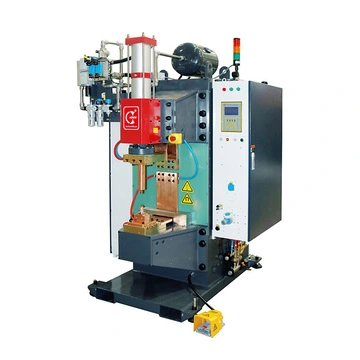
In today’s fast-paced manufacturing environment, efficient and reliable metal-joining techniques are essential to maintain high productivity, quality, and cost-effectiveness. A nut welder is a specialized tool that enables manufacturers to attach nuts to metal sheets and components with speed, precision, and minimal operator intervention. Heron Welder, a global leader in industrial welding solutions, offers advanced nut welding machines designed for OEMs, automation integrators, and manufacturing engineers seeking dependable and high-performance equipment.
What is a Nut Welder?
A nut welder is a type of resistance welding machine specifically designed to weld nuts, studs, or threaded components directly onto a metal workpiece. Unlike traditional methods such as screwing or riveting, nut welding creates a permanent, strong mechanical and electrical connection in seconds. These machines use electrical resistance and pressure to generate localized heat at the nut-to-sheet interface, allowing the nut to fuse with the metal without deforming the surrounding area.
How Nut Welding Works
The core principle of nut welding relies on resistance spot welding technology. The process involves:
-
Positioning the nut on the metal sheet.
-
Applying a precisely controlled electrode pressure.
-
Passing a high-current electrical pulse through the electrode and nut.
-
Generating localized heat that melts the base material at the contact point.
-
Allowing the molten material to solidify, creating a strong metallurgical bond.
Modern nut welders from Heron incorporate MFDC (Medium Frequency Direct Current) or capacitor discharge systems, ensuring fast cycles, minimal spatter, and consistent weld quality even on thin or coated sheets.
Applications of Nut Welders
Nut welders are widely used across industries where high-volume, repeatable, and durable fastening is required. Key applications include:
-
Automotive Manufacturing: Attaching nuts for engine components, body panels, chassis assemblies, and brackets.
-
Electrical and Electronics: Fastening threaded inserts in control panels, enclosures, and cabinets.
-
Appliances and HVAC: Securing nuts in washing machines, refrigerators, or air conditioning units.
-
Metal Furniture and Equipment: Reliable assembly of steel frames, brackets, and panels.
By integrating nut welders into automated production lines, manufacturers can drastically reduce labor time, improve safety, and maintain consistent product quality.
Types of Nut Welding Machines
Heron Welder provides a range of nut welding solutions to match diverse industrial needs:
1. Capacitor Discharge Nut Welders
-
Ideal for thin metal sheets or delicate components.
-
Delivers high-intensity, short-duration current for precise, minimal-heat welds.
2. MFDC Nut Welders
-
Best suited for high-volume production lines.
-
Provides stable, controlled heat cycles for uniform welds on thicker or coated sheets.
3. Automated Nut Welding Systems
-
Fully integrated into robotic or conveyor systems.
-
Allows continuous, high-speed nut welding without operator intervention.
-
Compatible with vision systems for accurate placement and quality monitoring.
Advantages of Using a Nut Welder
Investing in a high-quality nut welding system offers multiple benefits for manufacturers:
-
High Productivity: Rapid cycle times support mass production without compromising weld integrity.
-
Precision and Repeatability: Consistent weld quality across hundreds or thousands of components.
-
Reduced Material Deformation: Localized heating prevents warping or damage to thin sheets.
-
Labor Efficiency: Minimizes manual handling, improving operator safety and reducing labor costs.
-
Flexibility: Suitable for a wide range of metals including steel, stainless steel, and aluminum alloys.
Heron Welder’s nut welding machines are engineered to deliver all these advantages while being robust, user-friendly, and easy to maintain.
Nut Welding vs. Traditional Fastening Methods
Compared to mechanical fastening methods like bolting, screwing, or riveting, nut welding provides superior performance in high-speed, automated manufacturing environments:
| Feature | Nut Welding | Traditional Fastening |
|---|---|---|
| Speed | Milliseconds per weld | Seconds per fastener |
| Consistency | High repeatability | Operator-dependent |
| Strength | Permanent metallurgical bond | Subject to loosening |
| Surface Integrity | Minimal deformation | Possible sheet distortion |
| Automation Compatibility | Excellent | Limited |
This makes nut welding the preferred choice for automotive OEMs, appliance manufacturers, and industrial fabricators seeking efficiency without sacrificing quality.
Best Practices for Nut Welding
To achieve optimal performance and maximize the lifespan of your nut welding equipment:
-
Correct Electrode Selection: Use electrodes suited for the nut size, material, and sheet thickness.
-
Proper Sheet Preparation: Ensure clean, dry surfaces free of rust, oil, or coatings that could impede welding.
-
Accurate Parameter Settings: Adjust current, pressure, and welding time according to the material and nut type.
-
Routine Maintenance: Inspect electrodes, cables, and cooling systems to maintain consistent performance.
-
Operator Training: Ensure staff understand safety protocols and machine operation for maximum efficiency.
Heron Welder provides full technical support, training, and maintenance services to help factories implement these best practices successfully.
FAQs About Nut Welders
1. Can a nut welder be used on aluminum sheets?
Yes, modern nut welders with MFDC or capacitor discharge technology can efficiently weld nuts on aluminum, steel, and stainless steel sheets.
2. What nut sizes can these machines handle?
Heron nut welders are compatible with a wide range of standard and custom nut sizes, from small M3 nuts to larger M12 or higher, depending on the machine model.
3. Are nut welders suitable for automated production lines?
Absolutely. Heron offers robotic integration and automated systems to meet high-volume production needs with precision and repeatability.
4. How fast is the welding cycle?
Cycle times can range from 0.2 to 1 second per nut, depending on material thickness, nut size, and the welding system.
5. Is operator training required?
Yes, Heron provides comprehensive training and operational guidance to ensure safe and optimal machine performance.
Partner with Heron for Nut Welding Excellence
Choosing the right nut welding solution can significantly improve your manufacturing efficiency, product quality, and overall operational ROI. Heron Welder combines decades of expertise, cutting-edge MFDC and capacitor discharge technologies, and robust automation solutions to meet the demands of modern industry.
Whether you are an OEM, factory manager, or automation integrator, our team can help you identify, customize, and implement the perfect nut welding system for your production line.
Request a quote or consult Heron today to explore our advanced nut welding machines, automated welding systems, and full-service technical support for your manufacturing operations.