English
 Arabic
 French
 Spanish
 Portuguese
 Deutsch
 Turkish
 Dutch
Dutch
 Italiano
 Russian
 Romaian
 Portuguese (Brazil)
 Greek
Greek
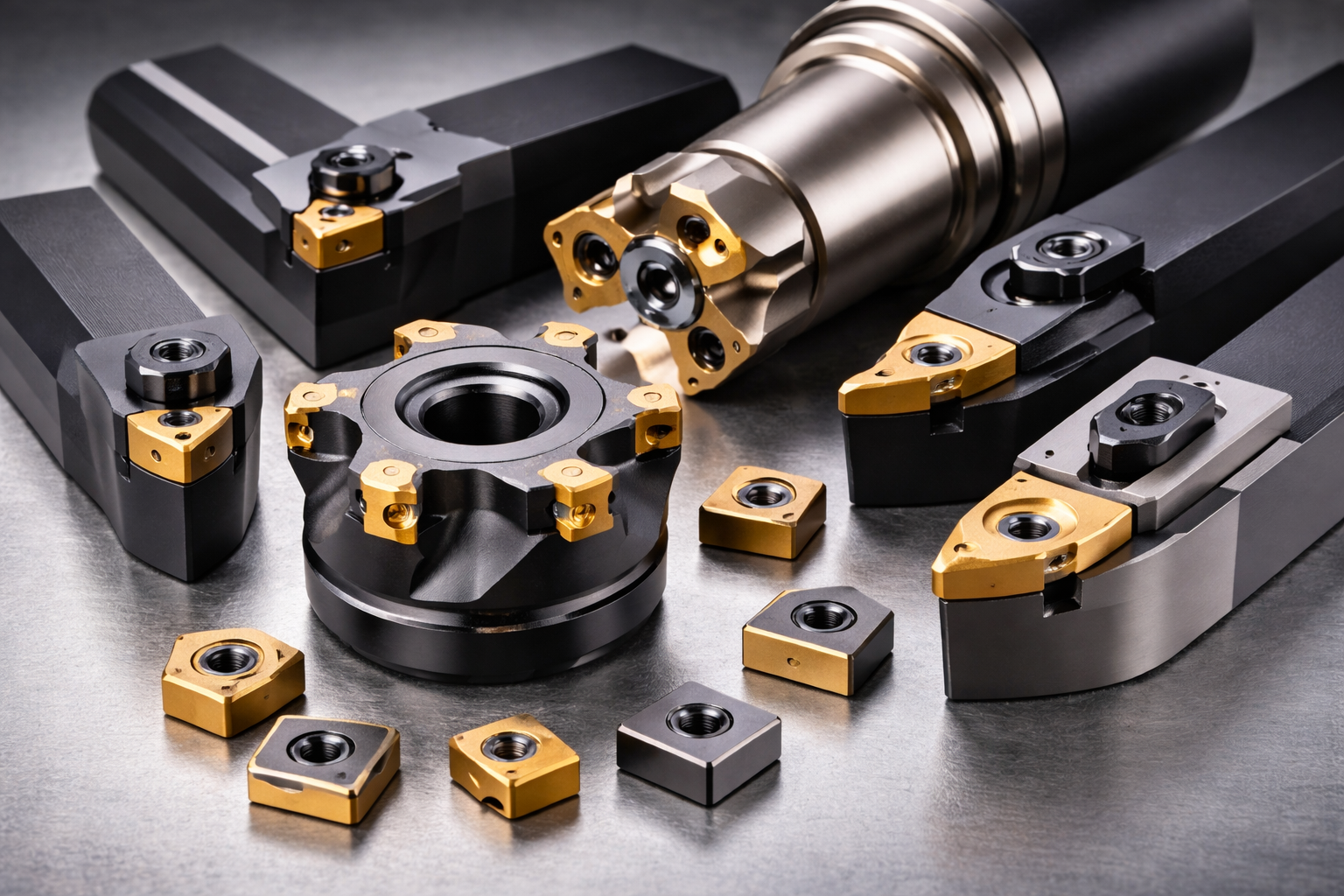
How Indexable Tools Reduce Tooling Costs in High-Volume CNC Production
In modern manufacturing, indexable tools have become a game-changer for companies running high-volume CNC production. When thousands of components are produced daily, even a small reduction in tooling expenses can lead to massive savings. Manufacturers today are not just focused on speed and accuracy — cost efficiency and tool longevity are equally critical. That’s where indexable tooling systems deliver measurable advantages.
What Are Indexable Tools?
Indexable tools are cutting tools that use replaceable inserts instead of a single, solid cutting edge. These inserts can be rotated or replaced when worn, allowing the tool holder to be reused multiple times. This design drastically reduces waste, tooling downtime, and overall production costs.
Unlike solid tools that require full replacement after wear, indexable tools allow manufacturers to change only the insert, which is significantly cheaper and faster.
Why Tooling Costs Matter in High-Volume CNC Production
In high-volume CNC environments such as automotive, aerospace, and heavy equipment manufacturing, tooling costs form a significant portion of operational expenses. Frequent tool changes, tool breakage, and inconsistent performance can slow production and increase costs.
Indexable tools directly address these problems by offering:
-
Reduced tool replacement costs
-
Faster tool changeovers
-
Extended tool life
-
Consistent machining performance
How Indexable Tools Cut Tooling Expenses
1. Lower Cost Per Cutting Edge
A single indexable insert typically has multiple cutting edges. Instead of discarding the entire tool, operators simply rotate the insert to a fresh edge. This means one insert can perform the work of several solid tools, lowering the cost per edge dramatically.
2. Reduced Tool Change Downtime
Downtime is expensive in high-volume production. Indexable tools are designed for quick insert replacement, often without removing the tool holder from the machine. This minimizes machine stoppage and increases production efficiency.
3. Longer Tool Holder Life
Tool holders in indexable systems are durable and designed for long-term use. Since only inserts are replaced, the primary tool body lasts much longer, spreading its cost over extended production cycles.
4. Improved Tool Performance Consistency
Indexable inserts are manufactured with precision, ensuring uniform geometry and cutting performance. Consistent results reduce rejected parts, rework, and material wastage — all of which impact tooling costs indirectly.
5. Optimized Cutting Speeds and Feeds
Modern indexable tools are engineered for high-speed machining. Their advanced coatings and geometries allow higher feed rates and faster cycle times, improving productivity without increasing tool wear proportionally.
Benefits for High-Volume CNC Operations
Better Inventory Management
Instead of storing many different solid tools, manufacturers only need to keep a stock of inserts. This simplifies inventory control and reduces storage costs.
Increased Machine Utilization
Because indexable tools reduce downtime and tool setup time, machines spend more time cutting and less time idle. Higher utilization means better return on CNC equipment investment.
Reduced Scrap and Rework
Precise and repeatable insert geometry ensures stable cutting conditions. This improves dimensional accuracy and surface finish, reducing scrap rates and rework expenses.
Sustainability and Waste Reduction
Indexable tooling produces less waste compared to solid tool disposal. Only small inserts are replaced rather than entire tools, supporting environmentally responsible manufacturing.
Applications Where Indexable Tools Shine
Indexable tools are widely used in:
-
CNC turning
-
Milling operations
-
Face milling
-
Boring processes
-
High-speed roughing
They are especially valuable where large batches of identical parts are produced, and tool wear is predictable.
Choosing the Right Indexable Tool System
To maximize cost savings, manufacturers should consider:
-
Insert material and coating
-
Tool holder rigidity
-
Application-specific geometry
-
Chip control features
Selecting the right combination ensures optimal tool life and machining efficiency.
Future of Indexable Tooling
Advancements in coatings, carbide grades, and insert design continue to enhance performance. Smart manufacturing trends also integrate tool monitoring systems that work well with indexable tools, predicting wear and optimizing change schedules.
As CNC production volumes rise globally, the demand for cost-effective tooling solutions will continue to push indexable tools to the forefront of industrial machining.
FAQs
1. How do indexable tools save money?
They use replaceable inserts with multiple edges, reducing full tool replacement costs and minimizing downtime in high-volume machining.
2. Are indexable tools better than solid tools?
For high-volume production, they are more cost-effective, easier to maintain, and provide consistent cutting performance.
3. Do indexable tools improve productivity?
Yes, they allow higher cutting speeds, quick insert changes, and reduced machine stoppage, increasing output rates.
4. Where are indexable tools commonly used?
They are widely used in CNC turning, milling, face milling, and other high-production machining processes.
5. Do indexable tools reduce waste?
Yes, only small inserts are replaced instead of entire tools, making them more sustainable and cost-efficient.
Conclusion
Indexable tools play a vital role in reducing tooling costs in high-volume CNC production. From lower per-edge cost and faster changeovers to improved consistency and reduced waste, they offer a comprehensive solution for modern manufacturers. Companies aiming for higher productivity and cost efficiency increasingly rely on advanced tooling providers like Buyohlic, known for delivering reliable, high-performance indexable tooling solutions that support precision machining and long-term operational savings.