English
 Arabic
 French
 Spanish
 Portuguese
 Deutsch
 Turkish
 Dutch
Dutch
 Italiano
 Russian
 Romaian
 Portuguese (Brazil)
 Greek
Greek
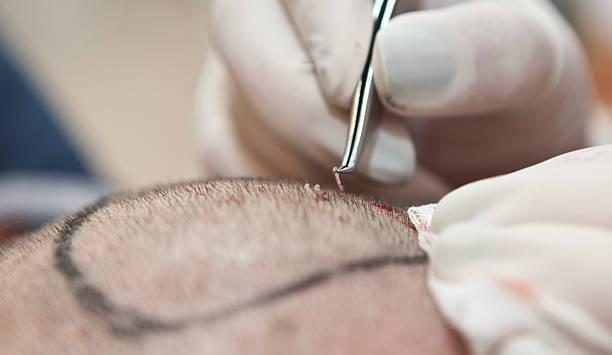
A receding hairline is often the first visible sign of aging for many men in the UAE, frequently starting at the temples before progressing toward the crown. This "maturation" of the hairline can drastically alter facial proportions, making the forehead appear larger and the face less defined. Choosing a hair transplant Abu Dhabi for hairline restoration is a strategic medical decision that focuses on "re-framing" the face. In 2026, the clinical goal has shifted from simply creating a "straight line" to designing a "macro-irregular" edge that mimics the natural, soft transition of a youthful, non-surgical hairline.
At the clinical level, restoring a hairline is an exercise in micro-geometry. Surgeons must calculate the "Golden Ratio" of the face to ensure the new hairline sits at a height that will still look natural as the patient enters their 50s and 60s.
The Architecture of Hairline Design
How do surgeons create a natural-looking hairline?
A natural hairline is never a solid wall of hair. In clinical settings, we observe that the most successful restorations utilize a "Transition Zone" consisting of varying densities and angles.
2026 Design Principles:
-
Micro-Irregularity: Intentionally placing follicles in a slightly staggered, non-linear pattern to avoid the "doll's hair" effect.
-
Single-Unit Priming: Utilizing only single-hair follicles for the first 1–2 centimeters of the hairline. Multi-hair grafts (2–4 hairs) are reserved for the "core" behind the front line to provide volume.
-
Angulation Control: Implantation at a 15-to-30-degree forward angle, matching the natural "exit direction" of native frontal hair.
-
Temporal Integration: Ensuring the new hairline connects seamlessly with the temporal peaks (the hair at the sides of the forehead) to prevent an isolated "island" of hair.
The Patient Experience: Sensory Walkthrough
What does hairline restoration feel like?
Because the forehead is a highly sensitive area with many nerve endings, we prioritize a "Comfort-First" approach using localized nerve blocks.
-
The Numbing Phase: You will feel a series of small "pinches" along the forehead line. Within 60 seconds, the entire front of your scalp will feel "frozen" or heavy, similar to a dental numbing sensation.
-
During the Procedure: You will be reclining, often able to see the surgeon working in the mirror during the design phase. You will feel a light "pressure" as each site is created. Based on post-procedure follow-ups, patients report that the front of the head feels "tight like a drum" during the process.
-
Immediately Post-Op: As the numbing fades, the forehead may feel "full." You might experience a slight "pulsing" sensation for the first evening, which is easily managed with the provided clinical care pack.
2026 Technology: Hairline Specifics
| Feature | Standard FUE | Sapphire Precision FUE | DHI (Choi Pen) |
| Incision Size | 0.9mm - 1.0mm | 0.6mm - 0.7mm | Variable (Micro-needle) |
| Graft Selection | Random Units | Hand-Picked Singles | Sorted High-Vitality |
| Recovery Scabs | Visible (10 Days) | Fine (5–7 Days) | Minimal (3–5 Days) |
| Natural Border | Moderate | Superior | Highest Precision |
| Frontal Swelling | Moderate | Reduced | Minimal |
Clinical Insights on Results
"I hated how high my forehead had become in photos. The surgeon didn't just give me a straight line; he gave me back the slightly jagged, natural look I had in my early 20s. The recovery was basically a week of wearing a cap, and now my face looks 'balanced' again." — Sultan
"The first few days of swelling were a bit strange, but once that cleared, I could see the shape. It’s been eight months, and the way the single hairs grow at the front makes it look like I never lost any hair at all." — David
Frequently Asked Questions
Can I choose my own hairline shape?
While we listen to your goals, the surgeon will guide you based on your "orbital bone" structure and future hair loss projections. A hairline that is too low may look unnatural as you age, so we aim for a "conservative yet impactful" design.
Will my forehead be very swollen?
In 2026, we use specialized "anti-gravity" headbands and localized cooling to minimize swelling. If it occurs, it typically lasts only 48 to 72 hours and can be managed by sleeping at an incline.
How many grafts are needed for a receding hairline?
On average, restoring the temples and the frontal line requires between 1,500 and 2,500 grafts. This varies based on the depth of the recession and the desired density.
Is the hairline restoration permanent?
Yes. The follicles are harvested from the "permanent zone" at the back of the head, which is genetically resistant to the hormones that cause receding hairlines.
Why Choose Tajmeels Clinic
At Tajmeels Clinic, we understand that a hairline transplant is as much an art as it is a surgery. Our approach to a hair transplant in Abu Dhabi focuses on 2026’s most refined Sapphire and DHI techniques to restore not just your hair, but your facial symmetry.
Our male and female-led specialist teams are experts in "Micro-Irregular" design, ensuring your new hairline is virtually indistinguishable from a natural one. We provide a private, luxury environment where your transformation is supported by 2026’s highest clinical standards. We are dedicated to providing a clinical experience that leaves you with a profoundly clear, naturally dense, and expertly managed head of hair.