English
 Arabic
 French
 Spanish
 Portuguese
 Deutsch
 Turkish
 Dutch
Dutch
 Italiano
 Russian
 Romaian
 Portuguese (Brazil)
 Greek
Greek
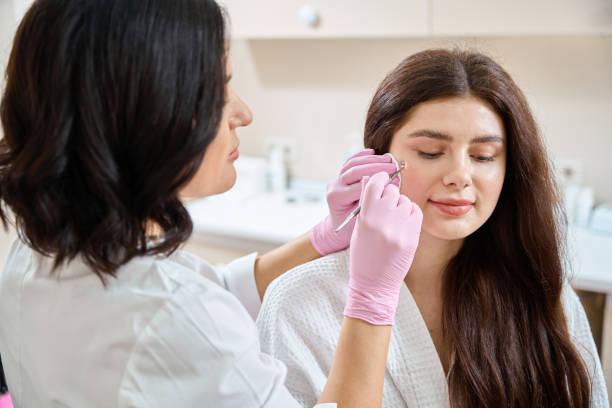
Chemical peels remain one of the most reliable clinical tools for skin resurfacing and acne management. For patients seeking a pimple treatment in Dubai, environmental stressors like heat and airborne pollutants often lead to a buildup of dead skin cells that trap oil and bacteria. A medical-grade chemical peel works by dissolving the cellular "glue" that holds these dead cells together, forcing a rapid exfoliation that clears pores and smooths the skin's surface. Unlike superficial spa peels, clinical-grade formulations are calibrated to penetrate the dermis, targeting active acne lesions while simultaneously fading the post-inflammatory hyperpigmentation (dark spots) that often follows a breakout.
How Chemical Peels Resolve Active Acne and Texture
In clinical settings, we observe that the efficacy of a peel depends on its acid profile. We select specific acids based on whether the patient has oily congestion, sensitive skin, or deep-seated cystic pimples.
-
Salicylic Acid (BHA): Oil-soluble and able to penetrate deep into the pores to dissolve sebum and clear blackheads and whiteheads.
-
Glycolic Acid (AHA): Smallest molecular size, allowing it to rapidly resurface the top layer of skin and smooth out uneven texture.
-
Mandelic Acid: A gentler option derived from bitter almonds, ideal for patients with darker skin tones or sensitive skin who need to clear acne without the risk of irritation.
-
Lactic Acid: Provides a hydrating exfoliation, perfect for "adult acne" where the skin is both breakout-prone and dehydrated.
Is a Chemical Peel Worth the Cost?
How long do the results of a chemical peel last?
A single peel can provide an immediate "glow" and dry up active pimples within 3 to 5 days. However, for significant structural improvement and long-term acne suppression, a series of 3 to 4 peels is recommended. Once the skin cycle is regulated, the smooth results can last for several months, provided a consistent medical-grade skincare routine is maintained.
Actual Pain Levels: The Sensation of Resurfacing
Does a chemical peel "burn" the skin?
The term "peel" can be intimidating, but most patients rate the discomfort as a 3/10. You will not feel a "burn," but rather a spicy, active tingling sensation that subsides as soon as the acid is neutralized.
-
The Application: You’ll feel a cold liquid being brushed onto the skin.
-
The Activation: Within 60 seconds, a warm, prickly sensation begins. It feels like "pins and needles" or a mild itch.
-
The Neutralization: As we apply the neutralizing agent, you’ll feel a brief surge of heat followed by an immediate cooling sensation.
-
The Post-Peel Feel: Your skin will feel "tight" and look shiny, similar to the feeling of a mild sunburn.
"I was expecting it to be very painful, but it was just a strong tingle for about three minutes. The practitioner used a fan to keep me cool, which helped a lot. My skin felt a bit tight afterward, but it wasn't nearly as scary as I thought." — Layla
Realistic Recovery: The "Peeling" Timeline
In Dubai’s social environment, knowing when you will actually "peel" is essential for planning your schedule.
| Timeline | Clinical Milestone | Visual Experience |
| Day 1 | The Glow | Skin looks tight, shiny, and very clear. Minimal redness. |
| Day 2 | The Tightening | Skin may begin to look slightly darker or "leathery" as the dead cells prep to shed. |
| Day 3–5 | The Shedding | Active peeling usually begins around the mouth and nose. Do not pick! |
| Day 7 | The Reveal | Fresh, smooth, and blemish-free skin is fully visible. |
Safety and Suitability: Who is the Best Candidate?
Who should avoid chemical peels for acne?
Chemical peels are safe for most, but we exercise caution with patients who have active eczema, rosacea, or those who have recently used tanning beds. We also screen for "aspirin allergies" specifically before using Salicylic acid peels.
Based on post-procedure follow-ups, we screen for:
-
Sun Exposure: You must avoid direct sun for 7 days post-peel. If you have a beach holiday planned, we recommend postponing the treatment.
-
Skincare Actives: You must stop using Retinol or strong acids 3 to 5 days before your appointment to prevent over-sensitizing the skin.
-
Pigmentation Risk: For patients with deeper skin tones, we use a "prep" cream for two weeks prior to ensure the peel doesn't cause temporary darkening.
Step-by-Step Patient Sensations During Treatment
-
The Degreasing: We use a medical-grade prep solution to remove all oils. You’ll feel a cold, "rubbing alcohol" sensation.
-
The Layering: The acid is applied in layers. You’ll feel the tingling intensify with each pass of the brush.
-
The Fan: We often provide a handheld fan. The cool air makes the tingling feel much milder.
-
The Final Hydration: A thick, soothing recovery balm is applied. You’ll feel an immediate relief as the skin's temperature drops.
"The peeling on day 4 was a bit annoying, but once it was done, my skin texture was the smoothest it has ever been. The big, under-the-skin pimples I had just flattened out and disappeared." — Nate
Frequently Asked Questions
Will my skin literally fall off in sheets?
Not necessarily. Modern "no-downtime" peels often cause "micro-peeling" that is barely visible to the naked eye. We adjust the strength based on your preference for downtime.
Can I exercise after a peel?
Avoid heavy sweating for 48 hours. Sweat can get trapped under the peeling skin and cause irritation or small blisters.
Can I pick the peeling skin?
No. Picking can lead to scarring or hyperpigmentation. Let the skin shed naturally by applying plenty of the recommended moisturizer.
Why Choose Tajmeels Clinic?
At Tajmeels Clinic, we treat chemical peeling as a clinical science. Our practitioners are experts in acid selection and skin mapping, ensuring that your pimple treatment in Dubai is safe, effective, and tailored to your specific skin goals. We prioritize the health of your skin barrier, providing comprehensive pre- and post-care instructions to ensure your journey to smooth, clear skin is seamless.