English
 Arabic
 French
 Spanish
 Portuguese
 Deutsch
 Turkish
 Dutch
Dutch
 Italiano
 Russian
 Romaian
 Portuguese (Brazil)
 Greek
Greek
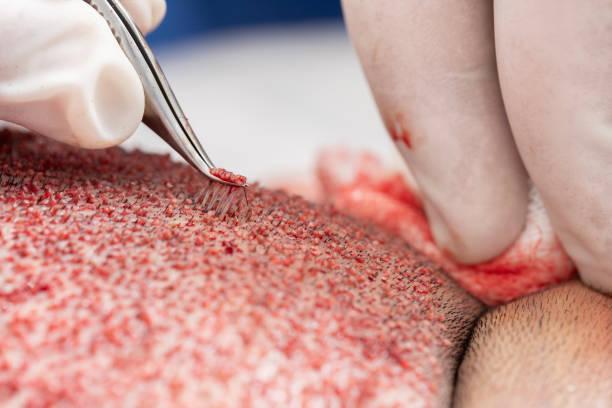
The ultimate objective of any FUE hair transplant in Dubai is not merely to "cover" a bald spot, but to achieve a permanent restoration of hair density that withstands the test of time. Unlike temporary topical solutions or camouflage fibers, a follicular transplant relocates genetically resistant hair to areas of depletion. However, achieving a "density boost" that looks natural requires a complex understanding of the "safe donor zone" and the biological limitations of graft survival.
In clinical settings, we observe that the most successful outcomes occur when patients understand that "density" is a relative term. We cannot replicate the original 100% density of a teenager, but we can strategically place grafts to create the visual illusion of a full head of hair. This guide provides a clinical look at how we maximize graft survival, the sensations you’ll experience, and the long-term reality of your results.
The Biology of Permanent Hair Density
The "permanent" nature of FUE relies on the theory of Donor Dominance. This means that hair follicles taken from the back and sides of the head maintain their genetic resistance to Dihydrotestosterone (DHT)—the hormone responsible for balding—even when moved to a new location.
How do practitioners maximize graft survival for density?
To ensure every transplanted follicle thrives and contributes to your density, surgeons follow these clinical protocols:
-
Graft Hydration: Follicles are stored in a specialized chilled solution (often containing ATP or growth factors) to maintain cellular health while they are out of the body.
-
Dense Packing: In the recipient area, surgeons place between 35 to 50 grafts per square centimeter. Placing them too close can compromise blood flow, while too far apart results in a "see-through" look.
-
Minimal Manipulation: Using "No-Touch" techniques or specialized implanters ensures the delicate hair bulb is not crushed during placement.
Is the Density-Boosting Procedure Painful?
What are the actual sensations during a high-density session?
High-density transplants often require more grafts, meaning a longer day in the clinic. While the procedure is performed under local anesthesia, the "duration" itself is the primary factor in patient comfort.
Step-by-Step Patient Sensations:
-
The "Numbing" Phase: You will feel a series of 5 to 10 quick pinches. Clinical teams often use a "vibration distraction" tool to keep the nerves occupied, making the injections feel like a minor annoyance.
-
The Extraction Phase: You will feel a rhythmic vibration and hear a low "humming" from the motorized punch. It feels like a localized scalp massage with no sharp pain.
-
The Placement Phase: This is a quiet, meticulous process. You will feel a light "tapping" or "pressing" on your scalp. Many patients spend this time watching movies or sleeping.
"I needed 3,500 grafts to fix my crown and hairline. The day was long, but it wasn't painful. The worst part was just sitting in the chair for so many hours, but the team made sure I was comfortable with breaks and snacks." — Mustafa
Who Should Reconsider Seeking High Density?
Are there medical reasons to limit graft counts?
More is not always better. Clinical observation shows that over-harvesting can lead to permanent damage. You should reconsider a high-density "boost" if you have:
-
Retrograde Alopecia: If your "safe" donor zone is also thinning, the transplanted hair may not be permanent.
-
Scarring Alopecia: In cases of Frontal Fibrosing Alopecia, the body’s immune system may attack the new grafts, leading to 0% survival.
-
Unrealistic Donor Expectations: If you have a small donor area and a large bald area, trying to achieve "high density" in one spot will leave you with a "moth-eaten" look in the back.
-
Active Health Issues: Uncontrolled hypertension or smoking significantly reduces blood flow, which is the "fuel" new grafts need to survive.
FUE Density vs. Alternative Restoration Methods
| Feature | FUE Hair Transplant | Scalp Micropigmentation (SMP) | Hair Systems (Wigs/Toupees) |
| Type of Result | Biological Growth | Cosmetic Tattooing | Non-Surgical Accessory |
| Permanence | Lifetime (Permanent) | Semi-permanent (Fades) | Temporary (Daily/Weekly) |
| Density Feel | Real hair texture | Visual shadow only | Instant thickness |
| Maintenance | Low (Wash and cut) | Medium (Touch-ups) | High (Re-bonding/Cleaning) |
| Scalp Breathability | 100% Natural | 100% Natural | Reduced |
The Honest Timeline for a Density Boost
How long until I see the final "thick" result?
Density takes time to manifest. You must pass through several biological phases before the "boost" becomes visible.
-
Month 1: The "Shock Loss" phase. Most transplanted hairs will shed. This is a normal clinical response and does not mean the graft has died.
-
Months 3–4: The "Sprouting" phase. Very fine, thin hairs begin to emerge. They are often colorless and soft at first.
-
Months 6–9: The "Maturation" phase. The hairs become thicker, darker, and start to match the texture of your donor hair. This is when the "density" first becomes apparent.
-
Month 12–15: The Final Result. All grafts have reached their full caliber. This is the permanent density you will keep for life.
"At six months, I was worried because it still looked a bit thin. But between months eight and twelve, it was like a switch flipped. The hair got so much thicker and more manageable." — Karim
FAQs
Can I have a second transplant to increase density further?
Yes, provided you have enough remaining donor hair. We typically wait 12 months between sessions to allow the scalp to fully heal and the first set of grafts to reach full maturity.
Does the transplanted hair grow as fast as my normal hair?
Yes. After the initial shed and regrowth phase, the transplanted hair follows your natural hair growth cycle, which is typically about 1cm per month.
Will I need to take medication to keep the density?
While the transplanted hair is permanent, your existing hair may continue to thin. To maintain a seamless blend and overall density, we often recommend maintenance therapies like PRP or Finasteride.
Can I dye or bleach my new "density boost" hair?
Once the hair is fully grown (usually after 6 months), you can treat it exactly like your natural hair. You can cut it, dye it, and style it however you choose.
Why Choose Tajmeels Clinic?
At Tajmeels Clinic, our philosophy for an FUE hair transplant in Dubai is "Integrity Over Volume." We focus on harvesting the maximum number of healthy grafts while ensuring the long-term health of your donor area. Our surgeons use advanced magnification and precision-guided extraction tools to ensure that every follicle moved is a follicle that grows. We don't just aim for a temporary change; we provide a medically-led, permanent density boost that integrates perfectly with your facial features and aging process.