English
 Arabic
 French
 Spanish
 Portuguese
 Deutsch
 Turkish
 Dutch
Dutch
 Italiano
 Russian
 Romaian
 Portuguese (Brazil)
 Greek
Greek
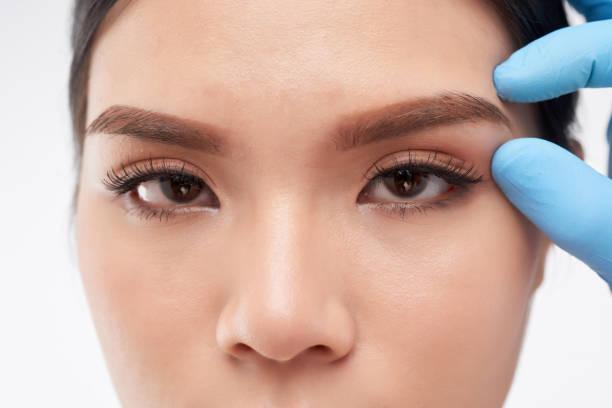
Follicular Unit Extraction (FUE) has revolutionized facial restoration by allowing for the microscopic relocation of individual hair follicles. Unlike traditional methods, an eyebrow hair transplant in Dubai using FUE avoids linear incisions, instead utilizing specialized micro-punches to harvest hair from the donor area. This technique is particularly suited for the face because it allows the surgeon to select only the finest hairs—those that most closely resemble natural eyebrow texture.
In clinical settings, we observe that the technical success of an eyebrow FUE depends on "follicular selection." Not all scalp hair is suitable for the brow; the surgeon must identify single-hair units with a specific caliber to ensure the results aren't too coarse. This guide details the clinical mechanics of the FUE technique, the physical sensations you will encounter, and the safety protocols that govern the procedure.
The Clinical Mechanics of Brow FUE
The FUE process for eyebrows is a three-stage clinical cycle: extraction, preservation, and implantation. Because the target area is small, the margin for error is virtually zero.
How do practitioners execute the FUE technique for brows?
To achieve a high-density, natural result, surgeons follow these calibrated steps:
-
Micro-Punch Extraction: Using a punch tool typically between 0.6mm and 0.8mm, the surgeon isolates follicles from the nape of the neck, where hair is naturally finer.
-
Graft Customization: Under high-power microscopy, the grafts are "cleaned" of excess tissue to ensure the smallest possible insertion point, which minimizes the risk of visible scarring on the brow ridge.
-
Lateral Slit Placement: The recipient sites are created using ultra-fine sapphire blades. These slits are made at an acute angle to ensure the hair grows "flat" against the bone, mimicking natural eyebrow flow.
Is the FUE Technique Painful?
What are the actual sensations during an FUE session?
While FUE is a surgical procedure, it is performed entirely under local anesthesia. Patients remain awake and can communicate with the surgical team throughout the process.
Step-by-Step Patient Sensations:
-
The Anesthesia Phase: You will feel approximately 4 to 6 sharp "pinches" around the eyebrows and the back of the head. This is the only stage where sharp pain is present, lasting about 60 seconds per area.
-
The "Tapping" Phase: During extraction and implantation, the sensation is one of "pressure" or "tapping." It feels as though someone is lightly drumming their fingers on your skin.
-
The Post-Op "Burn": As the anesthesia wears off (4-6 hours post-surgery), you may feel a mild "sunburn" sensation. This is easily managed with standard over-the-counter paracetamol.
"I was worried about feeling the 'holes' being made, but once the numbing kicked in, I felt nothing. It was actually quite boring—I just listened to an audiobook the whole time." — Nadia
Safety Considerations and Technique Risks
Who should be cautious about the FUE technique?
The precision of FUE requires healthy, stable skin. Clinical observation suggests that certain factors can interfere with the "take" of the FUE grafts:
-
Seborrheic Dermatitis: Active inflammation or "dandruff" on the eyebrows can increase the risk of infection and graft loss. The scalp must be clear before surgery.
-
Prior Microblading Complications: If a patient has significant "dermal staining" or deep scarring from a previous tattoo, the skin may be tougher (fibrotic), making it harder for the new FUE grafts to establish a blood supply.
-
Sun Exposure: Patients must avoid the harsh Dubai sun for at least 14 days post-FUE. UV rays can cause "hyperpigmentation" at the tiny extraction and implantation sites.
Comparison: FUE Technique vs. Traditional Strip (FUT)
| Feature | FUE Technique | Traditional Strip (FUT) |
| Harvesting Method | Individual follicle extraction | Removal of a strip of skin |
| Donor Scarring | Micro-dots (Invisible) | Linear scar (Visible if hair is short) |
| Recovery Time | 5–7 Days | 10–14 Days |
| Pain Level | Low (Minimal soreness) | Moderate (Requires stitches) |
| Graft Precision | High (Can pick the thinnest hairs) | Moderate (Random selection) |
The FUE Technique Recovery Timeline
How long do the FUE "dots" take to heal?
Because FUE uses micro-incisions rather than a scalpel, the "social downtime" is significantly reduced.
-
Day 1–2: Small red "pin-pricks" are visible in the brow and donor area. Some "crusting" (scabbing) begins to form.
-
Day 5: The micro-wounds in the donor area are typically closed and invisible. The brow scabs become firm.
-
Day 10: With gentle washing, the scabs fall away. The skin underneath may be slightly pink, similar to a light scratch.
-
Month 4: The FUE grafts begin their first growth cycle. You will see the first few hairs "sprouting" through the skin.
"The healing was so fast. By the end of the first week, I was back in the office. No one could tell I’d had surgery; they just thought I’d had my eyebrows tinted." — Elena
FAQ: FUE Technical Details
Does FUE leave "holes" in my eyebrows?
No. The implantation sites are less than 0.8mm in diameter. Once the hair is placed, the skin naturally contracts around it, leaving no visible mark or "hole."
Can FUE fix asymmetrical eyebrows?
Yes. The FUE technique is ideal for "spot filling." If one brow is thinner or higher than the other, we can extract a specific number of grafts to balance the facial symmetry.
Will the FUE hair change texture over time?
Initially, the hair will grow like scalp hair (thicker and faster). However, over several years, some clinical evidence suggests "recipient dominance," where the hair may slightly soften and adapt to its new environment.
When can I resume exercise after FUE?
We recommend waiting 10 to 14 days. Strenuous exercise increases blood pressure, which can "pop" the new FUE grafts out of their delicate channels before they have fully anchored.
Why Choose Tajmeels Clinic?
At Tajmeels Clinic, we believe the FUE hair transplant in Dubai is a marriage of medical science and artistic vision. Our surgeons use the latest "Sapphire FUE" technology, which utilizes blades made from a single crystal to create cleaner, smaller incisions. This results in faster healing and a higher "graft take" rate. We don't just provide a procedure; we offer a clinical journey defined by transparency, safety, and a commitment to achieving the natural density you deserve.