 English
 Arabic
 French
 Spanish
 Portuguese
 Deutsch
 Turkish
 Dutch
Dutch
 Italiano
 Russian
 Romaian
 Portuguese (Brazil)
 Greek
Greek
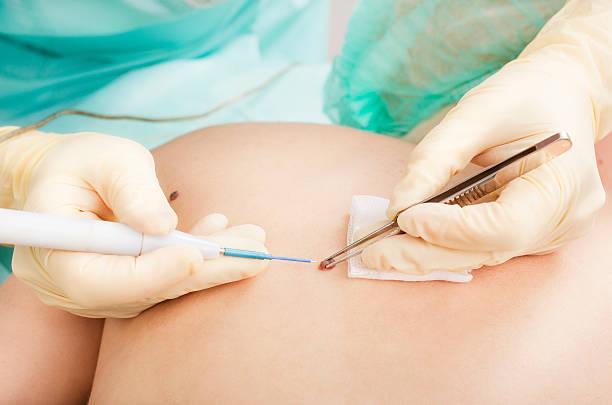
Why Surgical Removal is Often Best for Raised Moles
While lasers are excellent for flat pigmentation, raised or "pedunculated" moles—those that sit above the skin’s surface—often require a structural approach. When patients seek mole removal in Dubai for these types of lesions, they are usually dealing with physical discomfort, such as the mole catching on hairbrushes, collars, or razors. In clinical settings, we find that surgical techniques, specifically the "shave excision," allow for the highest level of topographical precision. By physically leveling the mole with a specialized surgical blade, we can achieve a contour that matches the surrounding skin perfectly, something that heat-based tools sometimes struggle to do on very fleshy tissue.
The Clinical Logic of the Shave Excision
A surgical shave is not a "cut" in the traditional sense; it is a horizontal planing of the skin. Using a flexible, ultra-thin blade, the practitioner removes the raised portion of the mole until it is perfectly flush with the dermis. One of the primary medical advantages of this technique is tissue preservation. Unlike laser vaporization, which turns the mole into gas, surgical removal keeps the tissue intact. This is vital for any mole that requires histopathology (lab testing) to confirm its benign nature, providing peace of mind alongside aesthetic improvement.
Comparing Surgical Methods for Raised Lesions
Choosing the right surgical path depends on the mole’s base and its location on your body.
| Feature | Surgical Shave Excision | Punch Excision | Full Elliptical Excision |
| Best For | Raised, dome-shaped moles | Small, deep-rooted moles | Very large or suspicious moles |
| Stitches Needed | No | 1–2 Small stitches | Yes |
| Recovery Time | 7–10 Days | 10–14 Days | 14+ Days |
| Result | Flat, smooth surface | Small "dot" mark | Fine linear line |
Is Surgical Removal More Painful Than Laser?
In clinical practice, patients often report that surgical removal is surprisingly comfortable because the area is "deeply" numbed prior to the start. We use a local anesthetic that ensures you feel zero sharpness or discomfort during the procedure. Patients typically describe the sensation as a feeling of "movement" or light pressure, but no pain.
Based on post-procedure follow-ups, the recovery "ache" is minimal. Because a shave excision stays in the upper layers of the skin, it feels more like a shallow scrape than a deep wound. Most patients find that a simple over-the-counter pain reliever is more than enough for the first few hours of "thawing."
"I had a large, raised mole on my neck that made me self-conscious for years. The surgical shave was so quick—maybe 15 minutes. I didn't feel anything, and now the skin is completely flat." — Hamdan
The Healing Stages of a Surgical Site
Because surgical removal involves physically removing a layer of skin, the healing process focuses on "re-surfacing."
-
Days 1–3 (The Sealing Phase): The site will look like a shallow, clean "well." It is protected by a small bandage. During this time, the body is sending growth factors to the area to begin new skin production.
-
Days 4–8 (The Regeneration Phase): A flat, soft scab forms. It is essential to keep this moist; a "wet" wound heals up to 50% faster than a dry, crusty one.
-
Week 2 (The Blending Phase): The scab sheds to reveal pink, flat skin. This is the stage where the "bump" is officially gone, leaving a smooth surface.
-
Month 1–3 (The Maturation Phase): The pinkness gradually fades to match your natural skin tone.
Why Every Surgical Removal Starts with a Diagnostic Exam
A diagnostic-first approach is essential for raised moles. Because these lesions have been subject to years of environmental friction, their surface can sometimes change. We utilize high-resolution dermatoscopy to inspect the "vessels" within the mole. If the mole shows any atypical vascular patterns, the surgical approach allows us to remove the lesion entirely and send it for professional lab analysis. This dual-purpose method ensures that your aesthetic goal is met without ever compromising your medical safety.
Who Should Choose Surgical Removal?
Surgical shave excision is the gold standard for:
-
Moles that are "catchy": Moles on the bra line, waistband, or beard area.
-
Large, Fleshy Moles: Moles that have a "stalk" or are dome-shaped.
-
Moles with Unclear History: When the patient wants a definitive lab report for peace of mind.
-
Patients Seeking Flat Results: Those who want to ensure the "bump" is 100% removed in a single visit.
Maximizing Your Surgical Results
To ensure the "divot" fills in perfectly and leaves no mark, follow these clinical observations:
-
Moisture is Non-Negotiable: Use the provided sterile ointment twice a day. This keeps the healing "cells" mobile so they can fill the area evenly.
-
Avoid Stretching: If the mole was on a joint or the back, avoid heavy lifting for 5 days. Tension on a healing surgical site can cause the final mark to widen.
-
Sun Shielding: Freshly healed surgical sites are "UV magnets." In the Dubai sun, protect the pink spot with a bandage or high-SPF zinc cream for 12 weeks.
"I removed a raised mole from my forehead. I was worried it would leave a hole, but the clinic's advice on aftercare was amazing. It leveled out perfectly within a month." — Sara
Why Choose Tajmeels Clinic for Your Procedure?
At Tajmeels Clinic, we treat surgical mole removal in Dubai with the highest level of clinical rigor and aesthetic care. We understand that removing a raised mole is about more than just "cutting"—it’s about restoring a smooth, natural skin contour. Our clinicians combine a diagnostic-first philosophy with refined surgical techniques to ensure your results are flush, functional, and aesthetically pleasing. We provide a professional, supportive environment and detailed aftercare support, ensuring your journey from "bump" to "smooth" is as seamless and comfortable as possible.
Frequently Asked Questions
Will a surgical shave leave a permanent scar?
Because a shave excision does not go into the deep dermis, it rarely leaves a "scar" in the traditional sense. Most patients are left with a small area that is slightly lighter or pinker than the surrounding skin, which fades over time.
How long does the procedure take?
A single raised mole can be surgically removed in about 15 to 20 minutes, including the time for the anesthetic to take full effect.
Can I wash the area after surgical removal?
You should keep the bandage dry for the first 24 hours. After that, you can gently wash the area with mild soap and water, but avoid scrubbing or soaking the site in a bath or pool for at least a week.
Is surgical removal better than laser for raised moles?
Often, yes. Lasers work by "melting" tissue, which can sometimes leave a small residual "nub" if the mole is very large. Surgery allows the practitioner to physically ensure the surface is 100% flat.
Does the mole need to be tested in a lab?
One of the benefits of surgical removal is that it preserves the tissue. While most moles we remove are benign, we always offer the option to send the sample for histopathology if there is any diagnostic uncertainty.
