English
 Arabic
 French
 Spanish
 Portuguese
 Deutsch
 Turkish
 Dutch
Dutch
 Italiano
 Russian
 Romaian
 Portuguese (Brazil)
 Greek
Greek
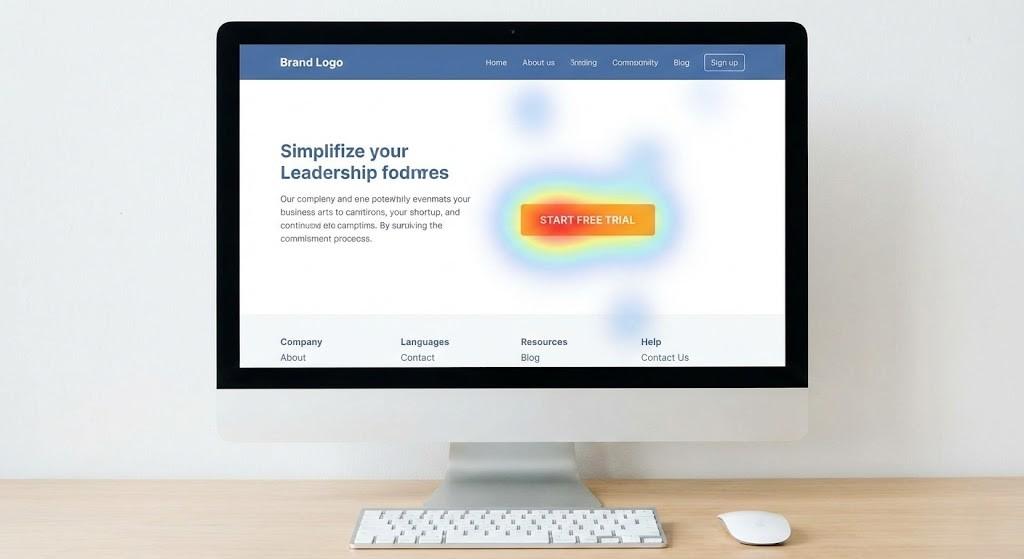
A gorgeous website that converts no visitors is just an overpriced digital showcase.
Every tint applied, every gap between components, every element positioned functions as a behavioral catalyst. The accomplished website designer doesn't merely polish aesthetics—they engineer decision pathways through proven psychological mechanics. These systems are more structured than most assume.
Pattern 1: Color Pulls the Eye Before the Brain Processes Meaning
Color psychology is constantly misread in digital design. Designers repeat that red means urgency and blue means trust, but these are cultural layers on biological functions.
What color actually does neurologically is create contrast that directs the fovea—the retina's sharp-vision center—toward specific elements before conscious thought kicks in.
Meaning shifts dramatically by culture. In Singapore, red signals luck and prosperity. In Western retail, identical red screams sales and discounts.
Same color. Different messages.
So when your web design agency works across markets, color choices become strategic location decisions, not just brand consistency.
The simple rule: use brand colors for navigation, headers, logos, and trust. Use one contrasting accent only for conversion actions.
When your CTA looks like your menu, users learn to ignore it. Not on purpose—the brain just filters repetitive visual patterns as background noise.
Pattern 2: Empty Space Is Valuable Real Estate Used Deliberately
Clients always want to fill the screen.
"Can we add more content here?" This makes sense—and kills performance.
Stanford's d.school research shows users remember more when visual groups have fewer items. Three services with breathing room consistently beat nine services crammed together. The issue isn't reading ability; it's confidence. Nine options say you're not sure any one is worth much.
Look at Grab's Singapore homepage versus typical local SME sites stuffed with services, awards, and contact buttons above the fold. Grab shows one thing. The SME shows forty competing things. One creates a clear path to action.
White space is visual silence. It tells the eye: this matters enough to stand alone.
Pattern 3: Layout Must Work With Natural Eye Movement or Fail
Users don't read websites. They scan, following predictable patterns.
The F-pattern shows up on text-heavy pages. Visitors read the top strip, scan down the left side, then dart right when something catches them. The right side gets ignored.
That's why trust signals—certifications, logos, awards—belong left or center, never in right sidebars where eye-tracking shows they vanish. Nielsen's documented this since 2006, and mobile makes it worse because the thumb covers the right edge when scrolling.
The Z-pattern appears on simple pages: top-left logo, top-right navigation, diagonal to bottom-left, action at bottom-right. That's why converting landing pages put the main CTA in the bottom-right above the fold. Not design trend—human biology.
A skilled website designer builds around these patterns instead of fighting them.
Pattern 4: Friction Is Built on Purpose, Not by Mistake
Strategic friction increases commitment. Sounds wrong until you see the data.
Multi-step forms complete more often when questions go from easy to hard. Ask for name and email first. Ask for budget and timeline last.
Users who answer question one feel invested enough to finish question eight because of the Zeigarnik effect: unfinished tasks stick in memory, creating mild tension until done. The incomplete form nags at people like unread texts.
The same thing works for checkout.
Get the email in step one, payment in step two. This recovers more leads than one long form. Even if they bail on step two, you have their email. The interrupted purchase stays in their head. A well-timed email closes more of these than retargeting ads.
Every good web design agency knows this. The goal isn't fewest steps, but best order—building commitment at each stage.
Pattern 5: Typography Controls Mental Work, Not Just Looks
Lindgaard et al.'s 2006 study found users form visual opinions in 50 milliseconds. Typography drives this more than most admit.
Serif fonts feel traditional and authoritative. Sans-serif feels modern and clean.
But brand feel matters less than reading mechanics: line height at least 1.5x font size, line length 50-75 characters, body text minimum 16px.
Break these rules and users tire without knowing why. They don't think "font too small." They feel "something's off" and leave.
Good typography disappears when right. Bad typography feels wrong immediately.
Pattern 6: Social Proof Only Works Where Doubt Happens
Testimonials at the bottom are decoration. Users scroll past them like legal text.
Effective social proof sits right where hesitation strikes. Not star ratings. Not "Excellent service!"
Specific, credible quotes next to decision points: "We briefed them Monday, had wireframes Wednesday, launched in three weeks. Ranked for our main keyword in two months." This answers the exact question users have: will this work for me?
Vague praise sounds fake even when real. Specifics build credibility, not ratings.
The Real Work Starts After Launch
Building the site is guessing. Everything after is learning.
Microsoft Clarity (free) and Hotjar ($32/month+) show heatmaps, scroll depth, and recordings of exactly where users drop off.
The gap between what you thought users would do and what they actually do is where smart design lives. Most sites launch and die. Converting sites launch and keep improving based on real data.
Color, space, and layout don't invent behavior. They tap patterns from every other site users have seen. A smart website designer aligns with these patterns on purpose. Fight them, and you get a site that looks great and performs badly.