English
 Arabic
 French
 Spanish
 Portuguese
 Deutsch
 Turkish
 Dutch
Dutch
 Italiano
 Russian
 Romaian
 Portuguese (Brazil)
 Greek
Greek
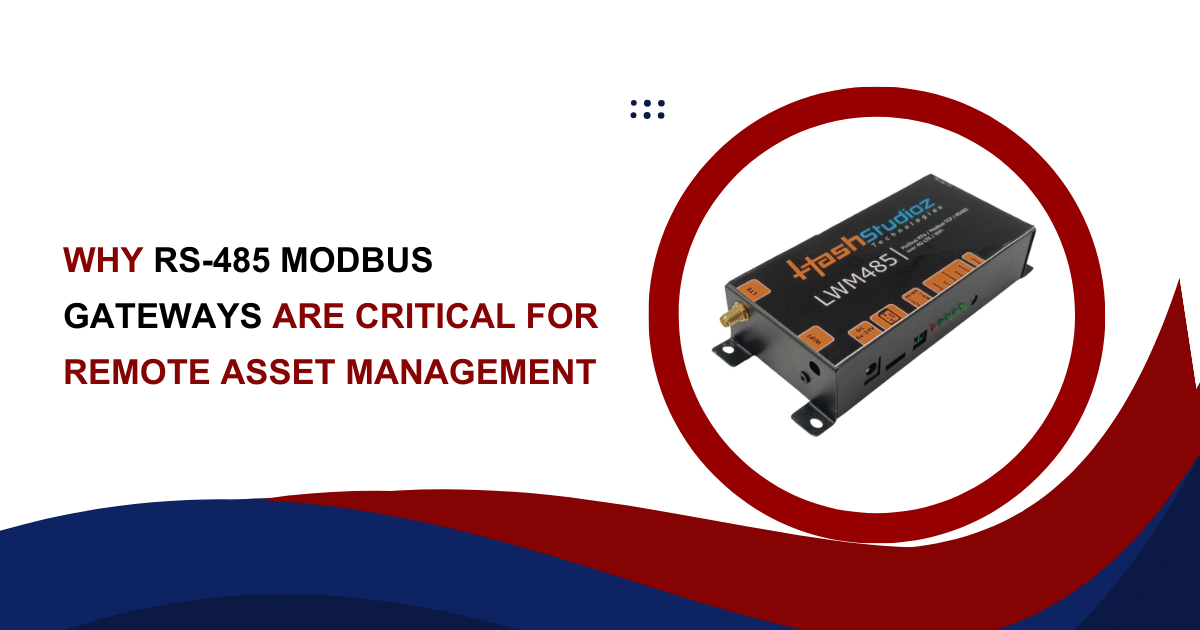
Remote asset management (RAM) is becoming increasingly important in industries that require the monitoring, control, and management of equipment from remote locations. Whether in industrial settings, utilities, or infrastructure projects, managing assets efficiently is crucial for reducing downtime, ensuring operational efficiency, and increasing the lifespan of equipment. A key technology facilitating this is the RS-485 Modbus Gateway, an essential component in enabling seamless communication between devices and systems over long distances.
What is an RS-485 Modbus Gateway?
An RS-485 Modbus Gateway is a communication device that acts as an interface between different types of communication protocols or networks. The RS-485 standard allows for long-distance, reliable communication, especially in industrial environments. Modbus is a communication protocol commonly used in automation and control systems, allowing devices like sensors, controllers, and PLCs (Programmable Logic Controllers) to exchange data.
The Role of RS-485 Modbus Gateways in Remote Asset Management
1. Facilitating Communication Over Long Distances
One of the primary benefits of the RS-485 Modbus Gateway is its ability to transmit data over long distances—up to 4,000 feet (1,200 meters). In industries such as oil and gas, water treatment, and manufacturing, assets are often spread over vast areas. With traditional communication protocols, this long-range requirement is difficult to achieve. However, RS-485 offers differential signaling, which allows reliable communication over long distances while maintaining high immunity to electrical noise and interference.
2. Interoperability Between Different Devices and Systems
In modern industrial environments, multiple types of equipment from different manufacturers are often used. For effective remote management, these devices must be able to communicate with each other. Modbus, being an open-source protocol, ensures compatibility across a wide range of devices, including temperature sensors, flow meters, pressure gauges, and more.
3. Increased Reliability and Reduced Downtime
In critical industries, unplanned downtime is expensive. Remote asset management relies on constant monitoring and control to ensure operations run smoothly. RS-485 Modbus Gateways improve the reliability of the entire communication infrastructure by offering stable and secure connections.
According to a report by the Aberdeen Group, companies that adopt real-time monitoring and predictive maintenance strategies have a 30% lower downtime rate compared to those that rely on reactive maintenance.
Key Features of RS-485 Modbus Gateways
1. Wide Compatibility
RS-485 Modbus Gateways support both Modbus RTU and Modbus TCP protocols. Modbus RTU is widely used in industrial settings where devices communicate serially, while Modbus TCP is commonly used for network-based communication. A good gateway supports both protocols, offering flexibility and scalability.
2. High-Speed Data Transmission
RS-485 communication offers a maximum baud rate of 10 Mbps, ensuring fast data transfer even over long distances. This speed is crucial for real-time monitoring and immediate action in the case of a problem or asset failure.
3. Scalability
As industries grow, so does the number of devices and assets that need to be managed. An RS-485 Modbus Gateway can handle multiple devices, allowing businesses to scale their operations without the need for costly infrastructure upgrades. By supporting several devices at once, it makes it easier for remote teams to manage a large number of assets spread across multiple locations.
4. Robustness in Harsh Environments
The industrial environments in which remote asset management takes place can often be harsh. RS-485 Modbus Gateways are built to withstand such conditions, featuring rugged housings, resistance to extreme temperatures, and protection against electrical surges and vibrations. This durability ensures that communication remains stable, even in the most challenging settings.
5. Easy Integration with Cloud-Based Systems
With the rise of IoT (Internet of Things) and cloud computing, the ability to integrate devices into cloud-based platforms is becoming increasingly important. RS-485 Modbus Gateways can connect legacy devices (which typically use Modbus RTU) to modern cloud-based applications that use Modbus TCP or MQTT (Message Queuing Telemetry Transport). This connectivity enables centralized monitoring, control, and reporting, even from remote or offsite locations.
Applications of RS-485 Modbus Gateways in Remote Asset Management
1. Industrial Automation
In industrial environments, factory equipment such as PLCs, sensors, and actuators need to be continuously monitored to ensure smooth operations. With RS-485 Modbus Gateways, manufacturers can collect data from these devices, analyze it in real time, and detect potential issues before they affect production.
Example: A manufacturing plant may use RS-485 Modbus Gateways to monitor the performance of motors, conveyor belts, and temperature sensors. The system will send alerts if any parameter goes beyond a predefined threshold, allowing technicians to perform maintenance on equipment before it breaks down.
2. Energy Management
In industries that depend on large-scale energy consumption, remote monitoring of energy usage is vital for cost-saving and sustainability goals. RS-485 Modbus Gateways are commonly used to interface with energy meters, transformers, and other electrical equipment.
Example: In a solar power farm, RS-485 Modbus Gateways can monitor solar inverters, battery storage, and power distribution systems. Real-time data transmission allows the farm operator to monitor energy production and consumption, ensuring the optimal performance of the entire system.
3. Oil and Gas
Oil and gas fields are often located in remote areas, where monitoring and maintenance require reliable communication over long distances. RS-485 Modbus Gateways are commonly used in these scenarios to connect sensors, flow meters, and pressure gauges with central monitoring systems.
Example: An oil drilling rig can use RS-485 Modbus Gateways to track the status of drilling equipment and transmit that data back to a remote operations center. If a machine malfunctions, it triggers an alert that informs the maintenance team to perform immediate repairs, thus preventing costly downtime.
4. Water and Wastewater Treatment
In water and wastewater plants, assets such as pumps, valves, and filtration systems are spread over large areas. RS-485 Modbus Gateways allow plant managers to remotely monitor these assets in real-time and respond to issues such as pump failure, clogging, or water quality problems.
Example: A water treatment facility can use RS-485 Modbus Gateways to monitor the condition of filtration systems, detect changes in water pressure, and analyze chemical concentrations. Remote access to this data improves operational efficiency and helps prevent environmental hazards.
5. Building Automation Systems
Building automation systems (BAS) control heating, ventilation, air conditioning (HVAC), lighting, and other critical building systems. RS-485 Modbus Gateways allow facility managers to control and monitor all these systems remotely, ensuring energy efficiency and occupant comfort.
Example: In large commercial buildings, an RS-485 Modbus Gateway can connect various HVAC units, light sensors, and occupancy detectors to a centralized management system. This setup allows the building operator to adjust heating or cooling in real-time based on occupancy patterns or external weather conditions.
Benefits of RS-485 Modbus Gateways in Remote Asset Management
-
Reduced Operational Costs: By continuously monitoring assets, companies can reduce the need for on-site inspections, decreasing labor and travel costs.
-
Enhanced Data Visibility: Remote access to real-time data ensures that decision-makers have up-to-date information to make informed choices.
-
Predictive Maintenance: The early detection of equipment failures allows for predictive maintenance, which can extend the lifespan of assets and reduce unplanned downtime.
-
Improved Safety: RS-485 Modbus Gateways help monitor safety-critical systems, such as pressure or gas leak detectors, providing early warnings of potentially hazardous conditions.
Conclusion
RS-485 Modbus Gateways play a pivotal role in enabling effective remote asset management. They facilitate long-distance, reliable communication, improve system interoperability, and enhance operational efficiency. Whether in industrial automation, energy management, or water treatment, these devices ensure seamless data flow between various equipment and control systems.
As industries continue to evolve and become more reliant on remote monitoring, the importance of Modbus Gateways will only increase. Their ability to integrate disparate systems and provide real-time insights will be critical for organizations striving to maintain a competitive edge while minimizing downtime and operational costs.