English
 Arabic
 French
 Spanish
 Portuguese
 Deutsch
 Turkish
 Dutch
Dutch
 Italiano
 Russian
 Romaian
 Portuguese (Brazil)
 Greek
Greek
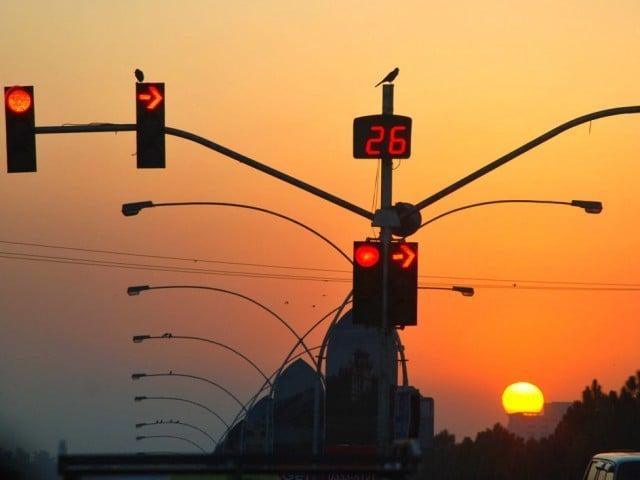
London is a unique driving environment. It is a city of relentless surveillance, with more speed cameras, red-light cameras, and ANPR units per square mile than anywhere else in the UK. It is also home to some of the busiest and toughest Magistrates' Courts in the country—Lavender Hill, Willesden, Stratford, and Bromley.
If you are facing a motoring prosecution in the capital, the stakes are often higher. London drivers are frequently professional drivers (Uber, Addison Lee, Black Cab) or high-net-worth individuals for whom a licence is essential for business. The Metropolitan Police and City of London Police have dedicated traffic units that are rigorous in their paperwork. You cannot rely on a "provincial" defence strategy here. You need driving offence solicitors in London who understand the specific tempo and temper of the London courts.
At Motoring Defence, we operate effectively within the M25 bubble. We know that a disqualification in London doesn't just mean taking the bus; it often means the loss of a PCO licence or the collapse of a business. In this guide, we explore the specific challenges of facing a driving charge in London and how we navigate the capital’s legal system to save your licence.
The "Met" Factor: Scrutinising the Evidence
The Metropolitan Police process hundreds of thousands of traffic offences a year. Because of this volume, errors are common.
· The Single Justice Procedure (SJP): London courts use the SJP aggressively to clear backlogs. You will likely receive a notice from the "Metropolitan Police Traffic Prosecution Service" based in Sidcup. It often encourages you to plead guilty online. Do not click "Guilty" without advice. We frequently find that in the rush to process tickets, the Met fails to attach the correct evidence or serves the NIP to the wrong address (often an old address on their system, not your current DVLA address). We audit the "Sidcup paper trail" to find the procedural flaws that can kill the case before it even reaches a Magistrate.
The 20mph Zone Epidemic
London is now blanketed in 20mph zones. From Wandsworth to Islington, roads that were 30mph for decades are now 20mph. We see hundreds of drivers caught doing 24mph or 28mph. While these seem minor, they add up.
· The Signage Defence: In London’s cluttered streets, signage is often obscured by buses, trees, or construction hoardings. For a speed limit to be enforceable, the signage must be "adequate." We send agents to the scene to photograph the signage from the driver’s perspective. If a sign was twisted or hidden behind a parked van, we argue that you could not reasonably have known the limit, securing an acquittal.
PCO Drivers: Protecting the livelihood
For London’s private hire and taxi drivers, a driving conviction is a double threat.
1. The Court: Punishes you with points/fine.
2. TfL (Transport for London): Reviews your fitness to hold a PCO licence. A conviction for a "major" offence (like using a mobile phone) or accumulating more than 6 points can lead TfL to revoke your PCO licence immediately. As specialist driving offence solicitors in London, we defend the criminal case with the TfL regulator in mind. We might negotiate a short ban instead of points for a PCO driver (strange as it sounds), because a short ban might not trigger a mandatory revocation under TfL’s specific policy, whereas 6 points for a mobile phone offence almost certainly will. We play the long game to keep you earning.
The "London Hardship" Argument
When arguing Exceptional Hardship to avoid a ban, London Magistrates can be cynical. They often say, "You live in London; you can take the Tube." To win in a London court, you must defeat the "public transport" argument.
· The "Tools of the Trade" Defence: We prove that you carry heavy equipment (builders, surveyors, musicians) that cannot be taken on the Underground.
· The "Unsocial Hours" Defence: We show that your shifts start at 3 AM or end at 2 AM, when public transport is limited or unsafe for your specific journey.
· The "Multi-Site" Defence: We demonstrate that you visit 5-6 client sites a day across different boroughs, a schedule that is physically impossible using buses and trains.
Why Motoring Defence?
· Local Knowledge: We know which Magistrates at Willesden are strict on "totting up" and which are receptive to hardship arguments.
· Speed: London moves fast. We can arrange representation for a hearing at Lavender Hill with 24 hours' notice.
· Fixed Fees: London law firms are famous for high hourly rates. We break the mould with fixed-fee packages, giving you elite representation without the "City" price tag.
Conclusion
Driving in London is hard. Defending yourself in a London court is harder.
Contact Motoring Defence today. Instruct the specialist driving offence solicitors in London who know the streets, the statutes, and the strategies to win.
Keywords: "drink driving solicitors"
One Drink, One Mistake, One Chance: How Drink Driving Solicitors Can Save Your Licence
Of all motoring offences, drink driving carries the deepest stigma and the most immediate consequences. The moment you fail a roadside breath test, your life changes. You are arrested, handcuffed, held in a cell, and fingerprinted. Your DNA is taken. When you are released, you face a mandatory minimum 12-month disqualification, a criminal record, and potentially—in serious cases—prison.
The system is designed to process you quickly. The police will tell you there is "no point" in fighting it. They will say the machine is never wrong. Do not accept this counsel of despair. Drink driving law is not about whether you had a drink; it is about whether the prosecution can prove, using a highly specific scientific and procedural framework, that you exceeded the legal limit. At Motoring Defence, we are specialist drink driving solicitors. We know that the Lion Intoxilyser 6000 (the machine used in police stations) is a piece of technology that can fail. We know that police procedure is strict and often breached. We fight these cases not by denying you drank, but by proving the evidence against you is flawed.
The "Mandatory" Ban: Is it Inevitable?
If convicted of driving with excess alcohol (Section 5 RTA 1988), the Magistrates must ban you for at least 12 months. There is no "Exceptional Hardship" argument for drink driving. To avoid the ban, we must achieve one of two things:
1. Acquittal: A "Not Guilty" verdict because the evidence is inadmissible or unreliable.
2. Special Reasons: A finding that while you are guilty, there are special reasons (like a spiked drink or a medical emergency) why you should not be disqualified.
Challenging the Machine: The Breathalyser Defence
The prosecution relies on the printout from the breathalyser machine in the police station. However, for that printout to be admissible, the machine must be working perfectly.
· Calibration: The machine must check itself with a "simulator solution" before and after your test. If the solution is old or the temperature is wrong, the reading is invalid. We demand the "calibration logs" and "maintenance records" for the specific machine used. If it has a history of faults, we argue the reading is unsafe.
· The "Statutory Option": If your breath reading was between 40µg and 50µg (the limit is 35µg), the police must offer you the option to replace your breath sample with a blood or urine sample. If they fail to offer this, or if they deter you from taking it, the entire case must be thrown out. We audit the CCTV of the breath test room to check if this offer was made clearly.
The "Hip Flask" Defence: Post-Driving Consumption
A common scenario: You clip a kerb or have a minor bump near your home. You drive the last 500 yards, park up, and go inside. Shaken, you pour yourself a large whisky or two. The police arrive 20 minutes later, smell alcohol, and arrest you. You fail the test because of the whisky you drank after driving. The police will charge you anyway. We build the Hip Flask Defence. We instruct a forensic toxicologist to perform a "back calculation."
· We measure your height, weight, and the alcohol consumed post-driving.
· The expert calculates what your alcohol level would have been at the time of the accident, stripping out the post-driving drinks.
· If the calculation shows you were under the limit when behind the wheel, you are Not Guilty.
The Procedure in the Station: The MG DD Forms
The police must follow a rigid script called the MG DD procedure. It is a complex flowchart of warnings and questions.
· Did the officer warn you that failing to provide a specimen is an offence?
· Did they ask if you were on medication?
· Did they wait 20 minutes after your last drink to ensure there was no "mouth alcohol" contaminating the breathalyser? If the officer skipped a page or paraphrased the legal warnings, the evidence can be excluded under Section 78 of the Police and Criminal Evidence Act (PACE) (Unfair Evidence). We scrutinise the MG DD booklet for these fatal errors.
Failing to Provide a Specimen
Sometimes, a driver tries to blow but can't. Maybe they have asthma, a chest infection, or are simply in a state of panic. The police often charge this as "Failing to Provide," which carries a more severe penalty than drink driving itself (often a 17-20 month ban). We defend these cases on medical grounds. We obtain GP records and specialist reports to prove you had a "Reasonable Excuse" (like reduced lung capacity) for failing to provide the sample. If the court accepts you tried but physically couldn't, you are acquitted.
Why Motoring Defence?
· Forensic Strategy: We don't just read the police statements; we challenge the science behind them.
· Fixed Fees: Drink driving cases can be expensive if paid hourly. We offer a fixed fee for the entire case, from first hearing to trial.
· Honest Appraisal: If the evidence is watertight, we will tell you. We will then switch strategy to minimising the ban (arguing for the minimum 12 months rather than 18 or 24) and securing you a place on the Drink Drive Rehabilitation Course (which reduces the ban by 25%).
Conclusion
A drink driving charge feels like the end of the world, but with the right technical defence, it doesn't have to be.
Contact Motoring Defence today. Instruct the specialist drink driving solicitors who act with science, strategy, and speed to protect your licence.