English
 Arabic
 French
 Spanish
 Portuguese
 Deutsch
 Turkish
 Dutch
Dutch
 Italiano
 Russian
 Romaian
 Portuguese (Brazil)
 Greek
Greek
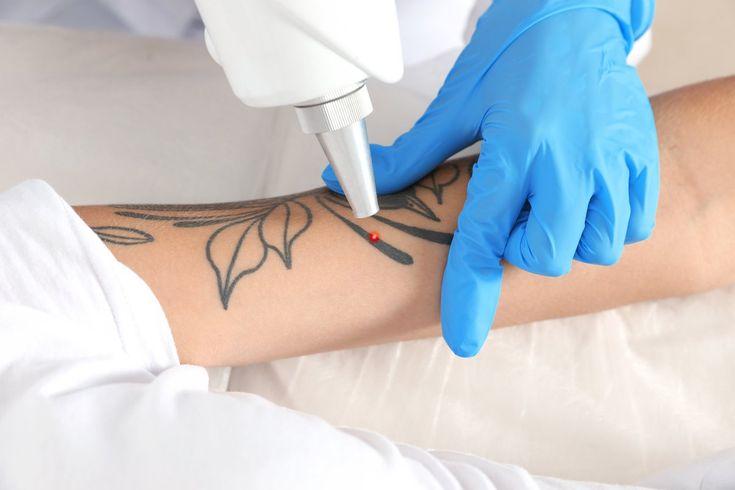
The Science Behind Pico and Nano Lasers for Skin Ink
The world of medical aesthetics has seen a monumental shift in how we approach the removal of permanent body art. For those considering a permanent tattoo removal in Riyadh,(إزالة الوشم الدائم في الرياض) the choice often comes down to two primary technologies: Nanosecond (Nano) and Picosecond (Pico) lasers. While both systems utilize the principle of selective photothermolysis to target ink without damaging the skin, the "science of speed" sets them apart. In a city where precision and safety are paramount, understanding the microscopic interactions between laser light and ink particles is essential for anyone looking to reclaim their skin's natural appearance.
The Pulse Duration Revolution: Billionths vs. Trillionths
The core difference between these two technologies lies in the pulse duration, which is the amount of time the laser energy is in contact with the skin.
-
Nanosecond Lasers (The Nano Era): A nanosecond is one-billionth of a second. For decades, Q-switched nanosecond lasers were the gold standard. They work primarily through a photothermal effect. The laser heats the ink particles rapidly, causing them to expand and break. However, because the pulse is relatively "long" in the world of physics, some heat can leak into the surrounding skin tissue, which is why these sessions often feel hotter and may require more recovery time.
-
Picosecond Lasers (The Pico Era): A picosecond is one-trillionth of a second—roughly 1,000 times faster than a nanosecond. This incredible speed shifts the mechanism from heat to pressure, known as the photomechanical or photoacoustic effect. The pulse is so fast that it creates a shockwave that shatters ink particles into microscopic "dust" rather than just smaller "pebbles."
Selective Photothermolysis and the TRT
The success of any laser treatment relies on Selective Photothermolysis. This theory states that to destroy a target (the ink) without harming the surrounding area, the laser pulse must be shorter than the target’s Thermal Relaxation Time (TRT).
The TRT is the time it takes for an object to lose 50% of its heat. Because tattoo ink particles are incredibly small (often between 30 and 300 nanometers), their TRT is extremely short—often in the sub-nanosecond range. Pico lasers are designed to match this window perfectly. By delivering energy faster than the ink can "leak" heat, the energy stays concentrated within the pigment, leading to more efficient shattering and a lower risk of thermal damage to the skin.
Photothermal vs. Photoacoustic: A Microscopic Battle
To visualize the difference, imagine a large boulder sitting in a field:
-
The Nano Approach (Photothermal): This is like using a blowtorch on the boulder. You heat the rock until the internal stress causes it to crack into several smaller stones. It works, but the ground around the boulder gets very hot in the process.
-
The Pico Approach (Photoacoustic): This is like hitting the boulder with a high-velocity sonic wave. The pressure is so intense and immediate that the boulder doesn't just crack; it pulverizes into fine sand. The surrounding grass remains cool because the energy was spent entirely on the mechanical destruction of the rock.
This "sand-like" debris created by Pico lasers is significantly easier for the body's macrophages (white blood cells) to swallow and transport to the lymphatic system for elimination. This often results in fewer total sessions and faster fading between appointments.
Wavelengths and Ink Color Science
Science doesn't just stop at speed; it also involves the physics of color. Light is only absorbed by an object if that object is a "complementary" color.
-
1064 nm (Infrared): This wavelength is the king of black and dark blue inks. It penetrates deeply and is safely absorbed by dark pigments, even in darker skin tones.
-
532 nm (Green Light): This is used for "warm" colors like red, orange, and yellow. These colors are notoriously difficult for older lasers, but the high peak power of modern Pico systems has made them much easier to clear.
-
755 nm (Alexandrite): Excellent for stubborn greens and blues, which were once considered permanent.
Why Technology Choice Matters for Your Skin
In Riyadh’s climate, minimizing skin trauma is vital for a smooth recovery. Because Pico technology relies on pressure rather than excessive heat, it is generally considered safer for a wider range of skin types. It reduces the risk of Post-Inflammatory Hyperpigmentation (PIH), a condition where the skin darkens in response to heat or injury.
Furthermore, the "shockwave" effect of Pico lasers can sometimes trigger a secondary benefit: collagen remodeling. As the pressure wave travels through the skin, it can stimulate the body's natural healing response, sometimes improving the texture of the skin in the area where the tattoo used to be.
Conclusion: The Future of Clearance
While Nanosecond lasers remain a reliable and cost-effective tool for simple, dark tattoos, Picosecond technology represents the frontier of what is possible. By harnessing the power of photoacoustic shockwaves, modern treatments offer a faster, safer, and more thorough path to total ink clearance. As the science continues to evolve, the goal remains the same: to provide a clean slate with the highest level of clinical precision.