English
 Arabic
 French
 Spanish
 Portuguese
 Deutsch
 Turkish
 Dutch
Dutch
 Italiano
 Russian
 Romaian
 Portuguese (Brazil)
 Greek
Greek
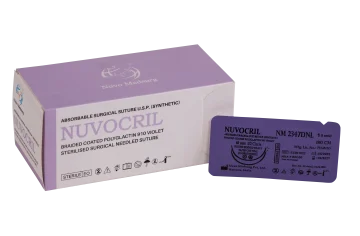
Surgical sutures are essential medical tools used to close wounds and hold tissues together after surgery or injury. They support the natural healing process by keeping tissue edges aligned until the body repairs itself. Over the years, suture technology has advanced significantly, offering surgeons more reliable materials that improve healing outcomes and reduce complications.
Modern surgical practice often favors advanced synthetic sutures designed to provide consistent performance and minimal tissue reaction. One example is NUVOCRIL Surgical Sutures , which are widely used for soft tissue approximation in various surgical procedures. Compared with traditional sutures made from natural materials, NUVOCRIL sutures offer improved strength, controlled absorption, and better handling during surgery. Understanding the differences between these two types of sutures helps healthcare professionals choose the most suitable option for effective wound closure.
What Are NUVOCRIL Surgical Sutures?
NUVOCRIL surgical sutures are synthetic absorbable sutures commonly used in modern surgical procedures. They are typically made from Polyglactin 910, a synthetic material designed to gradually break down in the body through a controlled process known as hydrolysis.
These sutures are braided and often coated, which allows them to pass smoothly through tissue during surgical procedures. Their design provides strong knot security and reliable tensile strength, helping maintain wound closure while the tissue heals.
Another important advantage of NUVOCRIL sutures is their predictable absorption rate. The material gradually dissolves in the body over time, eliminating the need for suture removal in many internal surgical procedures.
Because of these benefits, surgeons frequently rely on products such as NUVOCRIL Surgical Sutures when performing procedures that require dependent wound support and controlled healing.
What Are Traditional Sutures?
Traditional sutures refer to earlier forms of surgical sutures made from natural materials such as silk, catgut, or cotton. These materials were widely used before synthetic alternatives became common in modern medicine.
Some traditional sutures are absorbable, such as catgut, which gradually dissolves inside the body. Others, such as silk or nylon sutures, are non-absorbable and must be removed manually after the wound heals.
While traditional sutures can still be effective in certain procedures, they may have limitations. Natural materials can sometimes cause stronger tissue reactions or inflammation, and their absorption rates may vary depending on the patient’s body condition.
As surgical technology has improved, many healthcare providers have shifted toward synthetic sutures that offer greater reliability and consistency during wound healing.
Key Differences Between NUVOCRIL Sutures and Traditional Sutures
Understanding the differences between NUVOCRIL sutures and traditional sutures can help surgeons select the most appropriate material for specific procedures.
1. Material Composition
NUVOCRIL sutures are made from synthetic materials designed specifically for medical use. These materials provide consistent quality and predictable behavior during healing.
Traditional sutures are often made from natural fibers such as silk or collagen-based catgut. Because these materials are derived from biological sources, they may cause stronger tissue reactions in some patients.
2. Absorption Process
NUVOCRIL sutures break down through hydrolysis, a chemical process that allows the material to dissolve gradually inside the body. This process provides a predictable absorption timeline.
Traditional absorbable sutures, such as catgut, degrade through enzymatic processes. This type of absorption can vary depending on the patient’s body conditions, making it less predictable.
3. Tissue Reaction
Synthetic sutures such as NUVOCRIL are designed to minimize tissue reaction. This helps reduce inflammation and promotes smoother wound healing.
Natural sutures may trigger stronger immune responses because the body recognizes them as biological materials. This can sometimes lead to irritation or inflammation around the wound site.
4. Strength and Handling
NUVOCRIL sutures are often braided and coated, which improves flexibility and knot security. Surgeons can handle them easily during procedures, allowing precise wound closure.
Traditional sutures may not always provide the same level of consistency in strength and handling, especially during delicate surgical procedures.
5. Modern Surgical Applications
Modern surgical procedures often require sutures that provide reliable performance and predictable healing. Synthetic sutures like NUVOCRIL Surgical Sutures are commonly used in soft tissue repair, gynecological procedures, ophthalmic surgeries, and general surgical operations.
Their controlled absorption and dependent strength make them suitable for many medical applications where reliable wound closure is essential.
Advantages of NUVOCRIL Surgical Sutures
NUVOCRIL sutures offer several advantages that make them a preferred choice in many surgical settings.
Predictable absorption
The hydrolysis process ensures the suture dissolves in a controlled and consistent manner.
Minimal tissue reaction
Synthetic materials help reduce inflammation and irritation around the wound.
Strong tensile strength
The braided structure provides reliable support for healing tissues.
Smooth tissue passage
The coated surface allows the suture to glide through tissue with minimal resistance.
Wide range of applications
NUVOCRIL sutures can be used in multiple surgical specialties for soft tissue approximation.
These advantages make them a reliable option for modern surgical procedures.
Conclusion
Surgical sutures play a vital role in wound closure and tissue repair. While traditional sutures made from natural materials were once widely used, advances in medical technology have led to the development of synthetic sutures that offer improved reliability and performance.
NUVOCRIL sutures provide controlled absorption, strong tensile strength, and minimal tissue reaction, making them a dependent option for modern surgical procedures. Compared with traditional sutures, they offer more predictable healing outcomes and improved handling during surgery.
For healthcare providers seeking reliable wound closure solutions, NUVOCRIL Surgical Sutures provide a practical and effective choice that supports safe surgical care and optimal patient recovery.