English
 Arabic
 French
 Spanish
 Portuguese
 Deutsch
 Turkish
 Dutch
Dutch
 Italiano
 Russian
 Romaian
 Portuguese (Brazil)
 Greek
Greek
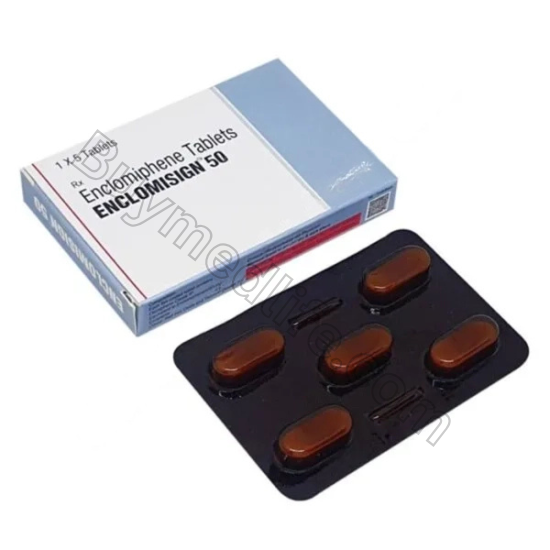
Fertility challenges can feel overwhelming, especially when you’re trying to understand the many treatment options available. Among newer approaches being discussed in medical and wellness communities is Enclomiphene 50 mg. While traditionally associated with male hormone therapy, there is growing curiosity about how this compound may support women’s fertility by influencing hormonal balance and ovulation.
In this blog, we’ll break down what Enclomiphene 50 mg is, how it may work in women, and what you should know before considering it as part of your fertility journey.
What Is Enclomiphene?
Enclomiphene is a selective estrogen receptor modulator (SERM), derived from clomiphene citrate. It works by stimulating the body’s natural hormone production rather than replacing hormones directly. In simple terms, it signals the brain to increase the release of hormones that are crucial for reproductive health.
For women, hormonal balance plays a key role in ovulation. When this balance is disrupted—due to conditions like irregular cycles or hormonal imbalances—it can make conception more difficult. This is where medications like enclomiphene are being explored for potential benefits.
How Enclomiphene 50 mg May Support Fertility
The primary way Enclomiphene may help women is by encouraging the body to produce more follicle-stimulating hormone (FSH) and luteinizing hormone (LH). These hormones are essential for ovulation.
Here’s how it may contribute to fertility:
- Promotes Ovulation: By stimulating hormone release, Enclomiphene may help trigger ovulation in women who experience irregular or absent cycles.
- Supports Hormonal Balance: It may help regulate estrogen levels, creating a more favorable environment for conception.
- Encourages Natural Function: Unlike some treatments, it works with the body’s natural systems rather than replacing them.
Because of these effects, Enclomiphene 50 mg is sometimes discussed as a possible alternative or complement to traditional fertility medications.
Is It Commonly Used for Women?
It’s important to understand that Enclomiphene is not yet widely approved or standard for female fertility treatment. Most established treatments still rely on medications like clomiphene citrate or letrozole.
However, some healthcare providers and researchers are exploring its off-label use in specific cases. This means it may be considered when other treatments haven’t worked or when a doctor believes it could offer a unique benefit.
If you’re exploring options through platforms like buymedlife, always ensure you’re guided by qualified medical advice before making any decisions.
Potential Benefits
Women who may benefit from Enclomiphene 50 mg often fall into categories such as:
- Those with irregular ovulation
- Women experiencing hormonal imbalances
- Individuals seeking alternatives to traditional fertility drugs
Some potential advantages include:
- A more targeted hormonal effect
- Possibly fewer estrogen-related side effects compared to older medications
- Support for natural hormone production
That said, results can vary widely depending on individual health factors.
Risks and Considerations
Like any medication, Enclomiphene 50 mg is not without risks. Since research on its use in women is still developing, it’s essential to proceed with caution.
Possible concerns include:
- Hormonal fluctuations that may cause mood changes
- Headaches or mild side effects
- Uncertain long-term safety for female fertility use
Additionally, because it is not a mainstream fertility treatment for women, there may be limited clinical data available. This makes medical supervision absolutely essential.
The Importance of Medical Guidance
Fertility is a complex process influenced by many factors—age, lifestyle, underlying health conditions, and more. While Enclomiphene 50 mg shows potential, it should never be used without proper consultation.
A fertility specialist can:
- Evaluate whether this option is suitable for you
- Recommend appropriate dosage and monitoring
- Compare it with more established treatments
If you’re researching or considering options through sources like buymedlife, use them as a starting point for information—not a replacement for professional care.
Final Thoughts
Enclomiphene 50 mg represents an interesting and evolving area in fertility support. While it is not yet a standard treatment for women, its ability to stimulate natural hormone production makes it an option worth discussing with a healthcare provider.
For women navigating fertility challenges, the key is staying informed and working closely with trusted medical professionals. Every journey is unique, and the right solution depends on your individual needs.
As research continues, Enclomiphene may play a larger role in women’s reproductive health. Until then, approach it thoughtfully, stay educated, and prioritize safe, guided care throughout your fertility journey.