English
 Arabic
 French
 Spanish
 Portuguese
 Deutsch
 Turkish
 Dutch
Dutch
 Italiano
 Russian
 Romaian
 Portuguese (Brazil)
 Greek
Greek
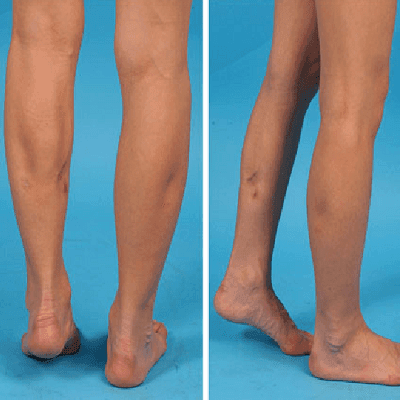
Common Questions About Calf Reduction in Riyadh Answered
Navigating the options for lower-leg contouring in Riyadh’s sophisticated 2026 aesthetic market often leads to several key questions. Whether you are curious about the differences between surgical and non-surgical paths or the specific safety standards in Saudi Arabia, this guide addresses the most frequent inquiries from local clients.
1. Is the procedure for everyone?
Not every "bulky" calf is treated the same way. The ideal candidate is someone in good general health with a stable weight who is unhappy with the proportion of their lower legs.
-
Muscle-based: If your bulk is due to a large gastrocnemius muscle (often genetic or from high-impact sports), you are a candidate for Botox or Selective Neurectomy.
-
Fat-based: If the volume is subcutaneous fat, Liposuction or CoolSculpting is the more effective route.
-
Combined: Many residents benefit from a hybrid approach that addresses both tissue types.
2. How much does Calf Reduction cost in Riyadh in 2026?
Costs vary based on the complexity of the case and the technology used. On average:
-
Non-Surgical (Botox): Ranges from 1,000 SAR to 3,500 SAR per session, depending on the units required.
-
Surgical (Liposuction/Neurectomy): Typically starts from 15,000 SAR and can reach 30,000 SAR for advanced VASER technology or comprehensive muscle resection.
-
Note: Most premier clinics provide an exact quote only after a physical assessment and 3D mapping.
3. Will it affect my ability to walk or exercise?
This is a common concern.
-
Botox: Does not affect your daily mobility. It only targets the superficial muscle fibers, leaving the deeper muscles (like the soleus) to handle your walking and stability.
-
Surgery: There is a temporary impact. You may need walking aids for the first few days, and strenuous "explosive" sports (like sprinting or jumping rope) are usually restricted for 4 to 6 weeks to allow the tissues to heal without strain.
4. Are the results permanent?
-
Surgical results (Liposuction and Neurectomy) are considered permanent. Once fat cells are removed or nerve signals are blocked, the structure of the leg is fundamentally altered. However, maintaining a stable weight is essential to preserve these contours.
-
Non-surgical results (Botox) are temporary. The slimming effect typically peaks at 2 to 3 months and lasts between 6 to 9 months, requiring maintenance sessions once or twice a year.
5. What are the specific safety regulations in Riyadh?
In 2026, the Saudi Ministry of Health (MOH) has strict mandates to protect aesthetic patients:
-
Specialist Verification: You have the right to verify your doctor's credentials via the MOH digital portal.
-
Material Transparency: Clinics must provide a stamped information card detailing the specific brands and components used (e.g., the type of Botox or the laser technology).
-
Supervision: All injectable treatments must be supervised by a specialized consultant to ensure anatomical precision and safety.
6. How long is the recovery "downtime"?
-
Botox/Non-Surgical: Zero downtime. Most clients return to their professional duties in Riyadh immediately.
-
Liposuction: Expect 1 week of light activity and 2 to 4 weeks of wearing compression garments.
-
Surgical Muscle Reduction: Requires the longest commitment, often 2 weeks off work and up to 6 weeks before returning to full physical exercise.