English
 Arabic
 French
 Spanish
 Portuguese
 Deutsch
 Turkish
 Dutch
Dutch
 Italiano
 Russian
 Romaian
 Portuguese (Brazil)
 Greek
Greek
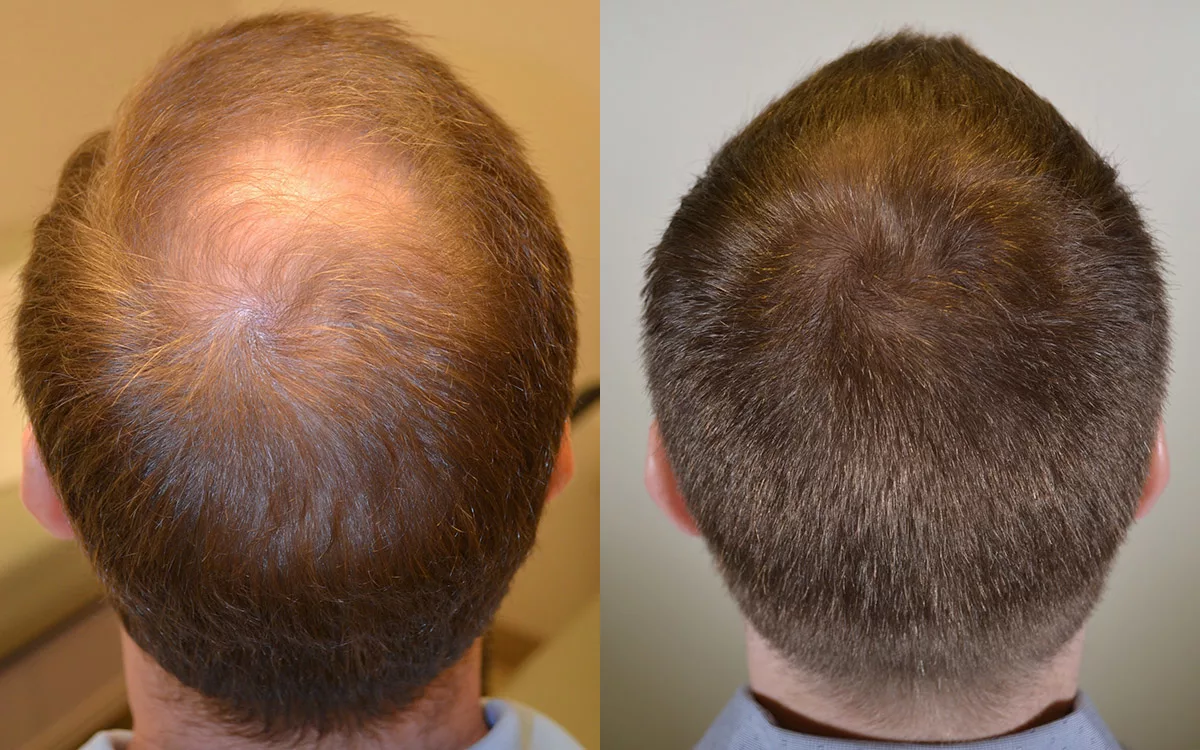
The ultimate hallmark of a successful hair restoration procedure is that no one can tell it ever happened. A Hair Transplant in Dubai has evolved far beyond the detectable "plugs" of the past, moving into an era of artistic mimicry where every graft is placed to replicate the natural flow of human hair. Achieving this level of realism requires a deep understanding of facial proportions, hair exit angles, and the biological diversity of follicular units.
The Definition of Artistry in Hair Transplant in Dubai
A natural result is defined by a soft, irregular hairline and appropriate density that matches the patient's age. In our clinical experience, the most common mistake in lower-quality restorations is creating a hairline that is too straight or too low. Natural hairlines are characterized by "micro-irregularities"—tiny zig-zags and staggered placements that break up the transition between the forehead skin and the hair.
During a Hair Transplant in Dubai, surgeons categorize harvested grafts based on the number of hairs they contain. Single-hair follicles are reserved exclusively for the very front of the hairline to create a soft "feathered" edge. Multi-hair units (containing two to four hairs) are placed further back to provide the bulk of the density. This graduated approach is the key to ensuring the hair looks authentic even under close inspection or in bright sunlight.
The Physiological Mechanism of Natural Hair Direction
Human hair does not grow straight up; it grows at specific angles that vary across different parts of the scalp. In the frontal region, hair typically grows forward and slightly outward. In the crown, it follows a complex "whorl" or spiral pattern. The mechanism of a natural-looking transplant depends entirely on the surgeon's ability to recreate these exact angles during the site-creation phase.
What patients typically report during recovery is that as the hair grows in, it begins to follow the grooming patterns of their existing hair. This is because the microscopic channels were angled to match the native "flow." If these angles are off by even a few degrees, the hair may stand up awkwardly or be difficult to style, which is why the use of high-magnification loupes during surgery is a non-negotiable medical standard.
The Purpose of Aesthetic Hairline Customization
The primary purpose of a customized design is to frame the face in a way that looks age-appropriate. A 40-year-old patient should not have the dead-straight hairline of a teenager; doing so creates an "uncanny" appearance that signals surgical intervention. Instead, the purpose of a Hair Transplant in Dubai is to provide a mature, dense hairline that restores the "golden ratio" of the face—the balanced distance between the chin, nose, and forehead.
Clinically, this involves "temple recession management." As we age, our temples naturally recede slightly. By maintaining a slight, natural recession while filling in the thinning areas, the surgeon creates a look that is both full and believable. The goal is to make the patient look like a "better version of themselves," rather than someone who has clearly had work done.
Key Benefits of High-Artistry Restoration
-
Undetectable Transition: Single-hair grafts ensure there is no "harsh line" where the hair begins.
-
Variable Density: Strategic placement creates thickness where it's needed most without looking "clumpy."
-
Style Versatility: Correct angling allows you to comb your hair back, to the side, or forward with ease.
-
Long-Term Realism: The design is built to look natural not just today, but 20 years from now as the face ages.
Who Qualifies for a Natural-Look Transformation?
| Candidate Profile | Aesthetic Requirement |
| High Contrast (Dark hair/Light skin) | Requires extra-fine single grafts to prevent a "dot" appearance. |
| Fine Hair Texture | Ideal for creating soft, high-density hairlines that look very natural. |
| Coarse/Curly Hair | Requires specialized angling to manage the natural "lift" of the curl. |
| Advanced Thinning | Requires a "global" design to ensure the front and crown blend seamlessly. |
In our clinical experience, the best results are achieved when a patient has a stable donor area that provides a variety of graft types. A mix of fine and thick hairs allows the surgical team to "paint" a realistic picture on the scalp, using different textures for different zones.
The Step-by-Step Design and Implantation Process
-
Facial Mapping: Using a laser level and specialized markers to find the natural "mid-point" of the forehead.
-
Macro-Patterning: Drawing the general shape of the hairline, ensuring it follows the natural curvature of the skull.
-
Micro-Patterning: Adding the "irregularities" to the drawing—this is where the artistry happens.
-
Selective Harvesting: Specifically choosing the finest hairs from the nape of the neck for the frontal row.
-
Directional Implantation: Placing each graft with a 15 to 45-degree forward tilt, mimicking natural growth.
Vital Treatment Zones for Realism
The "transition zone" is the first 0.5cm to 1cm of the hairline. This area must be populated with exclusively single-hair follicles. Behind this lies the "defined zone," where density is increased using two-hair grafts. Finally, the "heavy density zone" in the mid-scalp utilizes three and four-hair units to provide the opacity that prevents the scalp from showing through.
Another critical zone is the "temporal point." If the hairline is brought forward but the hair on the side of the head (near the eyes) is left thin, the face will look disproportionately wide. A comprehensive Hair Transplant in Dubai includes a subtle restoration of these side points to ensure the facial frame is closed and balanced.
Variables in Achieving High-Definition Results
The tools used play a significant role in the final aesthetic. Sapphire FUE blades, for example, are made from a gemstone that can be sharpened to a much finer edge than steel. This allows for smaller, more precise incisions that heal with almost zero scarring, allowing for closer graft placement (higher density) without compromising the blood supply to the skin.
Furthermore, the "out-of-body" time for the grafts is a factor. In our clinical experience, keeping the follicles in a chilled, oxygenated solution ensures they remain robust. Healthy, unstressed follicles produce thicker, more pigmented hair shafts, which contributes significantly to the final visual density and natural look of the result.
Timeline of the Aesthetic Evolution
-
Months 1–3: The "shedding phase" can be discouraging, but it is necessary for the new hair to grow.
-
Months 4–6: Hair begins to grow, but it may initially be curly or "kinky" due to the healing tissue.
-
Months 7–10: The hair texture begins to soften and match the donor hair perfectly.
-
Month 12: The direction and flow are fully established, and the hairline looks completely integrated.
Safety, Integrity, and Avoiding the "Surgical" Look
Safety in hair restoration also involves "donor management." A surgeon must be careful not to over-harvest the back of the head. If too much hair is taken, the donor area will look thin and "moth-eaten," which is a clear sign of a transplant. Ethical clinics prioritize the long-term health of both the donor and recipient sites.
We use high-precision tools to ensure that the skin's natural "turgor" or elasticity is maintained. Avoiding deep trauma to the scalp prevents the formation of "pitting" or "ridging," which can occur when grafts are placed too deep or too shallow. A smooth, flat scalp surface is essential for a result that looks natural even under harsh overhead lighting.
Maintaining the Natural Flow of Your Hair
Once your new hair has grown in, maintaining its appearance is simple. Regular haircuts help the new hair blend with the old, and using high-quality conditioners keeps the hair shafts hydrated and manageable. Because these are your own living follicles, they will grey naturally as you age, ensuring that your look remains consistent with your biological timeline.
In our clinical experience, some patients choose to use non-surgical therapies alongside their transplant to keep the surrounding "native" hair healthy. This prevents a "gap" from forming between the transplanted hair and the hair that was already there, preserving the seamless transition for years to come.
Conclusion
A truly great hair restoration is one that disappears into your natural features. It is a blend of medical science, geometry, and a fine-arts approach to the human face. When you choose a path of quality and precision, the result is more than just hair—it is a restoration of your natural identity. At Tajmeels Clinic, we focus on the minute details that create a believable, dense, and permanent hairline. Reclaiming your look is a journey we take with you, ensuring every graft contributes to a result you can be proud of.