English
 Arabic
 French
 Spanish
 Portuguese
 Deutsch
 Turkish
 Dutch
Dutch
 Italiano
 Russian
 Romaian
 Portuguese (Brazil)
 Greek
Greek
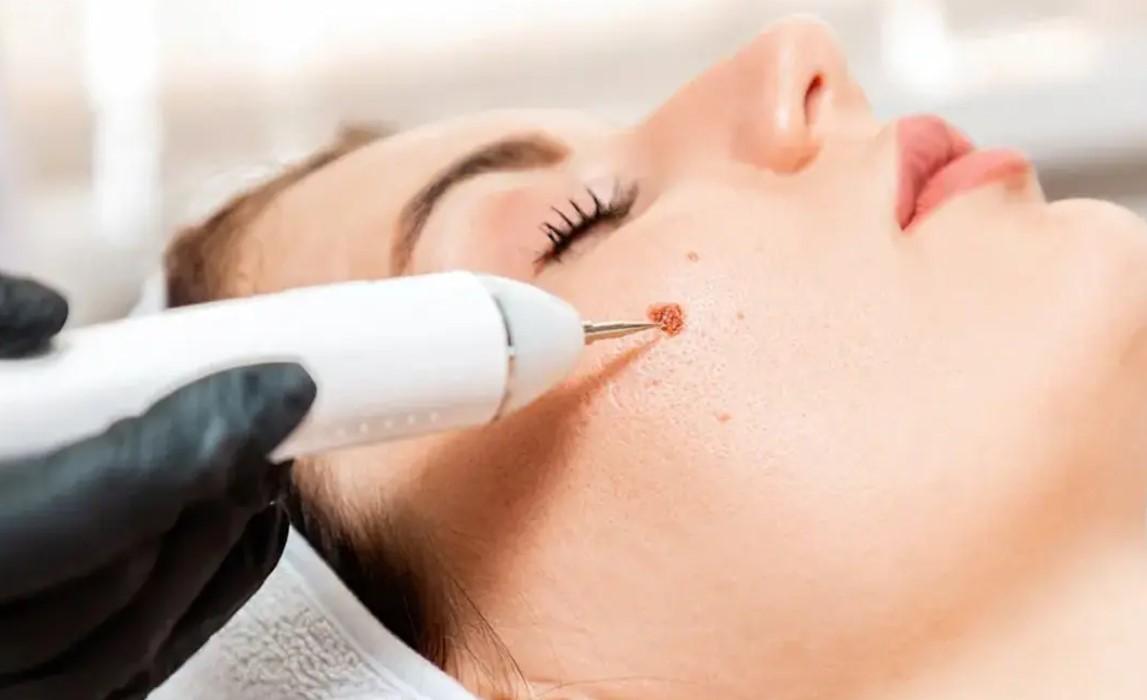
Moles, medically known as nevi, are common skin growths that appear when pigment cells, called melanocytes, grow in clusters. Almost everyone has moles, and they can vary widely in shape, size, color, and texture. While most moles are harmless, understanding the different types is important because some can develop into skin cancer if left unchecked. This guide explores the various types of moles and what they indicate. If you’re looking for safe and effective options, understanding the process of Mole Removal in Riyadh can help you make the best choice for your skin health.
1. Congenital Moles
Congenital moles are present at birth. They can range from small and unnoticeable to large and more conspicuous. These moles develop as a result of an overgrowth of melanocytes in certain areas during fetal development. While most congenital moles are benign, larger congenital moles—especially those over 20 centimeters—carry a slightly higher risk of developing into melanoma, a type of skin cancer. Regular monitoring by a dermatologist is recommended for anyone with large congenital moles.
2. Acquired Moles
Unlike congenital moles, acquired moles appear after birth, usually during childhood or adolescence. They are the most common type of mole and can continue developing into early adulthood. Acquired moles often arise due to genetic factors, sun exposure, or hormonal changes, such as during puberty or pregnancy. These moles are generally benign, but sudden changes in size, shape, or color should prompt a medical evaluation.
3. Common Moles (Junctional, Compound, and Intradermal)
Common moles can be classified based on their location in the skin layers:
- Junctional moles appear as flat, brown spots. They are formed at the junction between the epidermis and the dermis, the two top layers of the skin. These moles are usually harmless but may require monitoring if they change.
- Compound moles are slightly raised and darker. They contain melanocytes both in the epidermis and dermis. Their raised nature makes them easier to feel, and they often appear during adolescence.
- Intradermal moles are raised, often flesh-colored, and located entirely within the dermis. These moles are generally considered the least likely to turn cancerous. They are common in adults and can sometimes appear as small bumps or nodules.
4. Dysplastic or Atypical Moles
Dysplastic moles are unusual in appearance, often larger than common moles with irregular borders and varied coloration, including shades of brown, tan, and sometimes pink. These moles can resemble melanoma, making them important to monitor. People with multiple dysplastic moles have a higher risk of developing melanoma. Dermatologists often recommend regular skin checks and, in some cases, removal of particularly suspicious moles to reduce risk.
5. Spitz Nevi
Spitz nevi are rare, typically appearing in children and young adults. They often present as pink, red, or brownish dome-shaped nodules. While usually benign, Spitz nevi can sometimes resemble melanoma, which makes proper diagnosis critical. Dermatologists often perform biopsies to ensure accurate identification.
6. Blue Moles (Nevus of Ito or Ota)
Blue moles, also called blue nevi, are deep in the dermis and have a bluish hue due to the way light scatters through the skin. Nevus of Ota typically appears on the face near the eyes, while Nevus of Ito usually appears on the shoulder or upper arm. These moles are generally benign but should still be monitored for any noticeable changes.
7. Halo Moles
Halo moles are moles surrounded by a ring of depigmented skin, giving them a “halo” appearance. This occurs when the immune system attacks the pigment cells around the mole. While the halo itself is not dangerous, it can sometimes indicate an immune response to abnormal melanocytes. Dermatologists usually monitor halo moles to ensure there is no malignant transformation.
Monitoring and When to Seek Help
Regardless of type, all moles should be observed for the ABCDEs: Asymmetry, Border irregularity, Color variation, Diameter greater than 6 millimeters, and Evolving shape or size. Rapid changes, itching, bleeding, or pain are warning signs that require prompt medical attention.
Conclusion
Moles are diverse skin growths ranging from common, harmless nevi to atypical moles with higher cancer risk. Understanding the different types—congenital, acquired, junctional, compound, intradermal, dysplastic, Spitz, blue, and halo moles—helps in identifying which moles require careful monitoring. Regular skin checks, self-examinations, and consultations with a dermatologist are essential for maintaining healthy skin and detecting potential problems early. Being informed about moles ensures both peace of mind and proactive health care.