English
 Arabic
 French
 Spanish
 Portuguese
 Deutsch
 Turkish
 Dutch
Dutch
 Italiano
 Russian
 Romaian
 Portuguese (Brazil)
 Greek
Greek
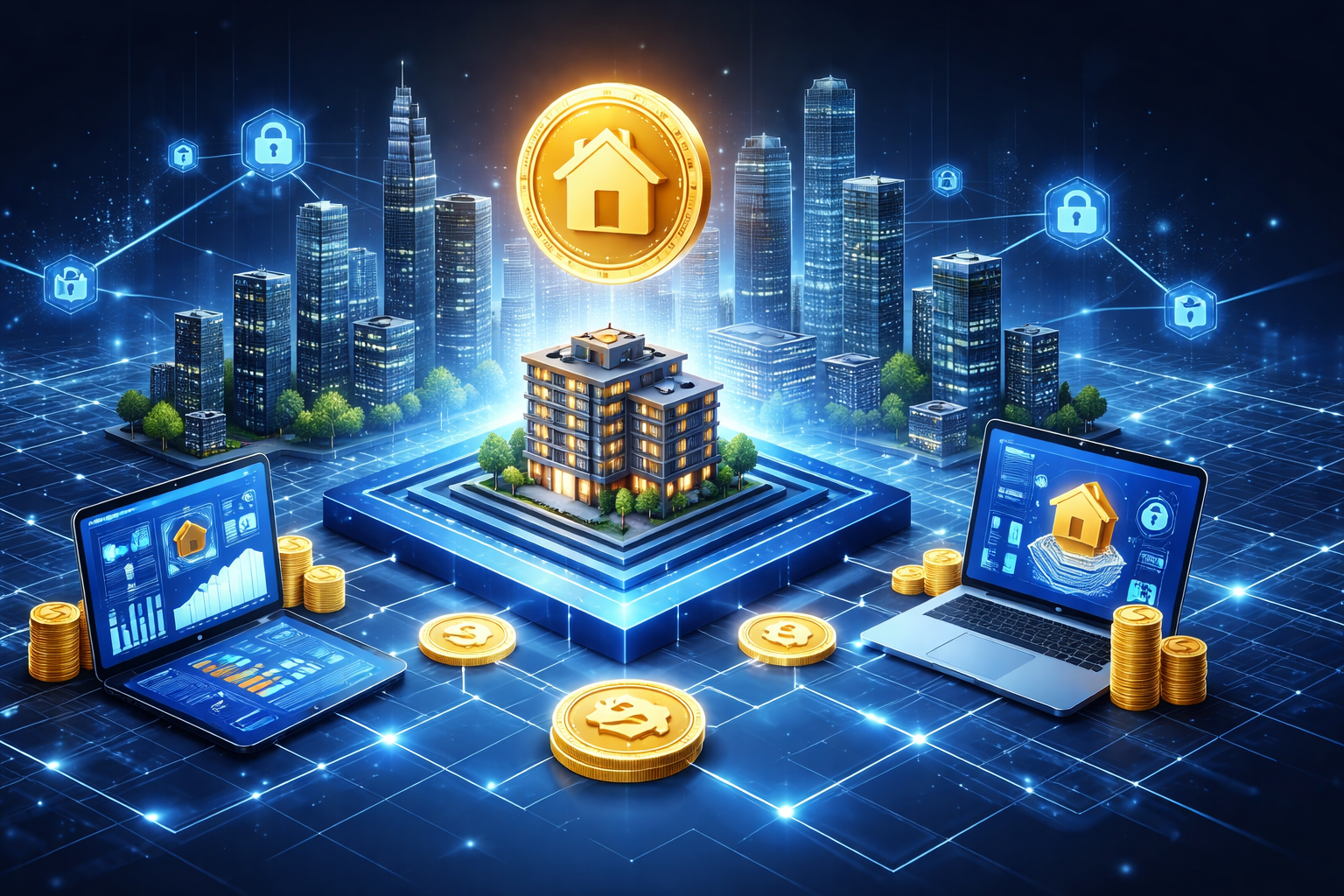
Real estate has historically been one of the most reliable and valuable asset classes, offering long-term appreciation, steady income streams, and portfolio diversification. However, despite its strengths, traditional real estate markets are often fragmented, illiquid, and limited by geographic and financial barriers. Transactions are slow, capital-intensive, and dependent on multiple intermediaries, making property investment less accessible and efficient.
Tokenized real estate is emerging as a transformative innovation that introduces a new financial layer to global property markets. By leveraging blockchain technology, tokenization converts physical real estate assets into digital tokens that can be owned, traded, and managed more efficiently. This digital layer enhances liquidity, expands investor access, and integrates real estate into modern financial ecosystems.
For enterprises, institutional investors, and individuals alike, tokenized real estate is not merely a technological advancement—it represents a structural shift in how property assets are financed, traded, and optimized on a global scale.
Understanding Tokenized Real Estate
Tokenized real estate involves the representation of property ownership or financial rights as blockchain-based digital tokens. These tokens can represent fractional ownership, equity shares, debt instruments, or rights to rental income generated by a property.
Each token is backed by a real-world asset and recorded on a decentralized ledger, ensuring transparency, security, and immutability. Smart contracts automate key processes such as ownership transfers, compliance verification, and income distribution, eliminating the need for manual intervention.
The result is a digital representation of real estate assets that can be easily traded, monitored, and integrated into broader financial systems.
The Concept of a New Financial Layer
Tokenization introduces a new financial layer that sits on top of traditional real estate markets. This layer enables assets to function similarly to digital securities, combining the stability of real estate with the flexibility of blockchain-based financial instruments.
This financial layer provides:
- A digital marketplace for property investment
- Programmable ownership and revenue structures
- Seamless integration with global financial systems
- Real-time asset tracking and performance monitoring
By bridging traditional property markets with digital finance, tokenization creates a more dynamic, accessible, and efficient investment environment.
Key Advantages of Tokenized Real Estate in Global Markets
1. Enhanced Liquidity Across Property Markets
One of the most significant advantages of real estate tokenization is its ability to unlock liquidity. Traditional real estate transactions are time-consuming and require significant capital commitments. Tokenization enables fractional ownership, allowing investors to buy and sell smaller portions of properties. Secondary markets for tokenized assets enable faster transactions and continuous trading, transforming real estate into a more liquid asset class. This increased liquidity attracts more investors and improves capital efficiency.
2. Global Investor Accessibility
Tokenized real estate eliminates geographical barriers, allowing investors from around the world to participate in property markets. This global accessibility expands the pool of capital available for real estate projects and enables investors to diversify their portfolios internationally. For enterprises, this means access to a broader investor base and the ability to raise funds more efficiently without relying on local financial systems.
3. Fractional Ownership and Democratization
By dividing properties into smaller units, tokenization democratizes real estate investment. Investors no longer need large amounts of capital to participate in high-value properties. Instead, they can invest according to their financial capacity. This democratization increases market participation, enhances liquidity, and creates a more inclusive investment ecosystem.
4. Transparency and Trust Through Blockchain
Blockchain technology ensures that all transactions and ownership records are transparent and immutable. Investors can verify property details, track income streams, and monitor performance in real time. This transparency reduces the risk of fraud, enhances trust, and simplifies due diligence processes.
5. Automation and Operational Efficiency
Smart contracts automate key processes, including:
- Ownership transfers
- Rental income distribution
- Compliance checks
- Investor onboarding
Automation reduces administrative overhead, minimizes errors, and accelerates transactions, making real estate investment more efficient.
6. Cost Reduction and Disintermediation
Traditional real estate transactions involve intermediaries such as brokers, banks, and legal advisors. Tokenization reduces reliance on these intermediaries by enabling direct peer-to-peer transactions. Lower transaction costs improve profitability for enterprises and make investments more attractive to a wider audience.
7. Integration with Digital Finance Ecosystems
Tokenized real estate can be integrated into decentralized finance (DeFi) platforms, enabling new financial functionalities such as lending, staking, and collateralization. This integration enhances the utility of real estate assets and provides additional opportunities for generating returns.
8. Programmable Investment Structures
Tokenization allows for the creation of customizable investment models tailored to different investor preferences. Tokens can offer fixed returns, revenue-sharing arrangements, or governance rights. Programmable structures provide flexibility and enable enterprises to design innovative financial products.
9. Improved Asset Management and Data Insights
Tokenized platforms often include analytics tools that provide real-time insights into property performance, occupancy rates, and revenue generation. Data-driven decision-making enables enterprises to optimize asset utilization and improve returns.
10. Cross-Border Efficiency and Compliance
Tokenization simplifies cross-border transactions by reducing reliance on traditional banking systems and streamlining compliance processes. Smart contracts can enforce regulatory requirements automatically, ensuring adherence to local and international laws. This efficiency supports the growth of global property markets and facilitates international investment.
Strategic Implications for Global Property Markets
Increased Market Efficiency
Tokenization reduces friction in property transactions, enabling faster capital movement and more efficient allocation of resources. Markets become more dynamic, with increased trading activity and improved price discovery.
Expansion of Investment Opportunities
Investors can access a wider range of properties across different regions and asset classes. This diversification enhances portfolio resilience and reduces risk.
Transformation of Real Estate Financing
Developers and enterprises can raise capital through tokenized offerings, reducing reliance on traditional financing methods such as bank loans or private equity.
Emergence of Digital Property Exchanges
Tokenized real estate is driving the development of digital marketplaces where property tokens can be traded. These platforms function similarly to stock exchanges, providing liquidity and accessibility.
Challenges and Considerations
Despite its advantages, tokenized real estate faces several challenges:
- Regulatory uncertainty and varying legal frameworks
- Integration with traditional real estate systems
- Market adoption and investor education
- Cybersecurity risks and smart contract vulnerabilities
- Standardization of token structures and trading platforms
Addressing these challenges is essential for the long-term success of tokenized real estate markets.
Future Outlook
The future of tokenized real estate is promising, with significant growth expected as technology and regulatory frameworks evolve. Key trends include:
- Increased institutional adoption of tokenized assets
- Development of global standards for tokenization
- Integration with AI and IoT for enhanced asset monitoring
- Expansion of decentralized marketplaces for property trading
- Growth of hybrid financial models combining traditional and digital systems
These trends indicate that tokenization will become a foundational component of global property markets.
Conclusion
Tokenized real estate represents a new financial layer that transforms how property assets are owned, traded, and managed. By combining the stability of real estate with the flexibility of blockchain technology, tokenization enhances liquidity, accessibility, transparency, and efficiency.
For enterprises and investors, this innovation offers a powerful tool to unlock value, diversify portfolios, and participate in global property markets. As adoption continues to grow, tokenized real estate will play a pivotal role in shaping the future of investment, bridging the gap between traditional assets and digital finance.