English
 Arabic
 French
 Spanish
 Portuguese
 Deutsch
 Turkish
 Dutch
Dutch
 Italiano
 Russian
 Romaian
 Portuguese (Brazil)
 Greek
Greek
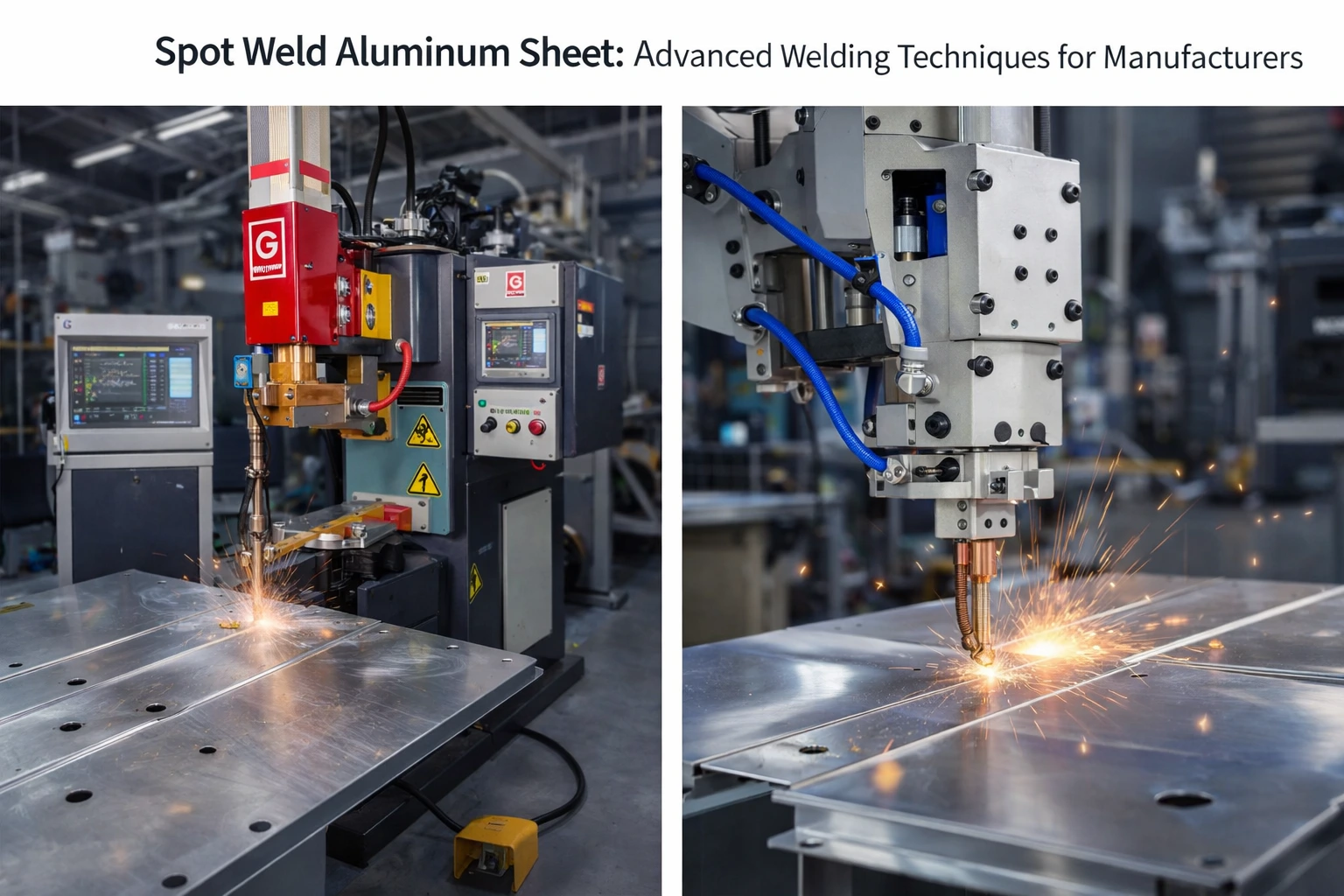
In today’s competitive manufacturing environment, efficiency, precision, and reliability are non-negotiable. For industries relying on metal-joining processes from automotive and aerospace to electronics and appliance manufacturing a spot resistance welder is a cornerstone of production. Heron Welder, a global leader in industrial welding and metal-joining solutions, delivers cutting-edge resistance welding technology tailored for OEMs, automation integrators, and factory decision-makers.
What is a Spot Resistance Welder?
A spot resistance welder (SRW) is a type of resistance welding machine designed to join two or more metal sheets at discrete points using electric current and pressure. The principle is simple yet highly effective:
- Electrodes positioned on either side of the metal sheets deliver a concentrated current.
- Electrical resistance at the interface of the sheets generates heat, melting the metal locally.
- Mechanical pressure applied by the electrodes fuses the materials as the molten area cools.
Unlike other welding methods, spot resistance welding requires no filler material and produces consistent, repeatable welds ideal for high-volume production lines.
How Spot Resistance Welding Works
Spot resistance welding operates on the fundamental relationship of heat, current, resistance, and time. Key factors include:
- Material type and thickness: Steel, stainless steel, aluminum, and coated metals behave differently under current.
- Electrode pressure: Ensures proper metal contact and prevents weld defects.
- Current intensity and duration: Must be calibrated to the materials and desired nugget size.
Modern spot welders, such as Heron’s MFDC (Medium-Frequency Direct Current) systems, offer precise control over current waveform and duration, ensuring superior weld quality, reduced electrode wear, and energy efficiency.
Applications of Spot Resistance Welders
Spot resistance welding is versatile and widely used across manufacturing sectors:
- Automotive industry: Body panels, chassis assemblies, battery enclosures for EVs.
- Appliance manufacturing: Washing machines, refrigerators, and ovens.
- Electronics and electrical components: Enclosures, connectors, and battery tabs.
- Metal furniture and HVAC fabrication: Steel frames and sheet metal assemblies.
Heron’s industrial solutions cater to both standalone machines and fully automated production lines, ensuring integration flexibility for factories pursuing lean manufacturing and smart automation.
Advantages of Spot Resistance Welding
Choosing a spot resistance welder provides several advantages for manufacturers:
- High-speed production: Multiple welds per second increase throughput.
- Consistent quality: Automated control reduces operator variability.
- Material efficiency: No filler metal required, minimal distortion.
- Energy efficiency: MFDC systems optimize power usage compared to traditional AC welders.
- Integration-ready: Compatible with robotic arms, conveyor systems, and automation lines.
With these benefits, Heron’s spot welders help manufacturers reduce downtime, improve product quality, and achieve lower total cost of ownership.
Spot Resistance Welder vs. Other Resistance Welding Techniques
While spot welding is one of the most common resistance welding methods, it’s important to compare it with other options:
| Welding Type | Use Case | Advantages | Limitations |
|---|---|---|---|
| Spot welding | Discrete weld points | Fast, precise, minimal material distortion | Limited to overlapping sheets |
| Projection welding | Pre-formed projections | Can weld multiple points simultaneously | Requires pre-shaped parts |
| Seam welding | Continuous joints | Leak-proof, ideal for fuel tanks | Slower than spot welding for discrete points |
| Capacitor discharge (CD) | Thin sheets, small parts | Extremely fast, low heat input | Limited to thin materials |
Heron provides all these technologies, but for high-volume sheet metal production, the spot resistance welder remains the most reliable and widely adopted solution.
Best Practices for Using Spot Resistance Welders
To maximize efficiency and product quality, manufacturers should follow these guidelines:
- Electrode maintenance: Regular cleaning and reshaping prolong electrode life.
- Material preparation: Ensure sheets are clean and free from coatings that reduce conductivity.
- Weld scheduling: Optimize current, pressure, and time for each material combination.
- Monitoring systems: Use integrated quality control systems to detect weld defects in real-time.
- Safety protocols: Follow machine-specific safety guidelines, including protective barriers and PPE.
Heron’s spot resistance welders come with advanced monitoring, automatic electrode adjustment, and programmable parameters, enabling engineers to maintain consistent weld quality even in complex production environments.
Why Choose Heron for Spot Resistance Welding
Heron Welder is more than a machine provider; we are a partner in manufacturing innovation:
- Global expertise: Decades of experience delivering welding solutions for OEMs worldwide.
- Comprehensive portfolio: Spot, projection, seam, MFDC, and capacitor discharge welders, as well as automation solutions.
- Customization: Tailored systems for unique production challenges.
- Automation-ready solutions: Integration with robots, conveyors, and line monitoring systems.
Our commitment to quality, reliability, and customer support ensures factories achieve higher efficiency and product consistency.
FAQs About Spot Resistance Welders
1. Can a spot welder handle aluminum sheets?
Yes. Heron’s MFDC spot welders are optimized for aluminum and coated metals, controlling heat input to prevent burn-through or distortion.
2. How thick can materials be welded using a spot welder?
Typically, up to 6 mm for steel and 3–4 mm for aluminum in standard applications. Thickness limits vary depending on machine capacity.
3. What maintenance is required for spot welders?
Regular electrode cleaning, monitoring weld parameters, and periodic calibration are essential. Heron provides maintenance guidelines and support.
4. Can spot welding be automated?
Absolutely. Heron designs robotic and automated welding lines, combining spot welders with conveyors and process monitoring.
5. How does MFDC technology improve welding?
MFDC reduces energy consumption, allows precise heat control, and extends electrode life compared to traditional AC welders.
Ready to Optimize Your Welding Process?
Whether you are integrating spot welding into a new production line or upgrading your existing operations, Heron Welder provides the expertise, machines, and automation solutions to deliver reliable, efficient, and high-quality results.
Contact Heron today to request a quote or consult with our specialists about customized spot resistance welding solutions for your factory or OEM production needs.