English
 Arabic
 French
 Spanish
 Portuguese
 Deutsch
 Turkish
 Dutch
Dutch
 Italiano
 Russian
 Romaian
 Portuguese (Brazil)
 Greek
Greek
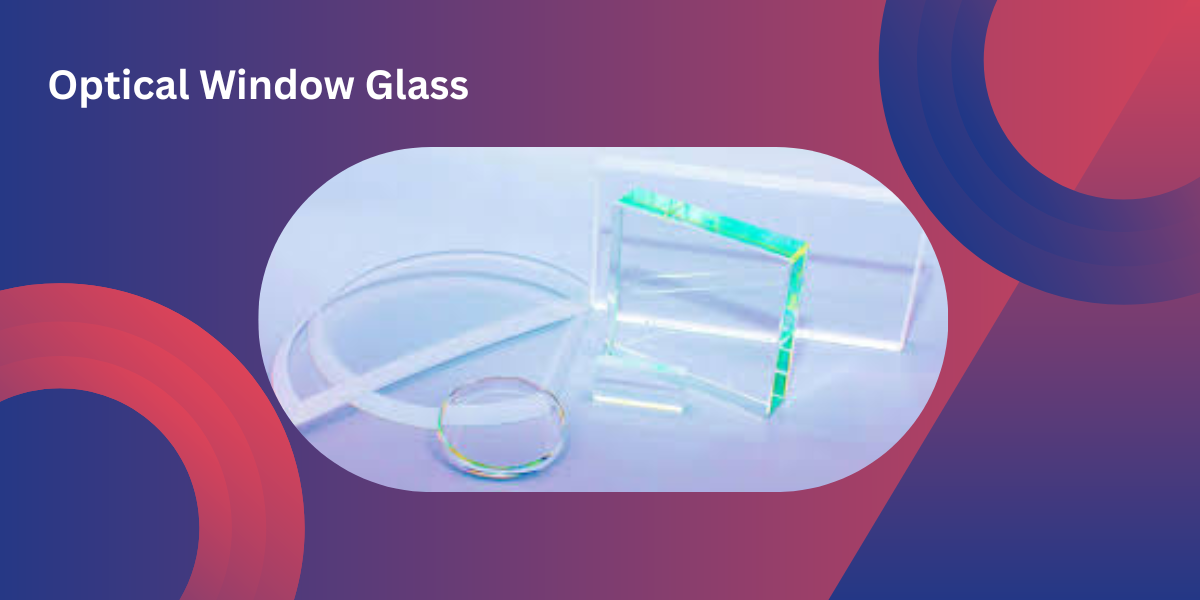
In everyday life, window glass is something we look through without a second thought. However, in the world of advanced optoelectronics and spatial computing, a "window" is a critical optical component. It serves as a protective barrier for sensitive internal electronics—like sensors, lasers, and micro-displays—while maintaining the absolute integrity of the light passing through it.
At ARVR Optical, we understand that in a high-tech assembly, the window glass is the first and last line of defense. Whether you are developing a consumer AR headset or an industrial laser system, the quality of your window glass directly impacts the performance, clarity, and longevity of your device.
What Makes Optical Window Glass Different?
Standard residential window glass is designed for basic transparency and insulation. In contrast, technical window glass used in the optoelectronics industry is engineered for specific physical and optical properties.
These windows are typically flat, plane-parallel plates that do not change the magnification of a system. Instead, they allow light to pass from one environment (like the outdoors) into another (like a vacuum-sealed sensor chamber) with minimal distortion, absorption, or scattering.
Key Technical Specifications for 2026
When sourcing window glass for professional projects, ARVR Optical recommends focusing on these five essential metrics:
1. Transmission and Spectral Range
Not all glass "sees" the same way. While standard glass is clear to the human eye, it might block ultraviolet (UV) or infrared (IR) light. High-performance windows are selected based on their transmission range—ensuring that 99% or more of the target light wavelength reaches the sensor.
2. Surface Quality (Scratch-Dig)
In precision optics, even a microscopic scratch can scatter light and create "noise" in an image. We use the "Scratch-Dig" standard (e.g., 20-10 or 10-5) to ensure the surface is smooth enough for high-resolution applications like medical imaging or AR waveguides.
3. Refractive Index and Homogeneity
The refractive index determines how much light bends as it enters the glass. For a window to be effective, the glass must be "homogeneous," meaning its internal structure is consistent throughout. Any bubbles or inclusions can ruin the performance of a high-end optical engine.
4. Thermal Stability (CTE)
As devices run, they generate heat. The Coefficient of Thermal Expansion (CTE) measures how much the glass grows or shrinks with temperature changes. ARVR Optical provides glass substrates that remain dimensionally stable, preventing focus drift in high-power laser systems.
5. Chemical and Mechanical Durability
For wearables or outdoor sensors, window glass must resist scratches, chemical corrosion, and environmental impact. Often, this requires chemically strengthened glass or specialized "Hard Carbon" coatings.
Advanced Coatings: Enhancing the Glass
A bare piece of window glass reflects about 4% of light per surface. To maximize performance, ARVR Optical applies advanced thin-film coatings:
-
Anti-Reflective (AR) Coatings: These reduce reflections to nearly 0%, ensuring maximum light throughput.
-
Oleophobic & Hydrophobic Coatings: These resist fingerprints and water droplets, which is essential for the outer "window" of AR glasses or smart helmets.
-
Infrared (IR) Cut Filters: These block heat-generating IR light while letting visible light through, protecting internal micro OLED displays from overheating.
Industry Applications in 2026
The demand for specialized window glass has expanded across several high-growth sectors:
| Industry | Application | Why Precision Matters |
| Augmented Reality | Protective Outer Covers | Must be ultra-thin, lightweight, and impact-resistant. |
| Medical Devices | Endoscope Windows | Requires high biocompatibility and resistance to sterilization. |
| Autonomous Vehicles | LiDAR & Camera Windows | Must provide perfect IR transmission for safety sensors. |
| Industrial Lasers | Beam Exit Windows | Needs high laser damage thresholds to prevent cracking. |
Smart Window Evolution: The Future is Dynamic
As we move further into 2026, the definition of window glass is evolving. We are seeing the rise of "Smart Windows" that incorporate electrochromic technology. These windows can change their tint or transparency at the touch of a button.
For the AR industry, this is a game-changer. Imagine AR glasses that automatically darken their outer window when you step into bright sunlight, allowing the internal micro-display to remain vivid and clear. ARVR Optical is at the forefront of integrating these dynamic glazing solutions into compact optical modules.
Conclusion
Choosing the right window glass is not just about finding a clear piece of material; it is about managing the behavior of light. From the selection of the raw substrate—be it N-BK7, Fused Silica, or Sapphire—to the final precision coating, every step determines the success of your optical system.
At ARVR Optical, we pride ourselves on being more than just a supplier. We are partners in the design process, helping you select and customize the window glass that will define the next generation of your technology. Whether you are an expert buyer looking for sub-micron tolerances or a new developer exploring the basics of optics, we have the tools and knowledge to bring your vision to life.