English
 Arabic
 French
 Spanish
 Portuguese
 Deutsch
 Turkish
 Dutch
Dutch
 Italiano
 Russian
 Romaian
 Portuguese (Brazil)
 Greek
Greek
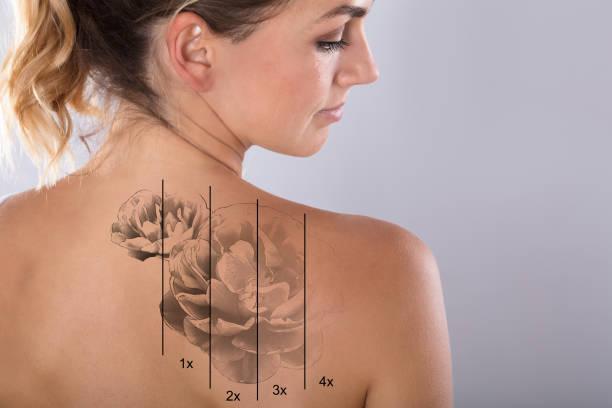
The evolution of dermatological light therapy has reached a pinnacle where precision and power are no longer mutually exclusive. For patients exploring tattoo removal in Dubai, the term "modern" refers to a specific class of lasers that operate with sub-nanosecond pulse widths. In 2026, the clinical standard has shifted away from simply heating the ink to a sophisticated process of photo-acoustic shattering. This ensures that the unwanted pigment is pulverized into microscopic particles that the body can easily eliminate, while the surrounding skin remains virtually untouched by thermal stress. By utilizing these advanced "Modern" techniques, specialists can now offer a pathway to clear skin that is not only faster but significantly more comfortable and effective across a wider range of ink colors and skin types.
Understanding the mechanics behind these modern innovations is the key to setting realistic expectations for your transformation.
The Power of Picosecond and Nano-Pulse Systems
Modern removal is defined by the speed at which energy is delivered. This speed dictates how the ink breaks apart and how the skin recovers.
How Does the PicoGenesis System Differ from Older Lasers?
The PicoGenesis system represents the leading edge of modern technique by delivering energy in trillionths of a second. This ultra-short pulse creates a mechanical shockwave that shatters ink into "dust" rather than "pebbles." Because it relies on pressure instead of heat, it is much safer for sensitive skin and requires fewer sessions to achieve total clearance.
Why Is the Q-Switch Nd:YAG Still a Modern Standard?
The Q-Switch Nd:YAG remains a staple in modern clinics because of its unparalleled ability to treat deep, dark carbon inks. By using a 1064nm wavelength, it can penetrate into the deepest layers of the dermis where professional ink is often anchored. It provides the heavy-duty power needed for the initial sessions before transitioning to finer Picosecond refinement.
Multi-Wavelength Precision for All Colors
Modern techniques allow for a "custom-frequency" approach. This means the laser is tuned specifically to the color of your ink to ensure maximum absorption and minimum skin disruption.
-
532nm (Green Light): Primarily used for red, orange, and yellow pigments.
-
755nm (Alexandrite): The gold standard for stubborn green and sky-blue inks.
-
1064nm (Infrared): The safest and most effective choice for black and dark blue ink on all skin tones.
Can Modern Lasers Treat "Paradoxical Darkening" in Permanent Makeup?
Yes, modern techniques involve performing a "test spot" to identify potential oxidation in cosmetic inks. If darkening occurs, specialized wavelengths can be used to gradually break down the oxidized metallic particles. This cautious, step-by-step approach ensures that delicate facial areas like eyebrows are treated with the highest level of medical safety.
What Is "Top-Hat" Beam Technology in Modern Removal?
Unlike older lasers that had "hot spots" in the center of the beam, modern systems use a "Top-Hat" profile. This distributes energy perfectly across the entire spot size, ensuring that the ink is hit with a consistent dose of light. This prevents localized burns and leads to much more uniform fading across the entire tattoo.
The Modern Patient Experience: Comfort and Speed
A modern session is designed to be efficient, often taking less time than a standard coffee break.
What Are the Key Sensations During a Modern Laser Session?
Patients typically describe the feeling as a series of very fast, sharp "pings" or cold snaps against the skin. Because the modern pulse is so fast, the heat does not have time to build up in the tissue. Combined with high-flow cold air systems, the sensation is manageable and subsides almost immediately after the laser stops.
How Much Downtime Is Expected with Modern Techniques?
Modern techniques are designed for "minimal to no downtime." While you may see some temporary redness or slight swelling immediately after the session, most patients return to their normal daily routine within an hour. The skin typically heals superficially within 3 to 5 days, making it a highly convenient option for busy professionals in Dubai.
Maximizing Results with Modern Aftercare
The treatment doesn't end at the clinic door; modern success is reinforced by a data-driven recovery plan.
-
Silicone-Based Gels: Used to maintain a sterile, breathable barrier that promotes faster epidermal healing.
-
Avoidance of Heat: Staying away from saunas and hot tubs for 48 hours prevents the "re-activation" of thermal energy in the skin.
-
High-SPF Protection: Protecting the area from UV rays is non-negotiable to prevent pigment changes while the skin is in its "renewal" phase.
Social Proof: Real Patient Perspectives
-
"I had an old tattoo that three other clinics couldn't budge. The modern Pico laser they used here actually started fading the green parts after just one visit. It’s amazing how much the technology has changed." — Zaid
-
"The specialist explained that the laser was using pressure, not heat. I felt much safer knowing my skin wasn't being 'burned' away. The recovery was so fast I didn't even have to skip the gym." — Maryam
Why Choose Tajmeels Clinic for Modern Removal?
Achieving superior results in ink removal requires a commitment to staying at the forefront of medical technology. At Tajmeels Clinic, we have equipped our facility with the most advanced 2026-standard laser platforms, including the latest Picosecond and multi-wavelength Q-Switched systems. Our specialists are experts in modern "pressure-wave" techniques, allowing us to offer faster clearing times with a higher safety profile for all skin types. We provide a professional, medical-grade environment where every pulse is calibrated to your specific ink chemistry and skin sensitivity. When you choose Tajmeels Clinic, you are choosing a team that understands the intersection of physics and biology. We invite you to experience the efficiency and precision of modern tattoo removal at Tajmeels Clinic.
Frequently Asked Questions
Is the "Pico" laser better for all tattoos?
While Picosecond lasers are revolutionary for colorful and stubborn tattoos, traditional Q-Switched lasers are sometimes still more effective for very dense, black "tribal" work. A modern clinic will often use a combination of both technologies—starting with Q-Switch to break down the bulk of the ink and finishing with Pico for the final clearance.
Can I get a tan between my modern laser sessions?
No, it is critical to avoid tanning. Modern lasers are highly sensitive to pigment, and if your skin is tanned, the laser may target your skin's melanin instead of the tattoo ink. This can lead to skin lightening or surface burns. For the safest and fastest results, keep the area covered and use SPF 50 daily.
Why do modern sessions cost more than older ones?
Modern technology like Picosecond lasers requires a significantly higher investment in equipment and specialized training. However, because these lasers are more effective and often require fewer total sessions to achieve a result, the "cost per tattoo removed" is often similar to or even lower than older, less efficient methods.
Will modern removal affect my hair follicles?
Modern laser techniques are specifically tuned to target tattoo ink and are generally safe for hair follicles. While you may notice some temporary "fading" of hair in the area immediately after a session, the hair typically grows back normally once the skin has completed its healing cycle.
How soon after a session can I shower?
You can shower as soon as you get home, but you must avoid scrubbing the treated area. Use a gentle, fragrance-free soap and lukewarm water. Pat the area dry with a clean towel rather than rubbing it, and apply your recommended healing ointment immediately after to keep the skin hydrated.