English
 Arabic
 French
 Spanish
 Portuguese
 Deutsch
 Turkish
 Dutch
Dutch
 Italiano
 Russian
 Romaian
 Portuguese (Brazil)
 Greek
Greek
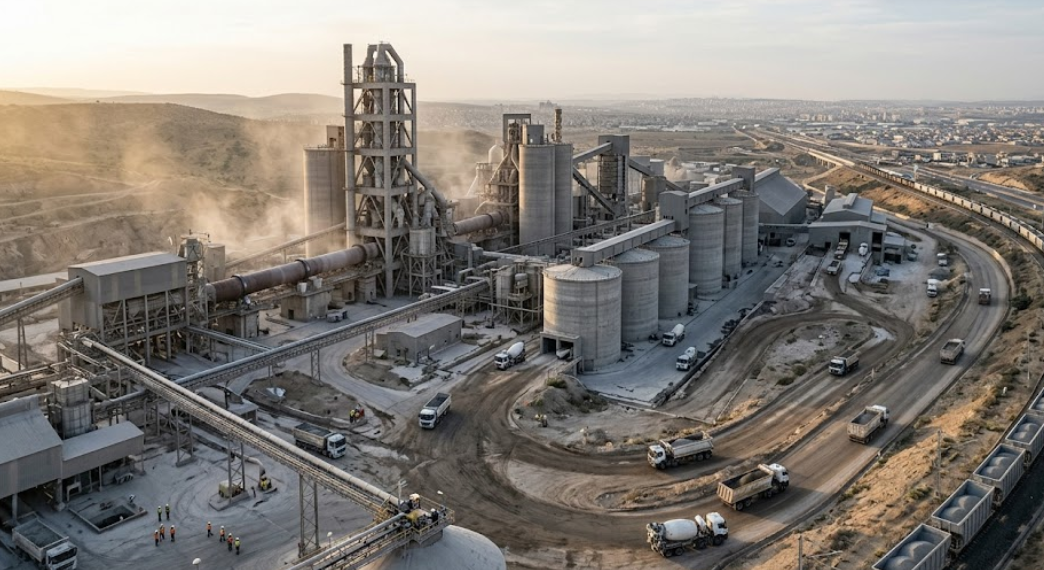
The Cement Price Trend in early 2026 reflects a stable-to-firm global market, supported by steady construction activity, infrastructure investments, and balanced supply conditions. Cement demand remains closely tied to urbanization, real estate development, and government-backed infrastructure projects, particularly in emerging economies. While feedstock costs such as coal and energy have stabilized, regional price variations persist due to logistics costs and production efficiencies. Asia Pacific continues to dominate both production and consumption, whereas developed regions show moderate demand recovery. Overall, the global cement market trend indicates resilience, with pricing influenced by energy inputs, construction cycles, and regional supply-demand dynamics.
Market Snapshot
Market Snapshot
- Market Direction: Stable to Slightly Bullish
- Primary Demand Sector: Construction & Infrastructure
- Key Feedstock: Coal, Limestone, Energy (Electricity & Fuel)
- Major Supply Region: Asia Pacific (China, India)
- Short-Term Outlook: Stable
Latest Pricing Data (January 2026):
- China (FOB): USD 45/MT
- India (FOB): USD 56/MT
- USA (FOB): USD 113/MT
Key Drivers Affecting Cement Prices
The cement supply demand analysis highlights several structural drivers shaping the market:
- Energy and Fuel Costs:
Coal and electricity are major cost components in cement production, directly impacting pricing. - Construction Activity:
Demand from residential, commercial, and infrastructure sectors significantly influences consumption levels. - Capacity Utilization Rates:
High production levels in countries like China and India help stabilize supply. - Logistics and Transportation Costs:
Cement is a bulk commodity, making freight costs a critical pricing factor. - Government Infrastructure Spending:
Public investment in roads, bridges, and urban development supports sustained demand.
Why Prices Increased or Decreased Recently
The Cement Price Trend in January 2026 remained regionally stable with slight upward pressure in certain markets.
- In India, prices showed firmness due to strong infrastructure activity and improved construction demand.
- In China, prices remained relatively stable at lower levels due to controlled production and balanced domestic demand.
- In the USA, higher prices persisted due to elevated production and labor costs.
Key reasons behind recent price behavior include:
- Stable energy costs reducing production volatility
- Balanced supply-demand conditions in major markets
- Improved construction activity in emerging economies
- Adequate inventory levels preventing sharp price fluctuations
Real Global Events Affecting the Market
Several global developments have influenced the global cement market trend:
- Energy Market Stability:
Stabilization in coal and fuel prices helped maintain consistent production costs. - Infrastructure Stimulus Programs:
Government spending in Asia and the Middle East boosted cement demand. - Geopolitical Conditions:
Reduced global trade disruptions improved raw material and cement distribution. - Environmental Regulations:
Emission control policies, particularly in Europe and China, impacted production levels. - Urbanization Trends:
Rapid urban expansion in developing economies continues to drive long-term demand.
Regional Market Analysis
North America
The North American cement market exhibited a firm pricing trend:
- Strong construction and housing demand
- Higher production and labor costs
- Limited supply expansion keeping prices elevated
Asia Pacific
Asia Pacific remains the largest cement market globally:
- Robust infrastructure development in India
- Controlled production in China to manage oversupply
- Stable pricing supported by consistent demand
Europe
Europe showed a moderate and slightly firm market:
- High energy costs impacting production
- Environmental regulations limiting output
- Gradual recovery in construction activity
Middle East & Africa
The region demonstrated a stable to growing market:
- Increased infrastructure investments
- Competitive production costs
- Export-oriented supply dynamics
Industry Expert Insight
Industry analysts indicate that cement prices are being shaped by stable energy costs and sustained infrastructure demand, while regional production efficiencies and regulatory frameworks continue to influence global price variations.
Market Outlook
Short-Term Outlook
The cement price forecast suggests:
- Stable pricing supported by ongoing construction projects
- Limited volatility due to balanced inventories
- Continued demand from infrastructure development
Medium-Term Outlook
The cement market outlook is expected to remain moderately bullish:
- Growth in urbanization and infrastructure investments
- Expansion of production capacity in emerging markets
- Potential fluctuations in energy costs
- Increasing adoption of sustainable and low-carbon cement technologies
FAQs
What affects Cement prices?
Cement prices are influenced by energy costs, raw material availability, construction demand, and logistics expenses.
Why did Cement prices remain stable recently?
Prices remained stable due to steady demand, sufficient supply, and stable production costs.
What industries use Cement?
Cement is primarily used in construction, infrastructure development, and real estate projects.
Which region produces the most Cement?
Asia Pacific, particularly China and India, leads global cement production.
What is the future outlook for Cement prices?
The outlook is stable to slightly bullish, driven by infrastructure growth and urbanization trends.