English
 Arabic
 French
 Spanish
 Portuguese
 Deutsch
 Turkish
 Dutch
Dutch
 Italiano
 Russian
 Romaian
 Portuguese (Brazil)
 Greek
Greek
Addressing Hypertrophic Scars: Surgical Solutions and Outcomes
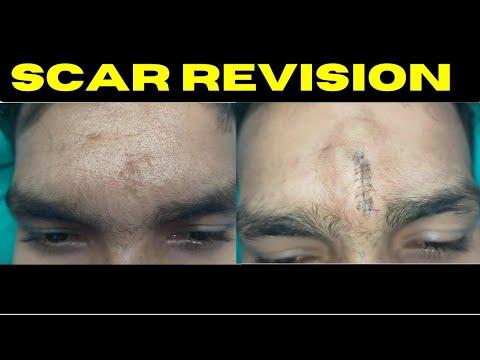
Hypertrophic scars represent one of the most common challenges in reconstructive medicine, occurring when the body’s healing response becomes overactive, leading to a raised, red, and often firm ridge of tissue. Unlike keloids, which grow beyond the original wound, hypertrophic scars remain confined to the boundaries of the incision or injury. Surgical Scar Revision in Riyadh has become a highly sought-after solution for these cases, as it offers a definitive way to physically remove the excess tissue and "reset" the healing environment. By combining surgical excision with advanced tension-reduction techniques, it is possible to transform a prominent, restrictive scar into a fine, discreet line that blends seamlessly with the surrounding skin.
The Surgical Approach to Hypertrophic Scars
The primary goal of surgical revision for a hypertrophic scar is to replace the thickened, disorganized collagen with a new, carefully managed incision. The procedure is typically performed under local anesthesia with sedation, though larger scars may require general anesthesia.
-
Excision: The surgeon meticulously removes the entire hypertrophic scar, including the deep fibrotic "roots" that may be pulling on the underlying tissue. This step is crucial for relieving the physical tension that often causes these scars to become raised in the first place.
-
Layered Closure: To prevent the scar from returning, the wound is closed in multiple layers. Deep, dissolvable sutures are placed in the dermis to take the "load" off the surface. By ensuring the surface skin edges meet with zero tension, the signal for the body to produce excess collagen is significantly reduced.
-
Repositioning: In many cases, the original scar formed because it ran against the natural "tension lines" of the skin. During revision, the surgeon may use techniques like W-plasty to change the direction of the incision, making it less likely to widen or thicken during the new healing phase.
Outcomes and Success Rates
The outcomes for hypertrophic scar revision are generally excellent, especially when compared to keloid treatments. Because hypertrophic scars do not have the same aggressive "tumor-like" growth pattern as keloids, the recurrence rate after surgical excision is remarkably low, provided proper post-operative protocols are followed.
Patients can expect a significant reduction in the height and width of the scar. Most revised scars eventually mature into a pale, flat, and soft line. Beyond aesthetics, the functional outcomes are equally important; patients often report an immediate relief from the itching, tenderness, and physical "tightness" that characterized the old scar.
Strategic Adjuncts to Prevent Recurrence
Surgery is rarely performed in isolation when treating hypertrophic tissue. To ensure the best possible outcome, surgeons in 2026 utilize a variety of "adjunct" therapies during and after the procedure:
-
Intra-operative Steroid Injections: During the surgery, a small amount of corticosteroid may be injected into the wound edges. This helps to modulate the inflammatory response and inhibits the over-activity of fibroblasts (the cells responsible for collagen production).
-
Silicone Therapy: Immediately after the initial healing phase (usually around week two), patients are started on a regimen of medical-grade silicone gel or sheets. Silicone works by increasing hydration and creating a protective barrier that "quiets" the collagen-building signals in the skin.
-
Laser Refinement: Once the surgical site has matured, fractional lasers can be used to further soften the texture and perfectly match the color of the new line to the surrounding area.
The Importance of Timing
One of the most critical factors in the success of a hypertrophic scar revision is timing. It is generally recommended that a scar be allowed to "mature" for at least 6 to 12 months before undergoing surgical revision. During this period, the scar naturally undergoes remodeling; operating too early can sometimes trigger an even more aggressive healing response. A thorough evaluation of the scar's maturity—checking for the absence of active redness and the presence of tissue softness—ensures that the surgery is performed when the skin is most receptive to a successful reset.
Post-Operative Care and Longevity
The longevity of a successful revision depends heavily on the patient’s commitment to aftercare. Protecting the new incision from UV radiation is paramount for the first year, as sun exposure can cause permanent darkening (hyperpigmentation) of the healing tissue.
Furthermore, patients are often advised to use "tension-offloading" tapes or strips for several weeks after the sutures are removed. By providing external support to the wound, these tapes prevent the skin from stretching, which is a leading trigger for hypertrophic regrowth. With this comprehensive approach—combining surgical precision, pharmacological support, and diligent aftercare—individuals can finally move past the discomfort and self-consciousness of hypertrophic scarring, achieving a skin surface that is as smooth and resilient as it was before the injury.