English
 Arabic
 French
 Spanish
 Portuguese
 Deutsch
 Turkish
 Dutch
Dutch
 Italiano
 Russian
 Romaian
 Portuguese (Brazil)
 Greek
Greek
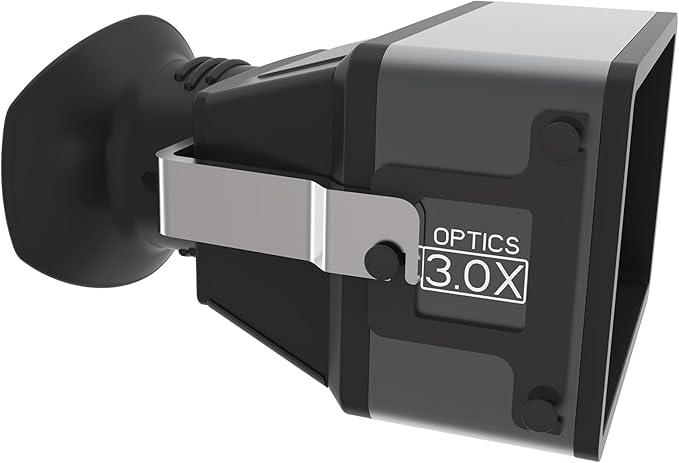
In the world of professional photography, medical imaging, and tactical gear, the ability to see a clear, high-resolution image in real-time is critical. This is made possible by the EVF optical module (Electronic Viewfinder). As we move further into 2026, the transition from traditional optical viewfinders to electronic systems is nearly complete, driven by massive leaps in display and lens technology.
At ARVR Optical, we specialize in the high-performance optoelectronics that power these viewfinders. Whether you are a first-time buyer looking for a camera upgrade or an industry expert designing a thermal imaging system, this guide will explain why the EVF optical module is the gold standard for modern visual precision.
What is an EVF Optical Module?
An EVF optical module is a compact system that combines a high-resolution micro-display with a specialized eyepiece lens. Unlike the screen on the back of a camera, which can be difficult to see in bright sunlight, an EVF is shielded from ambient light, providing a high-contrast, immersive view of the sensor's data.
At ARVR Optical, our modules typically utilize Micro OLED or LCoS displays. These are paired with precision-ground glass or molded plastic optics to magnify the tiny screen, making it appear as a large, high-definition monitor floating in front of your eye.
The Technical Core: How an EVF Works
A high-quality EVF optical module is more than just a tiny screen. It involves a sophisticated "optical stack" that ensures the image is comfortable to view for long periods.
1. The Micro-Display Source
Most modern systems use a Micro OLED display. These displays are preferred because they offer "true blacks" and incredibly fast response times. When you move your camera, the EVF optical module ensures there is zero lag, which is essential for tracking fast-moving subjects.
2. Magnification Optics
Since the display is often smaller than 0.5 inches, it needs to be magnified. ARVR Optical designs lenses that provide high magnification (typically 0.7x to 0.9x) while maintaining "edge-to-edge" sharpness. This means the corners of your frame are just as clear as the center.
3. Diopter Adjustment
Everyone's eyesight is different. A professional EVF optical module includes a diopter adjustment mechanism. This allows users to tune the focus of the viewfinder to their specific eye prescription, often allowing photographers to work without wearing their glasses.
Key Advantages of the EVF Over Optical Viewfinders
While some purists still enjoy traditional mirrors, the EVF optical module offers technical advantages that an optical system simply cannot match:
-
"What You See Is What You Get": An EVF shows you the exposure, white balance, and depth of field in real-time before you take the picture.
-
Focus Peaking: The module can overlay digital highlights on the sharpest parts of your image, making manual focusing effortless.
-
Information Overlay: You can view histograms, level gauges, and camera settings directly inside the EVF optical module without taking your eye off the subject.
-
Night Vision: In low-light conditions, an EVF can "boost" the gain of the image, allowing you to see clearly in environments where a traditional optical viewfinder would be completely dark.
Applications Across Industries
The EVF optical module is no longer just for DSLR and mirrorless cameras. ARVR Optical provides solutions for a wide range of high-tech sectors:
-
Tactical and Hunting Optics: Integrated into thermal and night-vision scopes, allowing hunters and security professionals to see heat signatures in high definition.
-
Medical Endoscopy: Surgeons use EVF modules in handheld units to see crystal-clear feeds from inside a patient's body during minimally invasive procedures.
-
Industrial Inspection: Used in borescopes to inspect the inside of jet engines or pipelines where high-resolution detail is required to spot microscopic cracks.
-
Broadcast Media: Professional cinema cameras rely on ARVR Optical viewfinders to ensure color accuracy and perfect focus on high-budget movie sets.
What to Look for When Sourcing an EVF Optical Module
If you are looking to purchase or integrate a module, ARVR Optical recommends focusing on these three technical pillars:
-
Resolution (Dots): Look for modules with high "dot counts" (e.g., 3.69 million or 5.76 million dots). Higher resolution means you won't see individual pixels, resulting in a more lifelike view.
-
Refresh Rate (Hz): To avoid eye strain and motion blur, a professional EVF optical module should support at least 120Hz. This ensures that motion looks fluid and natural.
-
Eye Relief: This is the distance your eye can be from the lens while still seeing the full frame. A longer eye relief is much more comfortable, especially for users who wear glasses.
Why Partner with ARVR Optical?
At ARVR Optical, we pride ourselves on our deep technical knowledge of the optoelectronics supply chain. We understand that an EVF optical module is a delicate balance of electronics and physics.
Our website, arvroptical.com, offers a variety of modules optimized for different environmental conditions—from ultra-bright displays for outdoor use to high-contrast systems for medical labs. We provide the engineering support to ensure that the module you choose integrates perfectly with your existing hardware.
Conclusion
The EVF optical module is the bridge between the digital sensor and the human eye. By providing a high-resolution, data-rich environment for the user, it has become an essential component in the world's most advanced visual tools.
As technology continues to advance toward 8K displays and even higher refresh rates, ARVR Optical remains committed to leading the industry in optical innovation. Visit arvroptical.com today to explore our technical specifications and find the perfect EVF optical module for your next project.