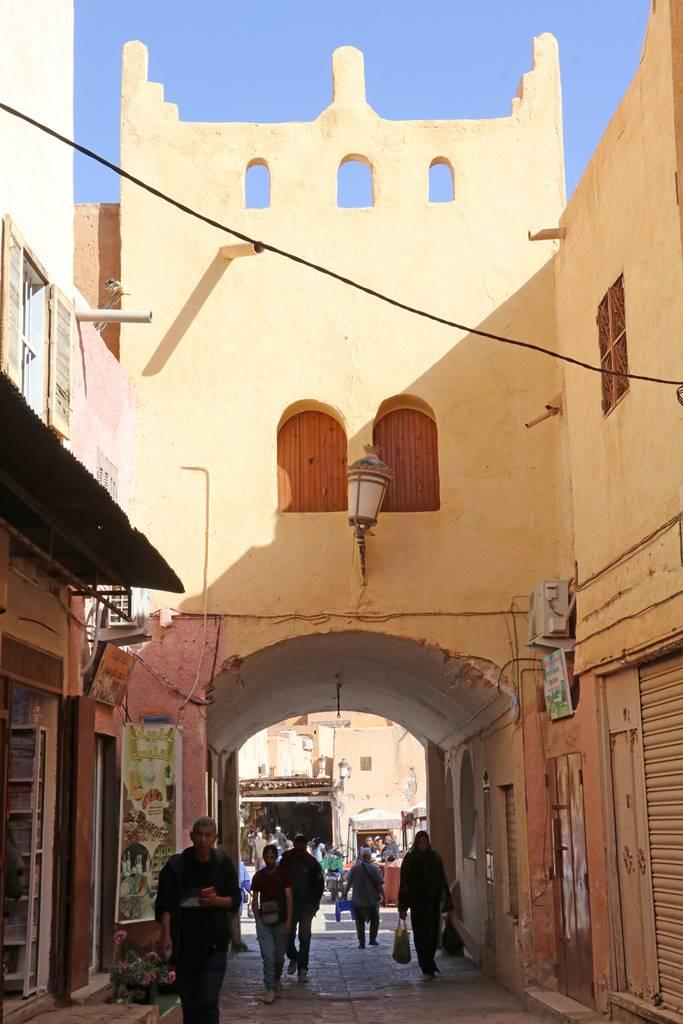
"Ghardaia City is a distinctive heritage and an icon of civilized coexistence."
Among the most prominent places that tourists should not miss in the Algerian desert is the state of Ghardaia, particularly the two cities of Ghardaia and Metlili, which are located 600 kilometers south of the capital in the northern region of the Algerian desert. The origin of the name "Ghardaia" goes back to "Ghar Daya," referring to a woman named Daya who used to live in a cave ("Ghar"). It was a stop for travelers, and from her, the name Ghardaia emerged. It is bordered by several states, such as Laghouat and the Wilaya of Ouargla. The reconstruction of the city dates back thousands of years, as evidenced by the Berber inscriptions on the rocks surrounding the city. The ancient city was surrounded by many palaces built by the Amazigh tribes, known as the residents of gutter, and some Arab tribes that settled in the region.
Public life in the city of Ghardaia: There are many aspects of ancient life in the governorate of Ghardaia, and its residents work in various professions, especially in multiple industries. The population exceeds 400,000 people.
The social nature of the population was clearly influenced by its construction and the nature of the Algerian desert, which created harsh economic and social conditions that drove its residents to adopt a controlled social system based on unity, coexistence, and respect among all parts of society.
Monuments in the city of Ghardaia: There are many archaeological monuments in the city of Ghardaia and other nearby cities, especially the ancient palaces that attest to its archaeological heritage. The most important of these palaces are: the Palace of Ghardaia, the Palace of Metlili (Metlili Chaamba), the Quarara Palace, the Palace of Bani Yazqn, the Brian Palace, and others. Ghardaia is also characterized by the spread of many religious monuments, the most important of which are the ancient mosques established with the arrival of Islam. Ghardaia is known for its unique architectural nature, linked to the construction of traditional housing.
Traditional Industries: One of the most important traditional industries in Ghardaia is carpet weaving, which is very popular. In addition to woolen clothing, such as Qandurah, Qushabiyya, and Khumri, the state is also famous for engraving on copper and wood, leather, pottery, and artifacts.
Tourism: Ghardaia is distinguished by the generosity of its residents and their permanent welcome to visitors from inside and outside the country. The preservation of the social system and distinctive traditions impresses everyone who visits the city. Tourists in Ghardaia are dazzled by the harmony in every corner and in every social, commercial, or cultural transaction that combines the local population with everyone who sets foot in the city. The lighthouse that appears from every corner of the city is one of its most prominent features, one of the minarets in Ghardaia, constructed in a way that preserved the simplicity of urbanization in religious monuments in the valley. Eid al-Zurbiyya in Ghardaia and Eid al-Mahri in the city of Metlili are among the most important commercial and cultural events in the quiet region throughout the year. These events attract many craftsmen and merchants from all over Algeria, in addition to tourists who are fascinated by the creations of craftsmen in carpet making, full of stories. The city is also especially known for the unique type of dates called Dagleet-Nour. The city of Zelfana (65 km away) is known for its mineral baths.
#Ghardaia #Algeria #Algérie 🇩🇿 "Ghardaia City is a distinctive heritage and an icon of civilized coexistence." 🇩🇿
Among the most prominent places that tourists should not miss in the Algerian desert is the state of Ghardaia, particularly the two cities of Ghardaia and Metlili, which are located 600 kilometers south of the capital in the northern region of the Algerian desert. The origin of the name "Ghardaia" goes back to "Ghar Daya," referring to a woman named Daya who used to live in a cave ("Ghar"). It was a stop for travelers, and from her, the name Ghardaia emerged. It is bordered by several states, such as Laghouat and the Wilaya of Ouargla. The reconstruction of the city dates back thousands of years, as evidenced by the Berber inscriptions on the rocks surrounding the city. The ancient city was surrounded by many palaces built by the Amazigh tribes, known as the residents of gutter, and some Arab tribes that settled in the region.
Public life in the city of Ghardaia: There are many aspects of ancient life in the governorate of Ghardaia, and its residents work in various professions, especially in multiple industries. The population exceeds 400,000 people.
The social nature of the population was clearly influenced by its construction and the nature of the Algerian desert, which created harsh economic and social conditions that drove its residents to adopt a controlled social system based on unity, coexistence, and respect among all parts of society.
Monuments in the city of Ghardaia: There are many archaeological monuments in the city of Ghardaia and other nearby cities, especially the ancient palaces that attest to its archaeological heritage. The most important of these palaces are: the Palace of Ghardaia, the Palace of Metlili (Metlili Chaamba), the Quarara Palace, the Palace of Bani Yazqn, the Brian Palace, and others. Ghardaia is also characterized by the spread of many religious monuments, the most important of which are the ancient mosques established with the arrival of Islam. Ghardaia is known for its unique architectural nature, linked to the construction of traditional housing.
Traditional Industries: One of the most important traditional industries in Ghardaia is carpet weaving, which is very popular. In addition to woolen clothing, such as Qandurah, Qushabiyya, and Khumri, the state is also famous for engraving on copper and wood, leather, pottery, and artifacts.
Tourism: Ghardaia is distinguished by the generosity of its residents and their permanent welcome to visitors from inside and outside the country. The preservation of the social system and distinctive traditions impresses everyone who visits the city. Tourists in Ghardaia are dazzled by the harmony in every corner and in every social, commercial, or cultural transaction that combines the local population with everyone who sets foot in the city. The lighthouse that appears from every corner of the city is one of its most prominent features, one of the minarets in Ghardaia, constructed in a way that preserved the simplicity of urbanization in religious monuments in the valley. Eid al-Zurbiyya in Ghardaia and Eid al-Mahri in the city of Metlili are among the most important commercial and cultural events in the quiet region throughout the year. These events attract many craftsmen and merchants from all over Algeria, in addition to tourists who are fascinated by the creations of craftsmen in carpet making, full of stories. The city is also especially known for the unique type of dates called Dagleet-Nour. The city of Zelfana (65 km away) is known for its mineral baths.
#Ghardaia #Algeria #Algérie
 English
 Arabic
 French
 Spanish
 Portuguese
 Deutsch
 Turkish
 Dutch
Dutch
 Italiano
 Russian
 Romaian
 Portuguese (Brazil)
 Greek
Greek